Food for healing… (Part One)
I normally write about lighter topics like the farm, the markets, dining out or cooking at home; however, McClendon’s Select took on a new customer this past fall that has had us all thinking about food differently. As growers of organic produce, we needed no convincing that eating organic and seasonal is best for our diets and our health. But it hit home how important the proper food is to our overall well-being when the Cancer Treatment Centers of America approached us last fall and asked to have McClendon’s Select provide the hospital with produce for their patients. Marsha and I had the opportunity to visit the Cancer Treatment Centers of America (CTCA) in Goodyear twice over the past few weeks to talk in depth with their Director of Nutrition, Sharon Day, and their Executive Chef, Chef Frank Caputo. We learned a great deal from both. I wanted to share their approach to treating cancer patients and how they incorporate a proper diet and nutrition in their treatment protocol. I will post this week on a little about the hospital itself, and then my interviews with Sharon and Frank.

Cancer Treatment Centers of America – Part One: The Hospital
You have probably seen the ads before; I certainly have, for the Cancer Treatment Centers of America (CTCA). They advertise a hospital that treats cancer differently, more respectfully, with the patient at the heart of mission. While it all seems like a good idea, I had filed it away as someplace that I am glad to know exists, but I hope I never have to go. In the past few months, after we started supplying produce to them, I heard nothing but praise from Bob every time he came back from a meeting with their chef. After a long career as a pharmacist, Bob has seen his share of hospitals, but he will tell you that he has never seen anything like CTCA. In his words, everything they do is meticulous from the attentive and warm staff to the extraordinary facilities and the level of detail that has gone in to all of their planning.
What I first noticed when Marsha and I visited is that the CTCA is more like an upscale hotel than a hospital. The lobby is inviting and bright with fresh flowers on the tables and a glowing fireplace. There is a concierge desk to one side to assist patients in from out-of-town, and a tree on the wall of the other side of the lobby with each brass petal bearing the name of a five-year survivor. I was told that large parties are held of five-year survivors and that every CTCA has a similar wall, some with the leaves of the tree reaching all the way around the lobby. There is nothing sterile or cold here, no weird hospital smells, drab hallways or cacophony of beeps and alarms from ominous machines. It is quiet and calm and feels very conducive to healing, both from cancer and the fears and frustrations that come with it.
Sharon Day, the Director of Nutrition, walked Marsha and I through the facility and explained their philosophy of patient care. Everything at CTCA is done with patient input. Their layout and design are all based off of patient feedback. All patients’ suggestions, complaints or ideas are directly assigned to the applicable area of the hospital and are answered within 24 hours. It is this level of patient input and detail that make you realize why nothing here feels like a hospital, because why would any patient ever want to recreate a hospital?
(Disclosure: Having spent the 24 hours prior to my tour in a different hospital facility with an elderly grandparent, the contrast was mind-blowing.)
Patients come to the CTCA having already received their diagnosis. They meet with a physician on the first day, as well as the dietician, naturopathic clinician and nursing staff that will work with them. Within three days, patients receive their treatment plan and know the team that they will be working with throughout their care. The agony of waiting, following up and trying to have different clinicians talk to one another is all taken away. Patients meet with the same team every time they come in, or rather; the same team meets with them. Patients have the dignity of staying in one room, while the clinicians come to them, not the other way around.
Every step has been made easy, with the peace of mind of the patient at the forefront. Chemo treatments are given in a quiet room with large windows offering views that would help both distract and soothe. A resource library allows access to the latest medical information, so patients can make informed decisions. There is a wig shop, an on-site hotel, gym, chapel and salon, all available. What seemed most defining of the feel and spirit of CTCA was the large brass ship’s bell in the radiation area. Patients commemorate the end of their treatments by ringing it loudly. This hospital is about celebrating the positive and helping patients reach those milestones with the hope, support and dignity every cancer patient deserves.
Food is an integral part of treatment and healing at the CTCA. Sharon explained that every patient meets with a dietician throughout their treatment. The patient’s diet is just as much a part of their treatment program as anything else they receive. Dieticians don’t just prescribe diets; they look at the full life-style, patient eating habits and preferences, cooking skills and nutritional education. As with everything at the CTCA, education is paramount so that the patients have all of the information they need to understand and help in their treatment and make choices that will assist in their progress. The emphasis on eating seasonal, local, organic produce is at the heart of their nutrition education. They are focused on helping patients incorporate as many fruits and vegetables as possible into their diets. This isn’t just a mantra that they preach; they put it into practice with every meal served at the hospital.
Having witnessed for myself the sad, processed, unappetizing meals that were being served at another hospital just the day before, it hit home all to well that the philosophy of the CTCA to their patients was revolutionary in the medical community. Doctors and clinicians aren’t telling a patient one thing, while turning a blind eye to what the kitchen is sending up to patient rooms. At the Cancer Treatment Center of America it is evident that everyone is invested and focused on patient care, including their chef and kitchen staff.
And now their farmer.
At the heart of it, our affiliation with them just makes sense. Why wouldn’t a hospital that treats patients diagnosed with cancer serve anything other than organic foods? It would seem that every hospital would want to make sure that the food they are serving is free of the chemicals and pesticides that can contribute to a cancer diagnosis. To not only advocate, but serve, meals rich in organic produce with cancer-fighting antioxidants should be an integral part of every cancer treatment facility. However, the Cancer Treatment Centers of America is the only hospital I know buying organic produce. They are certainly the only hospital in the Valley that has ever approached us. In talking with both Sharon and Frank it was clear that they know who the local farmers and food producers are in the Valley and they are serious in not only using local, organic produce, but in educating their patients to do the same. This isn’t about serving delicious meals or being supportive of the local community, they are dealing with matters of life and death and they have no interest in cutting corners. The kitchen is very much an integrated part of their patient care.
Everything we saw at the Cancer Treatment Centers of America was world-class, professional, and completely devoted to crushing the devastation that cancer causes in a patient’s being and their life. To know that they take the food they serve as seriously as the treatments they prescribe made it all the more real to us the vital role of organic produce plays in our health.
After all, we are what we eat.

Cancer Treatment Centers of America
at Western Regional Medical Center
14200 W. Fillmore Street
Goodyear, Arizona 85338
623.207.3000
www.cancercenter.com
I’ll meet you any time you want…

When Sean, Aidan and I traveled to Italy last summer we kept hearing the same thing in each city we visited. Whether talking to a tour guide, waiter or driver the Italian refrain was repeated, “We invented nothing.” That sentence was used when talking about art, architecture, food, wine or just beauty in general. It is a line said with respect to all of the inventors, artists, and visionaries that have walked before us, as well as the grandmas in the kitchen, the farmers in the field and all of the Italians over the years who have perfected that beautiful intangible, la dolce vita. Everything truly enjoyable in Italy is an homage to the past. Just as Italians claimed to invent nothing, they stated again and again that while they work to perfect what came before them, that nothing is perfect either. It is about the process, not the destination. You can not perfect, you can only work towards perfection. The idea is that we are all just a part of a history or tradition. It is our role to try to make it better and to pass these things along to the next generation, knowing that they will try to do the same.
“We invented nothing.” In that sentiment, I found both beauty and perfection.

So, you can imagine that I was not at all surprised that as Chris Bianco was explaining the concept for his new place, Italian Restaurant, that he referenced often not just his past, but how generations of his family influenced the restaurant. It was very Italian of him. His family is everywhere from the art on the walls to the recipes in the kitchen. He showed me the line drawings that were done by a great uncle in Rome in the 1940s, each signed on the back and sent to him by an eighty-year-old aunt still living in Rome. He hung the poster from Venice that was brought back after his family visited there in the 1970s. There are paintings from his father, just like on the walls of Pizzeria Bianco and Pane Bianco, but Italian Restaurant also has a collection of paintings done by his mother. There are family photos, including one that Chris says he has always had at the Pizzeria looking over his shoulder. It is of an uncle who was a fireman in Brooklyn. It just felt like good luck to have a fireman watching over a restaurant. Generations of Biancos are found throughout Italian Restaurant.

He wanted Italian Restaurant to be a place where people could come and eat the way he enjoys the most, sitting together and sharing a meal and a little history. Chris wanted that felt in the menu too. His mother’s meatballs are featured on the menu and the desserts are from her as well. His brother Marco is making that famous Bianco bread, the kind that is hard and crusty on the outside with a chewy heart of doughy goodness at its center. This restaurant does not have the infamous Bianco name on the door, because Chris did not want the restaurant to be about him, or just about his family either. He wanted his chef, Claudio Urciuoli, to include the recipes that he grew up on, dishes that his mother and grandmother made. This is about Claudio’s family, and Chris said, it is about ours. He wants the menu to change regularly, to have dishes that evolve with the seasons from the farm. This is about our combined story and contributions as chefs and farmers.
Chris wants his customers to share in this and to create a moment for themselves with the people they love. Each table was carefully planned by Chris, some for the view, some for privacy, some for sharing. There is a booth for families to gather around and a tiny table for two, for couples who want to huddle close. There is one next to a window, that can be opened on a nice day, and tables on wheels for when a little rearranging is in order. Just like you would when you have a little family over. Like his other restaurants, this feels a little like a home, although maybe more Chris’s mother’s home than his. His mother told me that Chris took so many things from her house she asked if he was moving out of the country.
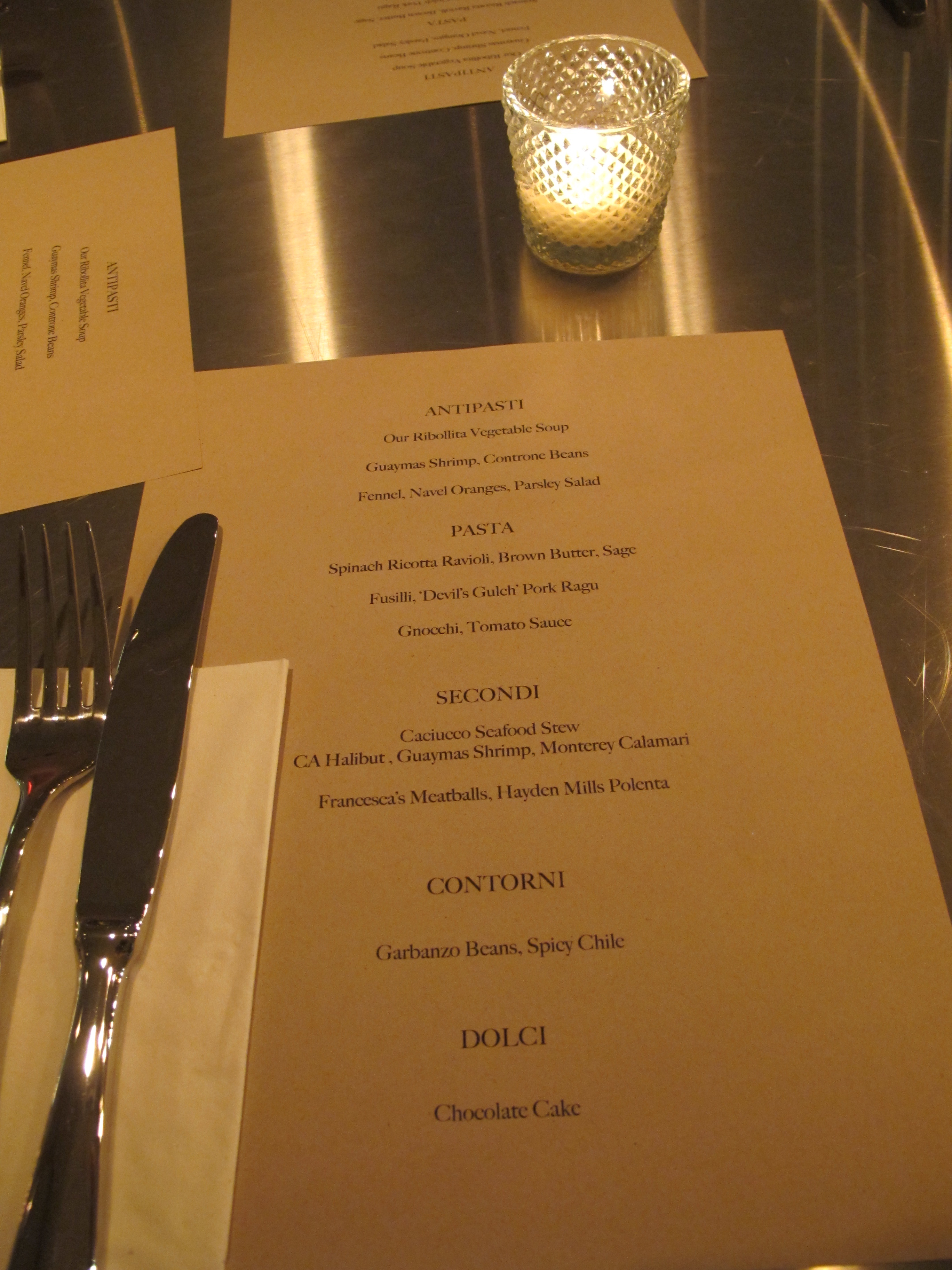
We were honored when Chris asked if we would come for an early preview for family and friends before Italian Restaurant opened. Sean and I brought Aidan with us one night, Bob and Marsha were able to go the next. (Sometimes that happens when you have a farm.) Just from one night to the next the dishes changed slightly as Chris had wanted. Fresh, handmade pastas, beautifully done sauces, combinations that felt inventive and yet traditional and familiar. We ate as Chris wanted, sharing dishes like shrimp with white beans, a seafood stew, gnocchi with tomato sauce, a chocolate torte so dense and decadent you needed only a bite, but found yourself eating the whole thing anyway. We had a spinach ricotta ravioli that was out of this world, although I only had two, which was one more than Sean had. After stabbing one with his fork while we were busy talking, Aidan realized what he had in front of him and almost finished the dish before we could try it. He then told Chris to make sure ravioli was always on the menu. It may be, but the next night Bob said it was a butternut squash ravioli and now he and Aidan are in a debate about which was better. There may be only one way to solve this. What we all agreed upon was that we wanted to return, and in the few weeks that Italian Restaurant has be open, we have several times already. (FYI – it recently opened for lunch as well.)

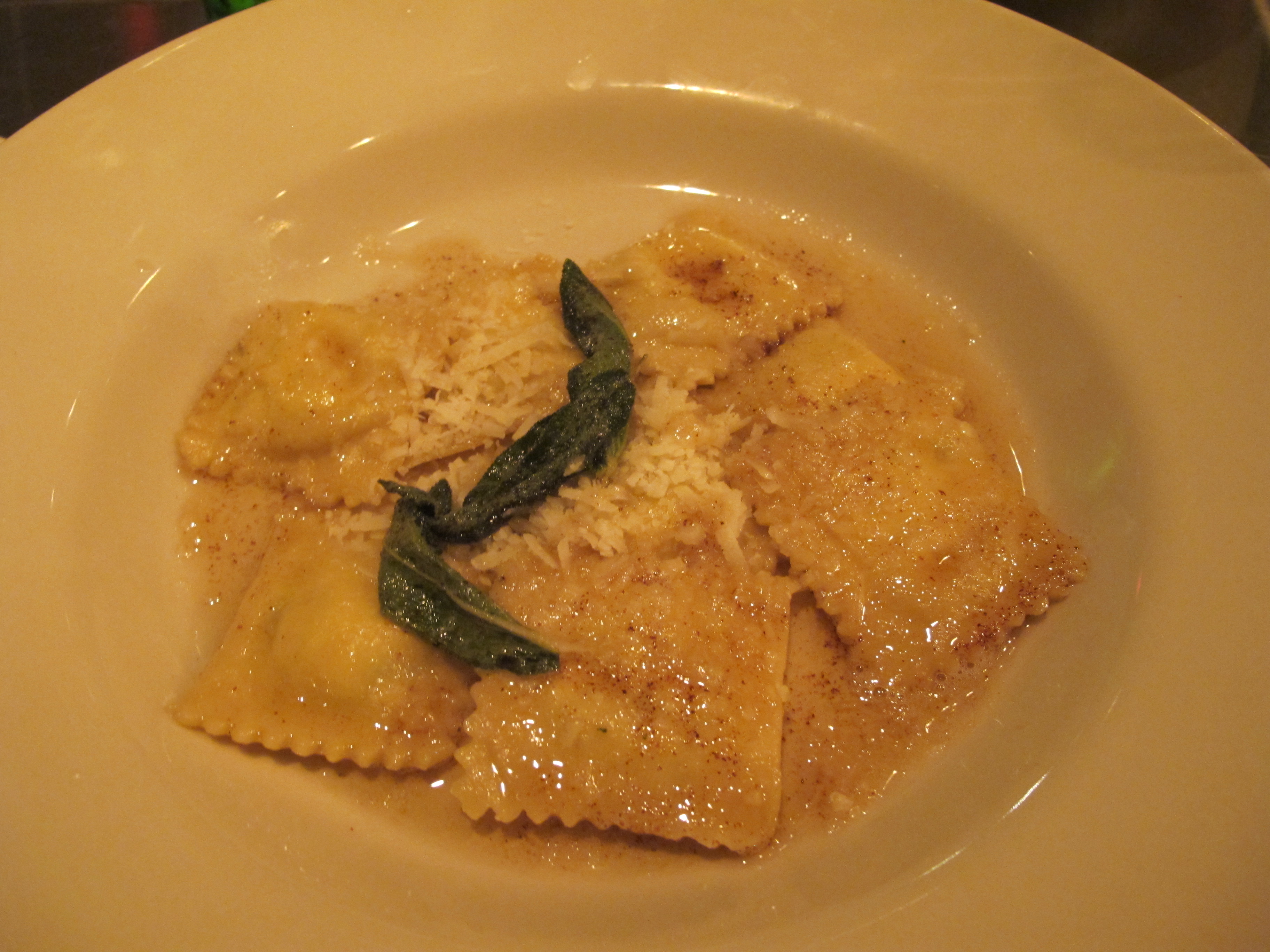

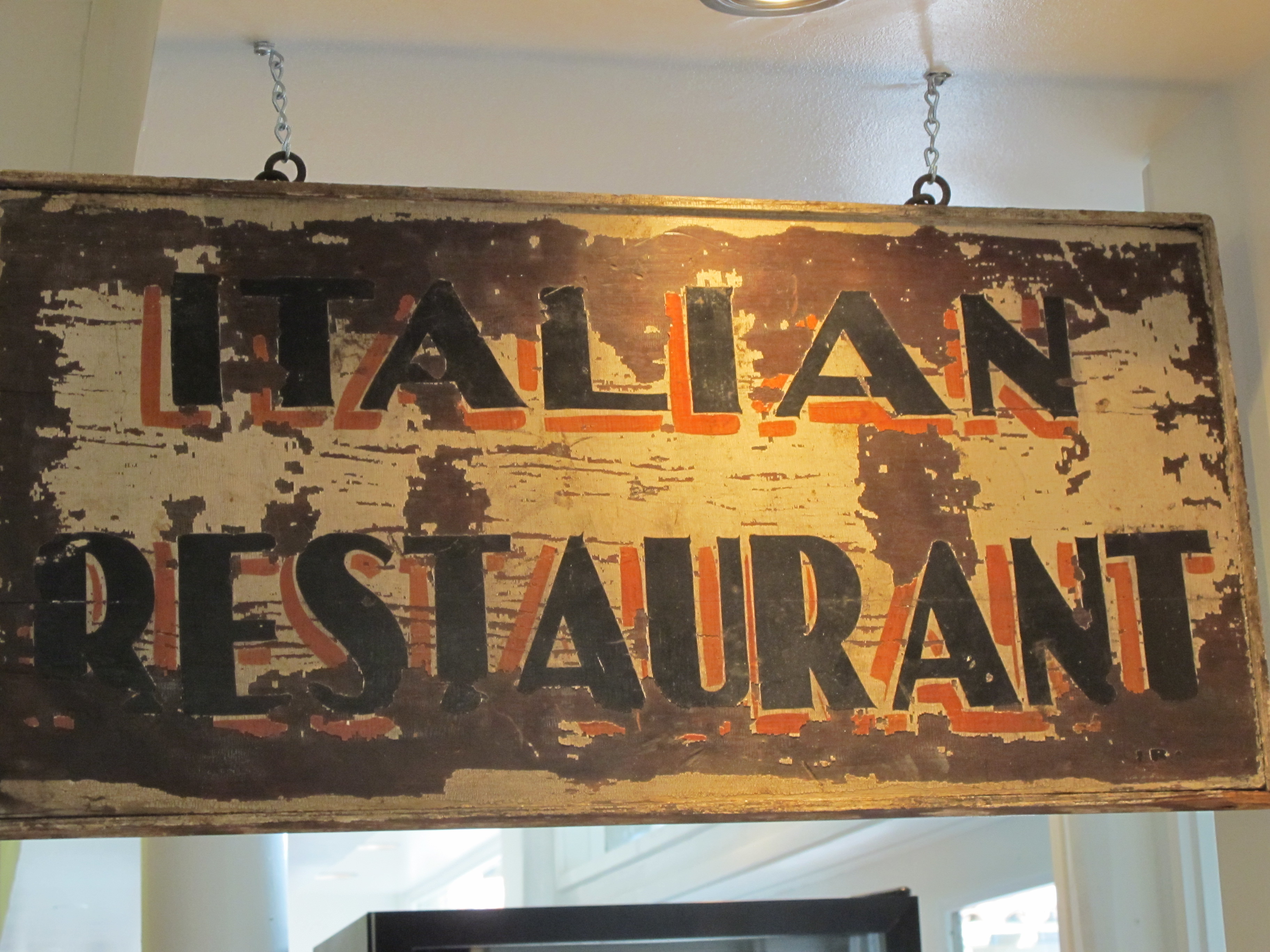
When I asked Chris why it was called Italian Restaurant he pointed to a sign I had seen before at Pizzeria Bianco’s. He said the sign was given to him when his bought his first bar. The previous owner had wanted him to have it and he has held onto it ever since. This added to the history of his newest venture. Because while the space, the menu, even the faces are new, Chris wanted people to feel the richness of the journey from different families, chefs, recipes, and ideas that led to this place. And then he said those same words I had heard before, “because we invented nothing.”
‘Italian Restaurant’, that says it all.
Italian Restaurant
4743 N. 20th Street
Phoenix, AZ 85016
602.368.3273
(It is tucked back inside the Town & Country shopping center.)
(As an homage to my own past, please someone tell me you caught the Billy Joel reference in this post. I can’t help but hum along to this tune every time I go.)
Of food and family…

In the past I have worked for Fortune 500s, government agencies, national charities and local 501c3s, but there is nothing quite like working with your family. Having a family business means everyone has to pitch in, that weekends and national holidays don’t always mean a day off, that you had better learn new skills fast, and that job titles don’t mean much, since everyone has their name on the door. It is a blessing that I count daily. It is also not for the faint of heart.
Pat Christofolo is someone who understands this all too well. She grew up working for her family and has carried that tradition onward. She is a legend in the Valley, but while restaurants and catering may be her business, it is family that is her life’s calling.

First and foremost, can I share that Pat greets you like a long-lost friend, even if you are newly introduced. She did the first time I met her and she still does. She welcomes with a hug, not just a hello. She wastes no time offering you a seat, something to drink, asks if the temperature is okay. That is just who Pat is. She wants to make sure that you are served, comfortable and at home. No wonder she has been in the business of serving people since the early 70’s.
Pat comes from a family of restauranteurs. Her father opened up the Italian deli Capistrano’s in Tempe in 1974. Pat started out by going in to work with her Dad every day. She watched her father give up a lot to start the business, but she also learned how customers respond when you give them what they are wanting. The deli was renowned for its hand-made foods and for delicacies in from New York that you couldn’t find elsewhere in the Valley. The work was hard, but gratifying and she says this exposure to the family business early in her life has shaped her family and own businesses as an adult.
By the early 1980’s Pat was a new mother and was looking to create a business that worked for her and her young son, Dustin. She started a sandwich shop, Out to Lunch, and then another and another. After a decade, she sold the business and ventured into catering. It has by chance that she was called for her first catering job when a law firm called wanting an omelette bar for an event they were holding. She started Santa Barbara Catering as a result. But the difference between a restaurant and catering weren’t lost on her, and Pat got involved with the International Caterers Association looking to learn more about trends, food styling, and how to build her business. She now serves as their President Elect. Her success did not go unnoticed. In 1997, Wayne Smith, the owner of the Farm at South Mountain, asked Pat to take over the Farm Kitchen. She then went on to start Quiessence and the Morning Glory cafe. Chef Greg LaPrad is now at the helm in those kitchens and Pat continues to run both Santa Barbara Catering and the Farm Kitchen. She is not one to sit still.
In the past year and a half she went into business with family once again. This time with her son Dustin, opening the House at Secret Garden.

She and Dustin have always been very close. They were bonded in a way that only a family that does business together can understand. It was very much shaped by the relationship Pat had with her own family growing up with their restaurant. She had watched Dustin in the kitchen over the years and saw how natural it was for him. She saw his attention to detail, his thoughtfulness about the food he was preparing, and importantly in the restaurant business, his palate and understanding of flavors. Her son has the same spirit and passion for preparing and creating good food that she saw in her father and herself. As any good mom, and business owner would, Pat made sure that if Dustin was serious about cooking that he learn the business. He worked in the front of the house at Quiessence and then went on to culinary school at the French Culinary Institute in New York and then in Italy. I wrote once about Dustin and what he is doing at House at Secret Garden. His years of growing in the family business have certainly served him as well. The culinary talent in that family is inherent. (You can read that post about Dustin and the House at Secret Garden here.)
Pat has always been passionate about cooking seasonally. She shares this with Dustin too. As a caterer she knows that to serve foods in season, means planning in advance. With events being planned sometimes up to 18 months in advance, Pat has taken care to educate her staff on what foods are in season throughout the year, so they can help their clients plan accordingly. She has seen the shift in customers education and passion about eating seasonally and having organic, local produce served. Pat was the first caterer in town to change to greener, more environmentally-friendly paper products. She says that it is not acceptable to not be interested in where your food comes from, or how it is grown.
Pat’s newest venture is Palette, the cafe at the Phoenix Art Museum. Just looking at the menu makes me hungry. Once again, Pat has taken her love of good food, her years of experience and her dedication to fresh, simple flavors and created an outstanding menu. Truffled wild mushroom macaroni and cheese alone is worth a trip to check it out. The Farmer’s Market Omelet on their brunch menu is another I want to investigate. It comes as no surprise that Pat has been able to turn a museum cafe into a destination dining spot. Palette is open during the day Wednesday thru Sundays and on First Fridays for evening events. Palette offers catering for special events at the museum from Santa Barbara Catering. If you are looking for a caterer somewhere else, Pat’s Santa Barbara Catering is the preferred caterer for many of the top event venues all over town. Just thinking about all she does is exhausting. I am not sure where she finds the time or energy, because Pat clearly gives every venture 100% of herself.

This past fall, Sean and I were invited to enjoy a evening at the House at Secret Garden for a dinner honoring local food producers. It was a beautiful evening with a fun mix of people who share our same passion for producing and enjoying good food. With Dustin’s incredible dishes coming out course after course, and Pat’s perfect touch for bringing people and food together, it was an evening we are still talking about. Pillsbury Winery, Crow’s Dairy, Hickman’s Family Farm, Black Mesa Ranch, The Meat Shop, Queen Creek Olive Mill were but a few of our dinner companions. If you wanted to know where local food comes from, it was all around the tables inside the Secret Garden’s Urban Barn. And like us, these businesses are not just local, many are also family ventures. Which made it all the more fitting that it was Pat at the head of the table, where the matriarch of Valley dining should sit.
To read more the evening, you can find the article The Arizona Republic wrote here. All photos courtesy of Santa Barbara Catering.
Santa Barbara Catering
480.921.3150
www.santabarbaracatering.com
The House at Secret Garden
2501 East Baseline Road
Phoenix, AZ
602-243-8539
www.houseatsecretgarden.com
Farm Kitchen
6106 S. 32nd Street
Phoenix, AZ 85042
602.276.6545
www.thefarmatsouthmountain.com/the-farm-at-south-mountain-the-farm-kitchen
Palette
1625 North Central Avenue
Phoenix, AZ 85004
602.257.2191
www.phxartcafe.com/palette
The road to St. Francis…
I have written before of my foodie crush on St. Francis. I love their wonderfully unabashed comfort foods that melt in your mouth without feeling like they are traveling straight to your hips. I have obsessed about their roasted chicken, their flatbreads, most recently their butternut squash puree with currants, cauliflower and pine nuts. I adore the cool kids table vibe in their dining room with open kitchen and wood-fired oven, and their indoor/outdoor bar with fireplace and the upstairs loft. Their menu is filled with fresh, seasonal, yummy dishes, and yet their price points don’t come with sticker shock. They just seem to have the whole package.
So I decided to ask how that came to be.
You don’t get to be that effortlessly spot on, without some serious work going on behind the scenes. If you have ever sat at their kitchen bar, you know that there is some real hustle going on in that kitchen.

Lucky for me, I got to sit with Chef Aaron Chamberlin and pick his brain for a bit. He is exactly what you would think the owner/executive chef/manager behind St. Francis would be like… energetic, forward-thinking, friendly, cool.
Very cool.
Aaron has one of those coveted, hard-earned chef resumes that had him bouncing from the top kitchens in New York to those in San Francisco. Daniel Boulud, Jean-Georges… he worked for them. He did the crazy hours all night, butchering meat, mastering sauces, perfecting the impossible, learning the ins-and-outs of fine dining. It became engrained in him, “How do I do this better? How do I make this perfect?”
But he knew that there was something more that he needed to learn. So he came home to Arizona and spent six years at Le Grande Orange learning the business part of the restaurant business. He wanted to learn what it takes to have a neighborhood restaurant, a place that became part of the landscape that locals considered a second home, while learning the balance of serving good food that is also affordable. And once he felt like he was there, he wanted a neighborhood to match his vision.
Enter St. Francis.
When Aaron decided to make the leap to create his own neighborhood spot, he again did his homework. He liked that Central and Camelback has a dense creative and intellectual population with architects, designers, professors, artists and writers all living, working and communing in that area. He wanted a place where they would feel welcome and comfortable, where they could stop for a business lunch, or come in later with their kids before a school recital for an early dinner, or visit on the weekends when out entertaining friends. He saw St. Francis as a place for them to gather, to feel comfortable, to find the familiar.
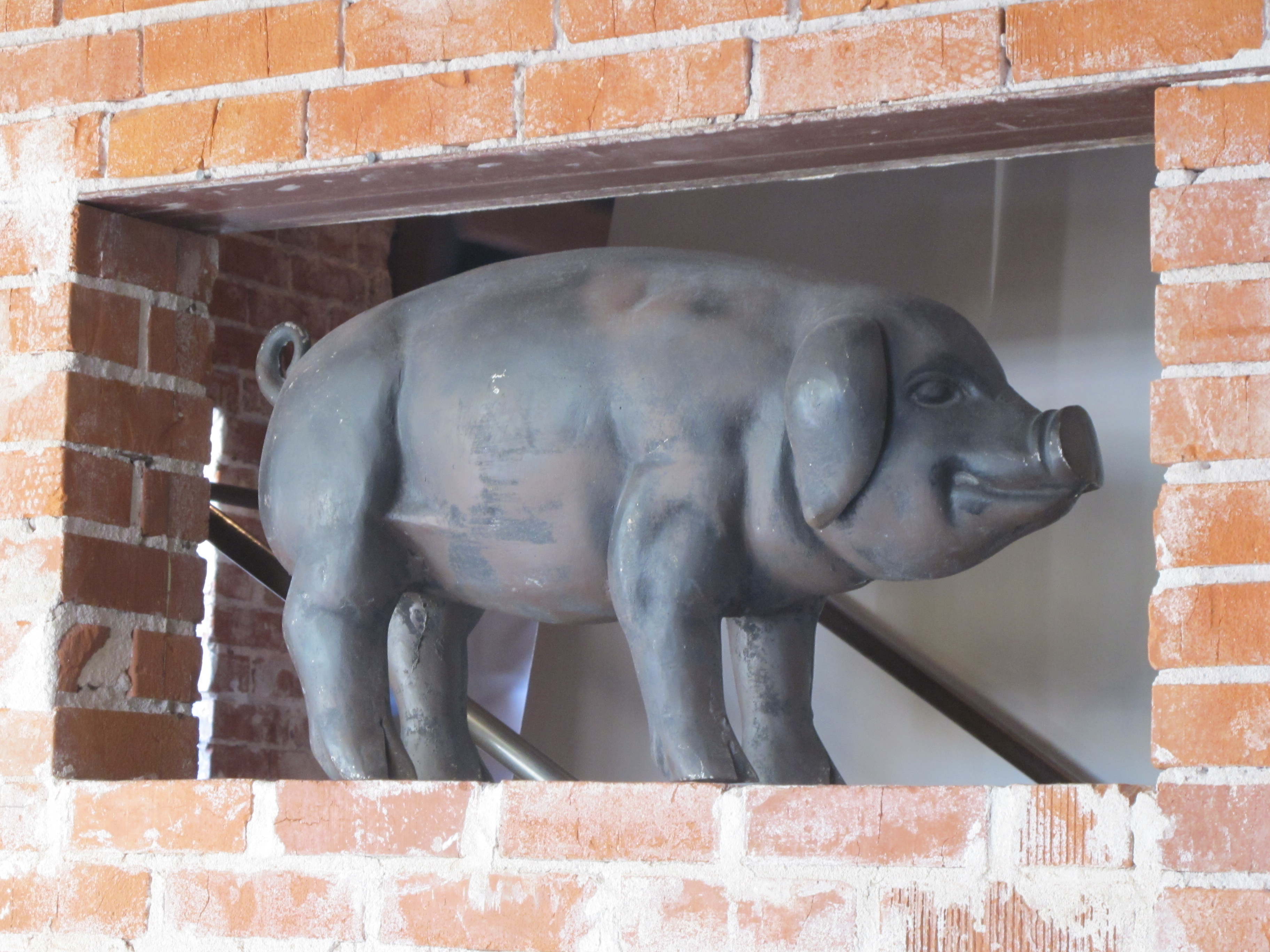
In the months of construction before he opened the doors to St. Francis, Aaron studied his new community. He visited every eatery in all directions of St. Francis to see what was already available and what was missing. He studied menus, prices, and ambiance. He also went through the surrounding residential areas and introduced himself and talked about St. Francis. But more importantly, he listened. He wanted to know what his neighbors wanted in a restaurant, what would they like to see on the menu. He wanted the food to be for them.
It is because of this feedback that St. Francis has a hamburger on the menu. This wasn’t something that was originally going to be part of their offering, but Aaron heard time and again that his new neighbors wanted a good, solid hamburger. So he gave it to them. But not first without bringing his own creativity to it. He played with the idea of a French Onion Soup version. Because didn’t everyone’s Mom serve that French Onion dip at some point or another in their childhood? Mine did. Those years of toiling in the finest kitchens pushed him to make it better. He played with adding shallots and creme fraiche. He played with it until it became his, and then it became the neighborhood’s. It is an item, he says, that will always be on the St. Francis menu. The neighborhood asked for it in the beginning, and now they order it daily.
This neighborhood research also led to a pork chop landing a spot on their menu. One gentleman Aaron talked to said that he couldn’t find a good pork chop when he ate out. Didn’t everyone’s Mom make one of those too? Mine did. So did Aaron’s. He says that the pork chop also is a hit with his customers. He doesn’t like the title of a “signature dish”, but if he were to call one that, the pork chop might be it. There are a few items on the menu like that. Mainstays that the neighbors like and he wants them to feel like they can walk in and find a dish they love. But he is also changing out some dishes as the seasons shift, because he wants his neighbors to enjoy what is fresh and in season too. There may be something new to love coming out of the ground.
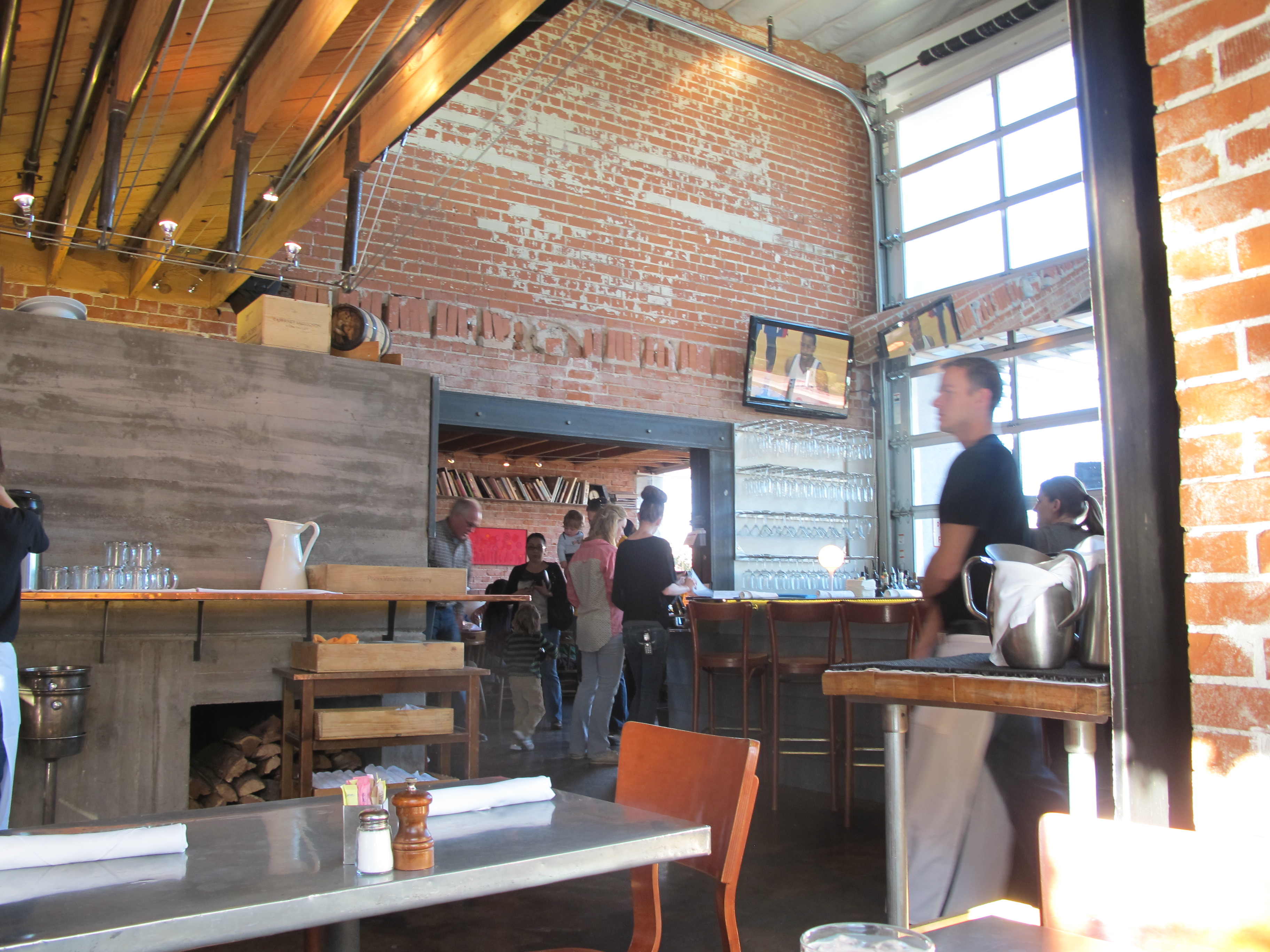
St. Francis is about being local in all regards. Aaron says that good dining has always been about using as much local, seasonal produce and products as possible. It is only recently that local and seasonal have become trendy, but he doesn’t see this as a trend for St. Francis, he sees this as a course of business. He wants to create food that is nourishing and familiar, while feeling healthy and light. He wants his customers to leave feeling happy, not heavy. This push to make things better within Aaron also applies to his wanting his customers to leave feeling better.
Aaron seems to approach managing his kitchen staff in the same regard. He wants this chefs and cooks to feel empowered and to bring their own ideas and recipes into the kitchen. In his philosophy, if he gives them the best produce and products to play with, then they will be inspired to do their best with them. Just like his customers, he wants his staff to feel like they are at their best when they are St. Francis. He is also opening them up to the realities of owning a restaurant. He wants them to see that everyone who walks through their doors is a customer, and whether they are ordering the evening special or off the kid’s menu, that they all deserve the same effort. He wants his kitchen to be flexible to new ideas, specific customer diets, the changing seasons.
Aaron is clear, this isn’t about him, St. Francis is about the community. His vision is for St. Francis to be a part of the neighborhood for a long time, and supporting the community of customers, farmers and food providers isn’t for show, it is for the long haul.
Told you he was cool.
St. Francis
111 East Camelback Road
Phoenix, AZ 85021
602.200.8111
www.stfrancisaz.com
P.S. If you are in need of a new brunch spot, St. Francis has an amazing brunch on Sundays. Just look…


I would have included a photo of the amazing iron skillet dark chocolate olive oil pancake that Aidan ordered, but he ate it before I could get a picture. (But not before I could also steal a bite.)
Getting to the market this Saturday…

This weekend the Parada del Sol parade will be taking place on Saturday morning starting at 10:00am. The parade will be running north along Scottsdale Road from McDowell Road to Indian School Road. The Old Town Scottsdale Farmers’ Market will still be open during this time. Road closures for the parade will be from 3:00am thru 1:00pm. The roads closed include:
Scottsdale Road from McDowell Road to Indian School Road.
Indian School Road from Scottsdale Road to 75th Street (east of the Scottsdale Civic Center).
To get to the market, we suggest coming in from south of McDowell and east of Scottsdale Road.
Once you are at the Old Town Farmers’ Market come by and check out the blood oranges, they are in season and a wonderful color and flavor. Asparagus, Hakurei Turnips and baby leeks are all beautiful right now too. See you at the market!
It is supposed to look like this…

Along the north border of the back field is a long row of what looks like an overgrown weed gone wild. It is as high as my shoulder in parts and looks like it would be a nasty mess to get tangled up in. On a farm with so many pretty things growing, this isn’t one of them.
And yet, this is one the things that I am most excited about every year.
Seriously though – this is pretty ugly stuff…

Any guesses? Take a closer look.

Underneath all of that mess are asparagus stalks. Right now the asparagus is in the fern stage, although fern sounds prettier than it looks. We planted our asparagus from organic crowns (roots) that originated from California three years ago. During the first year, these crowns were allowed to create large ferns that supported their root system throughout the first season. In the second season, only about 50% of the asparagus was harvested, to allow for the asparagus spears to rest and continue building up their root system.
But in January 2011, we were able to harvest 100%. If you were at the markets last year you know how much we were able to get. It felt never ending.
Asparagus stays in this fern state throughout the summer and fall until the first freeze of the year, typically in the middle of December. The ferns then cease growing and goes dormant. After a few more freezes, usually into the middle of January, we mow all of the top fern growth that has gone dormant and yellowed down to about two inches in height.
Right now the extensive asparagus root system starts putting up asparagus shoots which are harvested before they grow fully into this fern stage again. We harvest the asparagus over a two month period. Then the plant is allowed to return to the fern stage so that it may nourish and replenish its root system once again.

The great thing about asparagus is that it doesn’t require much attention, and it will continue to flourish and produce for the next 25-30 years. So, even though I eat more than my fair share when it is in season, there will be plenty. Thankfully it looks so much prettier on your plate than in the field!
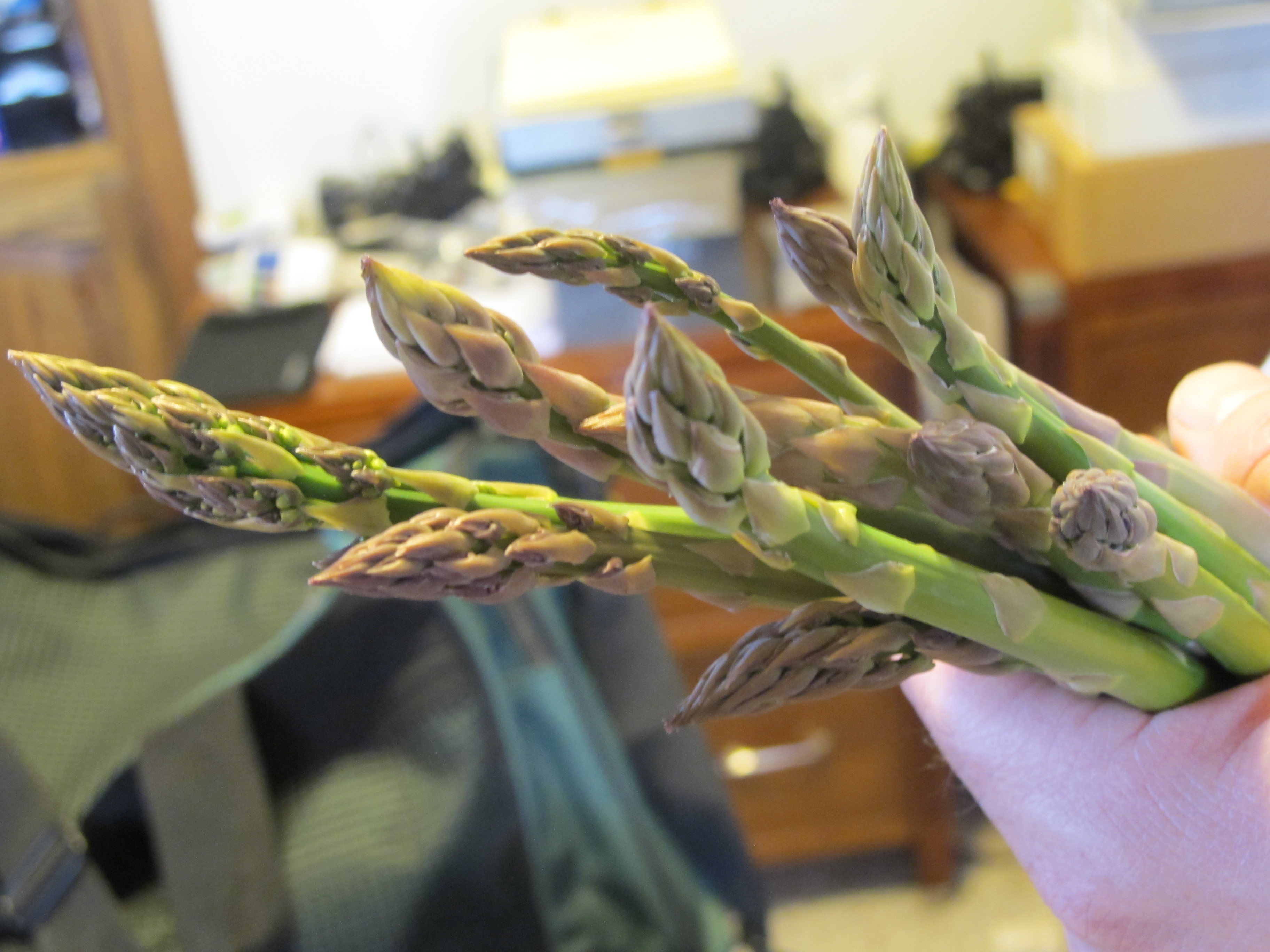
P.S. I know I have said it before on the blog, but it is worth repeating. There is so much you can do with fresh asparagus, but my favorite way to eat it is to boil a little water and Queen Creek Mexican Lime Olive Oil in a pan and cook it for a minute or two. That and a little sea salt and you are good to go!
Care and Storage of Organic Produce…

I haven’t ever recycled a blog post before, but of all of the things I have written since starting the blog, this post is probably the most helpful and one we refer people to often. A link to this post is permanently at the top of our site for easy reference. I still find myself referring to it from time to time. So, in the spirit of keeping things green around here, I am recycling…
Apples: Keep apples in the coldest part of the refrigerator. They do not continue to ripen after picked, but can have a shelf life of up to four weeks. Apples will soften after three weeks, but are fine for cooking after that.
Apricots: Apricots can have a shelf life of 5-7 days. They can be ripened on the countertop, but then need to be refrigerated after ripening.
Asparagus: Keep asparagus in the coldest part of your refrigerator. Best to keep upright with the cut end in an inch or two of water. Asparagus will stay fresh for up to ten days.
Basil: Cut ¼” off of the basil stems and place in a cup of water on the countertop. Storing basil in the refrigerator will blacken the leaves. If kept at room temperature, basil will stay fresh for 7+ days. Replace the water every other day.
Bee Pollen: If you are going to use Bee Pollen within a month, it is best to keep it in the refrigerator. If you would like to extend the shelf life up to two to three years, it may be kept in the freezer.
Beets: The root of the beet will stay edible for up to four weeks. It is best to store beets in the refrigerator. The greens on a beet stay fresh for five days. Separate the greens and keep refrigerated. Wash just before cooking.
Berries: Blackberries, blueberries, raspberries and strawberries must be stored in the coldest part of the refrigerator. Store in a plastic container that is packed loosely with ventilation or an open lid. Wash berries just before eating, excess water will lead to fungal growth. Blackberries, raspberries and strawberries have a shelf life of 3-5 days. Blueberries can stay fresh for 1-2 weeks.
Broccoli: Broccoli has a shelf life of one week. Keep broccoli in the coldest part of your refrigerator.
Brussels Sprouts: Brussels sprouts must be kept in the coldest part of your refrigerator. They have a shelf life of 3-4 weeks.
Cabbage: Cabbage can be refrigerated for up to two months. It is best anywhere in the refrigerator. Chinese cabbage only has a shelf life of two weeks.
Citrus: Citrus should be kept ideally between 42-50 degrees.
Carrots: Carrots are best stored dry in a plastic bag in the coldest part of the refrigerator. They can have a shelf life of one month. If they are stored wet they will begin to sprout. If stored out of a bag they will go limp and soften.
Cauliflower: Refrigerate cauliflower in the coldest part of the fridge. Cauliflower will stay fresh for 1-2 weeks.
Celery: Celery needs to be loose in a bag in the coldest part of the refrigerator. It can stay fresh for 1-2 weeks.
Cherries: Cherries can be washed and drained immediately, but then need to be stored in the refrigerator. Store cherries in an open container. They will have a shelf life of 2-6 days.
Chives: Store chives dry in a loose bag in the coldest part of the refrigerator. Wash just before using. They will stay fresh for 4-7 days.
Cilantro: Store cilantro in a cup of water in the refrigerator. Cilantro can have a shelf life of 7 days. Replace the water every other day.
Corn (Sweet): It is best to eat corn immediately. Sweet corn will retain its sweetness up to four days if kept in the coldest part of the refrigerator, but will lose some of its flavor.
Cucumbers: Cucumbers need to be refrigerated and will stay fresh for 3-7 days.
Dill: Wash and drain dill before refrigerating. It is best stored in a sealed container with a paper towel underneath to regulate the moisture. Dill can last 3-14 days.
Edamame: (Soy beans) Store edamame in the refrigerator unwashed. They will stay fresh for one week.
Eggplant: Eggplant will stay fresh up to 10 days. To ripen eggplant, leave on the countertop until soft (a little wrinkly), this is when it is the sweetest and most tender. Refrigerate after ripening.
Fennel Bulbs: Fennel likes the coldest part of the refrigerator. Keep the leaves dry and loose in a bag. Fennel can last up to three weeks.
Garlic: Garlic has the best flavor when eaten within 6 weeks, but it can be kept up to four months in the pantry.
Grapes: Grapes have a shelf life of 3-10 days. Keep in the coldest part of the refrigerator in an open container.
Greens: All leafy green vegetables need to be kept as cold as possible in your refrigerator. When buying greens do not tie a knot in the plastic bag. Greens, and all produce for that matter, need to be allowed to breathe. Greens are still alive after cutting and to keep them in a tied bag suffocates them and starts to break them down. The bag does not need to be kept wide open, but it needs to be open enough to allow the air to exchange while keeping the greens protected.
Green Beans/String Beans: Store green and string beans loose and dry in the refrigerator for up to one week.
Honey: Honey should never be refrigerated. Raw Honey (such as the types we sell) should also not be heated above 100 degrees. Raw Honey can be warmed when it crystallizes to restore it to a liquid consistency.
Kohlrabi: Keep in the coldest part of the refrigerator, loose and dry in a plastic bag. Keeps for four weeks.
Leeks: Leeks have a shelf life of 7-10 days. Keep in the coldest part of the refrigerator, loose and dry in a plastic bag.
Melons (Honeydew & Cantaloupe): Melons will stay fresh for up to two weeks after ripening. Keep melons on the countertop until ripe. Refrigerating will slow or stop the ripening process. Cantaloupes will smell ripe from the stem end when they are perfect.
Mint: Mint has a shelf life of 2-5 days. Cut the stems and place in a cup of water on the countertop or in the warmest part of the refrigerator. If too cold, the leaves will begin to blacken.
Mushrooms: Mushrooms need to be stored loose in an open container in the coldest part of a refrigerator, never store in a plastic bag. They will stay fresh for 1-2 weeks.
Nectarines: Keep nectarines on the countertop loose and separated on a platter, until just soft. Fruit should sit on its shoulders. Once ripe, eat within 12 hours or refrigerate. Nectarines can stay ripe in the refrigerator for 3-5 days.
Okra: Keep in the coldest part of the refrigerator, loose and dry in a plastic bag. Keeps for 3-7 days.
Onions (Dry skin): Onions can keep for four weeks either in the pantry or in the refrigerator.
Onions (Green): Green onions must be kept in the refrigerator. They can keep fresh for 3-14 days.
Oregano: Do not wash oregano before storing. Keep oregano loose in a bag in the warmest part of the refrigerator. Best if used immediately, but will keep up to five days.
Parsley: Store parsley in a cup of water in the refrigerator. Parsley can have a shelf live of 7 days. Replace the water every other day.
Parsnips: Keeps parsnips in the coldest part of the refrigerator. Store dry in a bag. Like carrots, if parsnips are wet they will begin to sprout, and left out of a bag, they will go limp.
Peaches: To ripen peaches, keep on the countertop loose and separated until just soft. Eat or refrigerate within 12 hours of ripening. Peaches may be kept refrigerated for 3-5 days after ripened.
Pears: To ripen pears, keep on the countertop loose and separated until just soft. Eat or refrigerate within 12 hours of ripening. Pears may be kept refrigerated for 3-14 days after ripened.
Peas (Black-eyed): Keep refrigerated. Shell peas as soon as pods soften. Black-eyed peas have a shelf life of 10 days.
Peas (English): English peas are sweetest when eaten 1-4 days from harvesting. They can have a shelf life up to three weeks when refrigerated loose in a bag. Shell peas as soon as pods soften.
Peas (Snow, Sugar Snap): Keep in the coldest part of the refrigerator. They will last 3-14 days.
Peppers (Green – Sweet; Hot; Red – Sweet): Refrigerate loose and dry. All have a shelf life of up to 2 weeks.
Plums: To ripen plums, keep on the countertop loose and separated until just soft. Eat or refrigerate within 12 hours of ripening. Plums may be kept refrigerated for 3-5 days after ripened.
Potatoes (Irish): Keep potatoes in the pantry or the warmest part of the refrigerator. They will keep in the pantry for up to four weeks; and will keep up to four months if refrigerated. Very cold temperatures will lead to increased sugars in the potato and will intensify the sweetness.
Potatoes (Sweet): Sweet potatoes can have a shelf life up to eight months depending on the variety and handling. Never refrigerate sweet potatoes. Store them in the pantry. They ideally like 55-65 degrees, but will tolerate 80-degrees and higher.
Pumpkins: Pumpkins hate refrigeration. Keep them in a cool, dry pantry and they will last up to eight weeks.
Radishes: Radishes need to be washed, drained and then refrigerated in a container with a paper towel or cloth underneath to regulate the moisture. Radishes have a shelf life of 1-2 weeks.
Rhubarb: Store rhubarb in a loose, dry plastic bag in any part of the refrigerator. It will stay fresh for up to three weeks.
Rosemary: Store rosemary dried and loose in a bag in any part of the refrigerator. Wash only just before using. Rosemary will keep for 1-2 weeks.
Rutabaga: Store rutabaga in a loose, dry plastic bag in any part of the refrigerator. It will stay fresh for 2-7 weeks.
Sage: Store rosemary dried and loose in a bag in the warmest part of the refrigerator. Best if used immediately. Wash only just before using. Sage will keep fresh for one week.
Squash Blossoms: Refrigerate squash blossoms immediately. Store in a lidded container with a moist paper towel underneath. Remove the internal portion of the blossom, keeping the leaves intact, before preparing. Squash blossoms have a shelf life of 1-3 days.
Squash (Summer): Refrigerate all summer squash. It will keep for 3-10 days.
Squash (Winter – Acorn, Butternut, Delicata, Hubbard and Kabocha): Do not refrigerate! Keep these squash varieties in a cool pantry. They will last for 3-8 weeks.
Squash (Winter – Butternut, Spaghetti): Store in the pantry. Do not refrigerate. They will keep for 3 weeks to 4 months.
Tarragon: Store tarragon dried and loose in a bag in the warmest part of the refrigerator. Best if used immediately. Wash only just before using. Tarragon will keep fresh for one week.
Thyme: Do not wash! Store loose in a bag in any part of the refrigerator. Thyme will stay fresh for 1-2 weeks.
Tomatoes (Big Slicing): To ripen keep on the countertop loose and separated on a platter until just soft. Keep tomatoes on its shoulders, like peaches or nectarines. Once ripened, refrigerate for 3-5 days.
Tomatoes (Cherry): To ripen, store in an open container on the counter. Once ripe, eat or refrigerate within 12 hours. Cherry tomatoes will keep once refrigerated 7-10 days.
Turnips: Store loose and dry in any part of the refrigerator. Turnips have a shelf life of 1-2 weeks.
Watermelon: Counter storage will not helping ripen a watermelon. Watermelon are much more tolerant of pantry or refrigerator storage than other melons. They have a shelf life of up to 2 weeks.
In general the colder you keep produce (with the exception of freezing) the longer you will be able to extend the shelf life and freshness. We would advise whenever you shop a farmer’s market take an empty ice chest with some sort of cooling material in it for your purchases. Keeping your produce cool on the way home will make a huge difference versus transporting them in a hot car when you leave. You will notice that we keep our refrigerated trucks running during the markets. We bring out our produce one bin at a time to replenish our stock as needed. We also keep crushed ice on our root vegetables to keep them moist and cold. This is to make sure you have the freshest produce possible.
Getting to Know Your Refrigerator: To help you find the optimal temperatures for storing your produce, we suggest you get to know the zones of your refrigerator. Take a thermometer and store it in the different areas of your refrigerator and write down the temperatures in of these zones, such as the crisper drawer, the meat and cheese drawers, and the higher shelves.
Keep the thermometer in each area overnight, when you are not opening and closing your refrigerator (and thus changing the temperatures), to get an accurate reading. All refrigerators can be adjusted to make them colder, if necessary. Knowing the different temperate zones will help you find the ideal areas to keep your produce fresh longer.
Interview coup…
Coup des Tartes is one of those lovely little gems that you want to hold onto for yourself, but it is too good not to share. A charming little bistro in central Phoenix, Coup des Tartes is the place you take someone when you want to impress be it a date, your soon-to-be-in-laws, or the new boss. It has all of the key ingredients you would want for a special night out and a menu that has so many wonderful options everyone will be pleased. There seems to be a little magic at work there. Wanting to know more, I met with the owner of Coup des Tartes, Ron Pacioni, a man who is as charming as his bistro.
At first glance Ron seems mild-mannered, but when he starts talking about his restaurant Coup des Tartes he becomes animated, excited and expressive. Passionate even. It makes sense. The name Pacioni means “passion” in Italian.
Restaurants are in Ron’s blood. His grandfather owned a number of them in Chicago years ago. Ron and his wife even owned a chain of them in Phoenix awhile back. But after he sold those and spent some time in the world of land development, he felt the restaurant world still calling to him. There was something about food and cooking and dining that he craved, but he wanted it to be right. Because, when you do things right from the beginning, according to Ron, everything after that is easy. So five years ago when he looked at Coup des Tartes, it felt like more than just a good business, it felt like a good fit to who he is as a person. This little French bistro has a lot of heart and soul, and the addition of a little Italian passion seems to fit it perfectly.
“Dining should be an escape,” Ron told me. “If we can give people a moment away from the outside world and to just celebrate, then we have helped in some way.” Coup des Tartes is definitely that place. Ron wanted the restaurant to be a place that people think of when they want to celebrate, be it a first date or a twentieth anniversary. This is that place where you go when you wear your nicest dress and have paid the babysitter overtime. Where you can give a toast, even if it is just because it’s Tuesday night. And yet, it is without the stuffiness and pretension that can come with a fancy night out.

The atmosphere at Coup des Tartes makes you instantly feel at home, which is fitting, because Ron feels like it is his. He loves preparing good food and entertaining, and his focus is to always have people feel welcome. The inside feels warm and quiet and so inviting, but one of my favorite memories there is eating outside in the courtyard near the fountain and under the twinkling lights. There was no grand occasion that evening, but Coup des Tartes made it special nonetheless.
Ron wants you to take a moment while you dine and taste every flavor, layer by layer, in each bite. He says his chef Jose Hernandez has a special talent for creating dishes that highlight each flavor, giving you the chance to actually taste and enjoy the lime or basil or mint. Having enjoyed different dishes here, I know that to be very true. The purity of the ingredients is very important to giving diners this experience. Again, it starts with doing things right from the beginning.
“We change our menus seasonally, based on what is local and organic and abundant in that season,” Ron said. They also do special menus throughout the year for Valentine’s Day, Mother’s Day and New Year’s, but their focus is on creating a new menu each season that showcases what is at its peak, because he feels strongly that it does make a difference. His dishes focus on using fresh herbs right from their garden, rather than dried. He likes free-range chicken and grass-fed beef, just as he does heirloom tomatoes, because that is how they were intended to be. Farm-to-table is not a concept at Coup des Tartes, it is their practice. Using fresh ingredients is not just because it is important for your diet, but Ron thinks it is also the most exciting way to eat. He likes doing his research to see what new trends are in food and what new things we have growing at the farm. He wants his patrons to enjoy these experiences as they dine.
I couldn’t agree more.

Coup des Tartes is also more than a restaurant. They also have an on-site venue called Rendez-Vous, which is a beautiful private room that is half dining room and half living room, that is perfect for a private event. (I should know, my family has thrown a bridal shower and a baby shower there over the past two years). They also do off-site catering, where their focus is to create a restaurant dining experience, like that at Coup des Tartes, brought to you at your venue. With both, they are happy to create options and menus that work with the event, which staying true to the seasons.
It is note-worthy to mention that Coup des Tartes is BYOB, so go find that bottle that you have been saving for a special occasion, because this is the place you want to be when you finally get to sit and relax and truly enjoy it.
Ron would want that for you too!
With Valentine’s Day around the corner, I would recommend a reservation and soon. It is the perfect place to take your someone special.
Welcome AZCentral readers!

McClendon’s Select is thrilled to be part of AZCVoices, a community of food and dining bloggers on AZCentral.com.
My husband, son and I work with my in-laws on our certified organic farm, McClendon’s Select, in Peoria. This farm produces over 150 different varieties of organic fruits and vegetables throughout the year. Food is absolutely central to who we are. Being connected with what you eat means knowing who is growing your food and where it is coming from. This blog is also our way of letting our customers know who we are and what we grow. The start of every great dining experience, whether in a top restaurant or around a kitchen table, begins first on a farm.

We sell at two farmers’ markets during the season, Town and Country on Wednesdays and at the Old Town Farmer’s Market in Scottsdale on Saturday mornings. One of our greatest pleasures is getting to talk to our customers and getting to find out what they are cooking and how they are eating. We also sell to many of the top restaurants throughout the Valley and Arizona and we work closely with these chefs to make sure that they have the freshest in local, seasonal organic produce for their menus.

So, here are some links to get an idea of who we are and what this blog is about…
A little introduction…
Bob Answers Your Questions
Change of Seasons
Handling Your Food
The Green House

I also use this blog to help answer a number of the questions we get at the farmers’ markets, from how to store organic produce to a little background on some of the unique things that we grow…
Care and Handling of Organic Produce
Iitoi Onions
Gilfeather Rutabagas

We get a lot of questions on how to prepare the produce we sell. This farm is where I learned to cook, and more importantly, where I learned how to eat. I am still learning, but I do like to share a good recipe, and no one knows more about how to prepare our produce than my mother-in-law.
Cauliflower Salad
What to do with a Persimmon
Marsha’s Shrimp Gazpacho
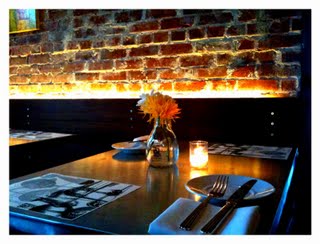
We eat out… a lot! I like to write about the restaurants we work with, because the chefs we work with are as passionate and dedicated to serving wonderful food as we are about growing it. One of the great rewards of what we do is getting to see how our hard work to grow food is transformed by their hard work in preparing it.
A seat with a view…
FnB = LuV
Nobuo… we missed you!
I would eat here again in a heartbeat!

I hope you enjoy reading!
Town & Country Shopping Center
Wednesdays from 8:30am to 2:00pm
4881 North 20th Street
Phoenix, AZ 85016
Old Town Scottsdale Farmers’ Market
Saturdays starting October 29th, 2011
From 8:00am to 1:00pm
Located on the Southwest corner of 1st Street and Brown in Scottsdale.
Brown is one block East of Scottsdale Road. 1st Street is two blocks South of Indian School Road.
In the interest of full disclosure, yes, I write about restaurants that we work with. We pay for all our meals at these restaurants. They do not pay me to write about them.
Sunny news…
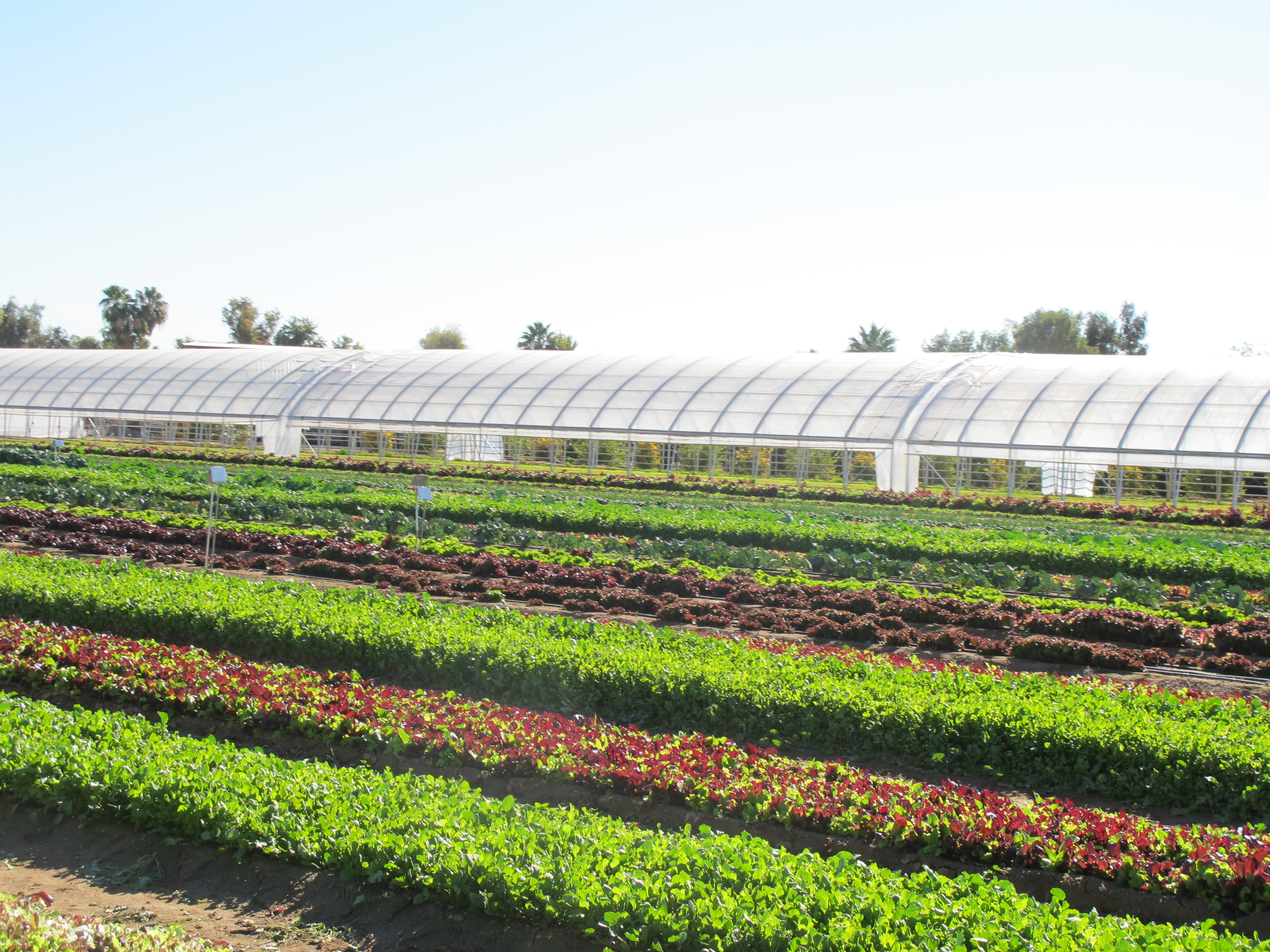
Do you want to know the best part of all of this lovely weather we have been having? Sure the farm looks lush and green right now, but all of this sunshine has made us even greener. I don’t know what has made me happier… that our last bill from SRP was ZERO thanks to our new solar panels from Royal Solar, or that our carbon offset was 3.14 tons for the month of December, or the equivalent of 81 trees. To date since the system went in, the panels have produced 13.5 MWh, which could power 445 houses for one day, meaning our total carbon offset since this began is 9.30 tons or 238 trees. In fact our bill was better than zero, we have a credit now. This last month the panels put energy back into the power grid after providing the farm with all of the power we needed. Love that!

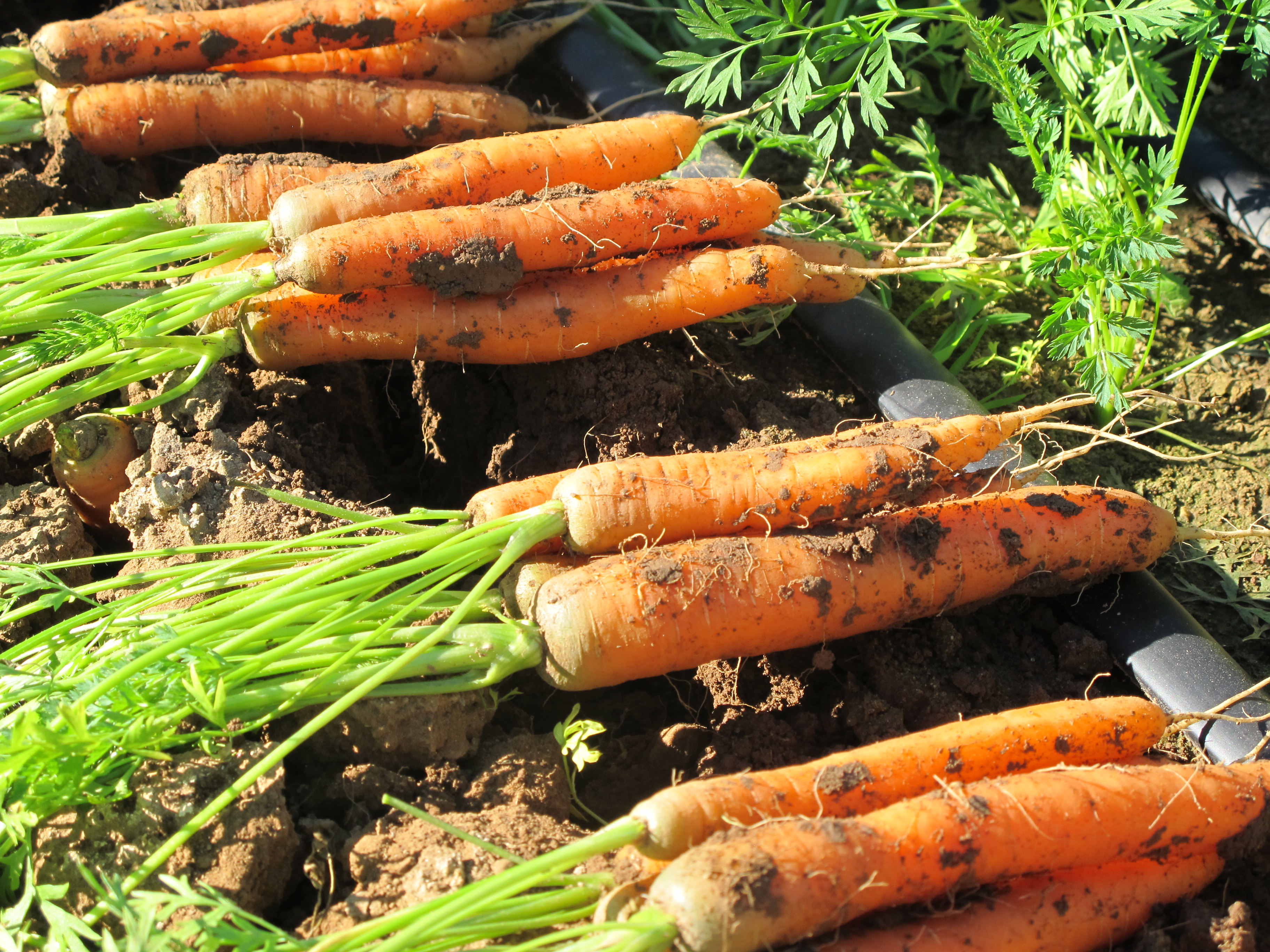
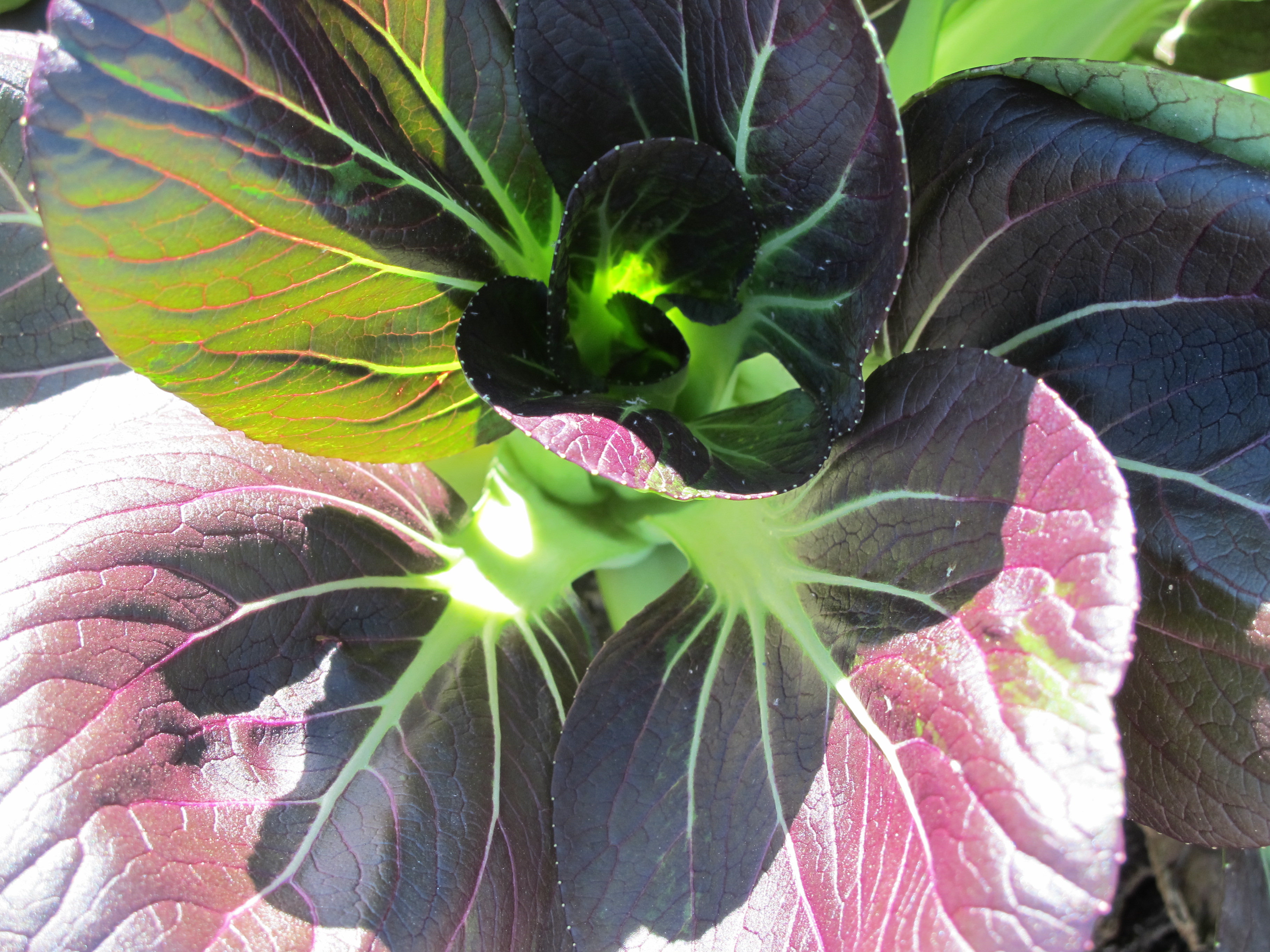
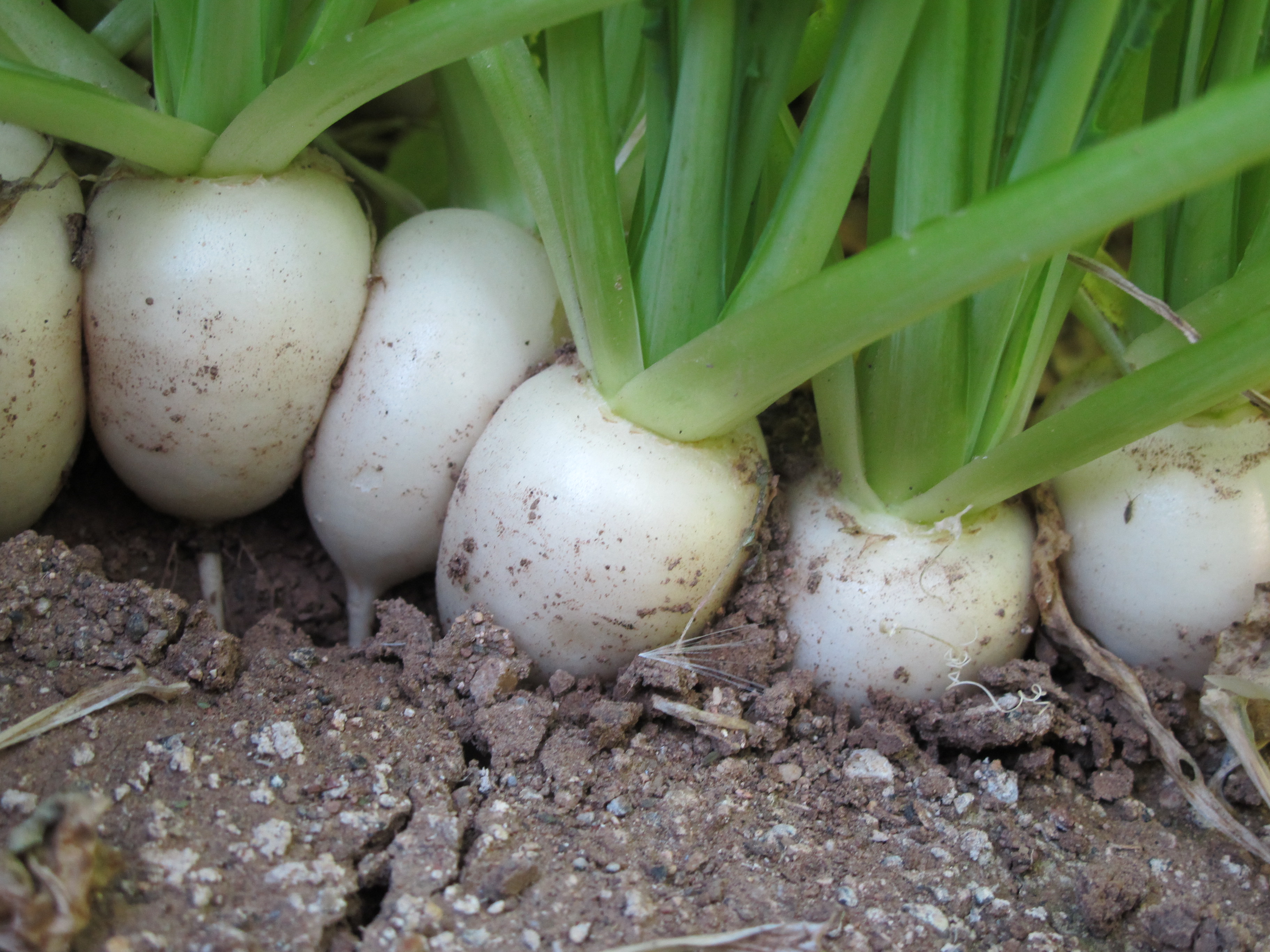
Here is a little sampling of what else the sun helped with…

And my morning snack…



 McClendon's Select