Drink to good health… (Part One)
I had the honor of being invited to a Bloggers Summit last week at the Cancer Treatment Centers of America (CTCA) in Goodyear. The event they hosted brought in bloggers from around the country who write about their experiences with fighting cancer. Some were survivors, some were caregivers, all were incredibly knowledgable and inspiring. In the little bit of time I got to spend with them I was touched by each of their stories. Cancer had reeked devastation in all of their lives, and yet they were positive, passionate people, each motivated and driven to share their journey and what they have learned. Among those I met was a widow who helps others navigate the maze of information and technology relating to cancer, a caregiving husband who has nursed and advocated for his wife through cancer twice and is about to publish his first book, a poised, well-spoken sixteen-year-old who has battled brain cancer and is now a patient advocate, and a colon cancer survivor in her early twenties who is now in medical school. The entire group was well-informed and articulate about diagnosis, treatment, the realities of cancer. I joined the group during their tour of the CTCA facility and was in awe not just of their questions, but of the straight-forward answers they received in return. I was again impressed by not only the work done at the CTCA, but by their ability to be both efficient and professional while also being compassionate and direct. The passion of the bloggers was matched by the passion from the CTCA staff. No subject was left off of the table, and no question went unanswered.
Chef Frank Caputo was on hand throughout the day discussing his role as chef at the hospital and how he is involved with a patient’s care. He also created an amazing lunch for all of us that was like nothing anyone had seen before in a hospital setting including a fresh green bean salad, tomatoes stuffed with quinoa, a melt-in-your-mouth turkey breast, wild rice with walnuts and sautéed apples, and a field green salad. As with every meal he prepares, he had reduced the fat, sugar and salt and left the fresh flavors and nutrients for a meal that not only satisfied, but left me feeling energized. I was truly touched at his response, when after listening to one survivor talk of her struggles with getting enough fiber in her diet after cancer had taken a section of her large intestine, Chef Caputo thought for a moment and then told her he had a solution. He returned to the room with a smoothie he created just for her, to help give her the fiber her body needs, while making sure it would be something she would digest (and enjoy) as well. His gesture did not go unnoticed throughout the room, it was exemplary of the dedication to patients and their well-being that CTCA provides.
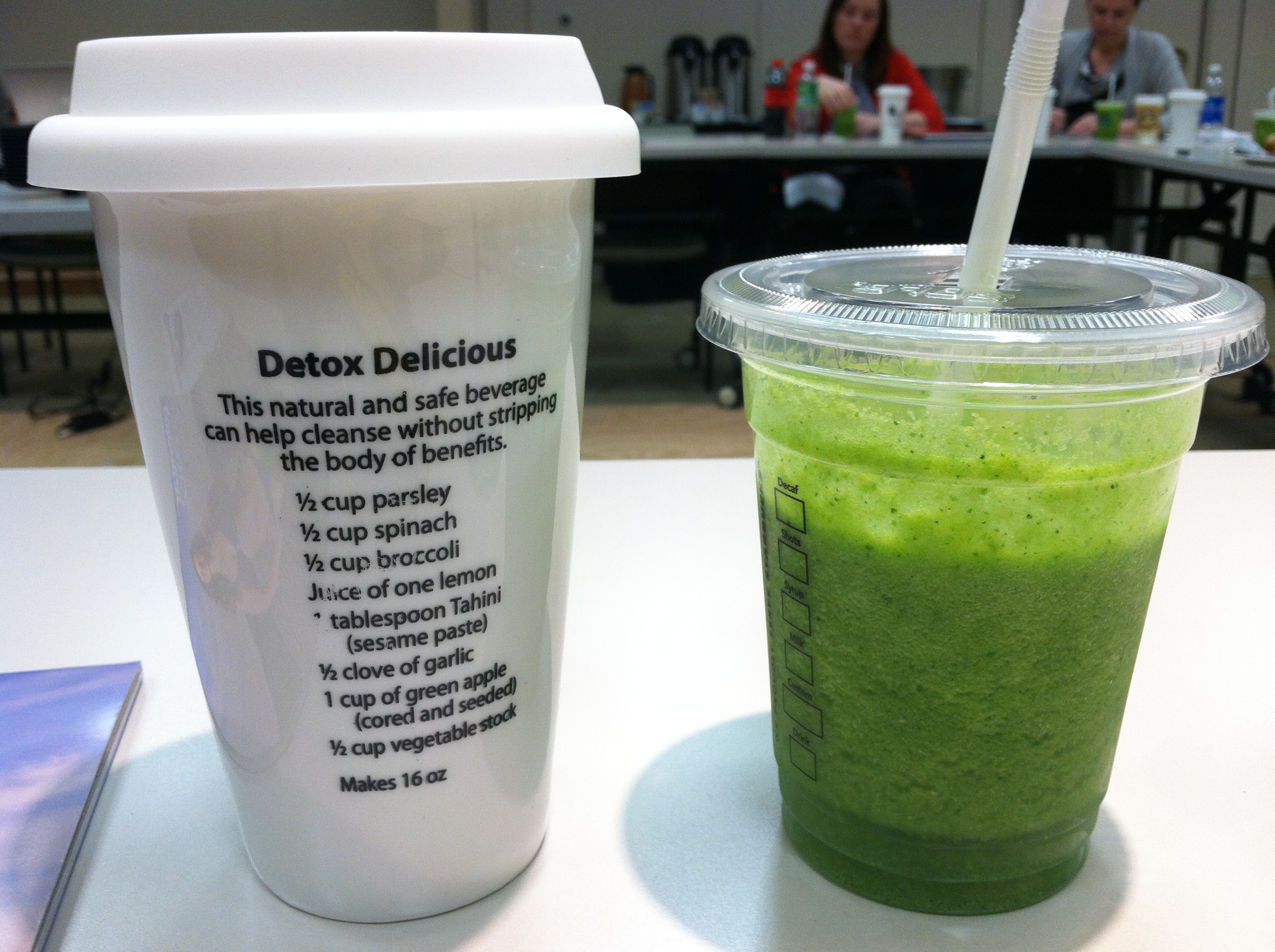
At the beginning of the day, Chef Caputo brought all of us a treat. He had made us each a Detox Delicious smoothie. He told us that over the years they have compiled a book of smoothie recipes that they keep in the kitchen, each recipe is named for a different patient. Since cancer treatments can change a patient’s flavor palate, appetite and metabolism, the chef and his team work with each patient to find out what they are craving and what their diet is requiring. They then create a smoothie for that patient that will be something they will enjoy while giving them the nutrients they need. According to the National Cancer Institute, 40% of cancer deaths are attributable to malnutrition. One survivor in the room mentioned that during her treatment almost all foods tasted like motor oil to her, with the exception of lemons. Lemons were one of the only flavors that she could still taste. This is the kind of thing that Chef Caputo takes the time to find out, so that he can create a drink that a patient will not only be able to taste and enjoy, but will give them what they need to continue their fight. He keeps this book of recipes so that when a patient returns, he can have their smoothie ready for them.
In Ricardo’s Cafe at the Cancer Treatment Centers of America there are five smoothies available for all to enjoy. They generously shared their recipes for me to post on the blog. Here are the first two, I will share more in a coming post.
Enjoy in good health!
Detox Delicious – designed to help the body cleanse naturally without stripping the body of benefits
1/2 cup parslep
1/2 cup spinach
1/2 cup broccoli
Juice of two lemons
1 Tablespoon tahini (sesame paste)
1 clove garlic
1 cup of green apple (seeded and cored)
1/2 cup vegetable stock
Makes 16 ounces
Super Greens – high in antioxidants and phytochemicals
1 cup raw kale
1 cube of frozen wheat grass
1 cup of fresh spinach
1 cup of fresh watercress
1 cup of fresh green apple (seeded and cored)
1/2 cup fresh broccoli
1 cup vegetable stock
Makes 16 ounces
Cancer Treatment Centers of America
at Western Regional Medical Center
14200 W. Fillmore Street
Goodyear, Arizona 85338
623.207.3000
www.cancercenter.com
Wished you were here…

The “Farmer+Chef+WineMaker=Connection” was held on the farm this past Sunday with an amazing dinner put on by Charleen Badman and her incredible crew from FnB and Sam Pillsbury pairing the courses with some of his wonderful wines from Pillsbury Wines. The event started with an afternoon tour of the farm, giving the guests a chance to see the gardens, fields, and green houses here, and was followed by a reception and dinner out in the backfield by the high tunnel and all of the tomato plants. There was a lot to be learned and more to be enjoyed.


And it was just so much fun. Charleen’s food and Sam’s wines are perfectly matched. Every course was inventive and had produce just picked from the farm. It was fun to see so many colors and flavors fresh from the fields coming together on the plate. There were combinations that I had never tried before, like grapefruit with white beets and pistachios that I loved. The courses seemed unending… a savory bread pudding, freekah with fava beans, citrus marinaded quail, a roasted lamb that was out of this world, Gilfeather rutabaga, pickled veggies and a blood orange salad. I know I am not remembering all of the courses. I would have written them all down, but I was too busy enjoying them. They had a cheese plate like the one I fell in love with at Baratin and a Meyer Lemon cake for dessert that elicited raves from the guests.
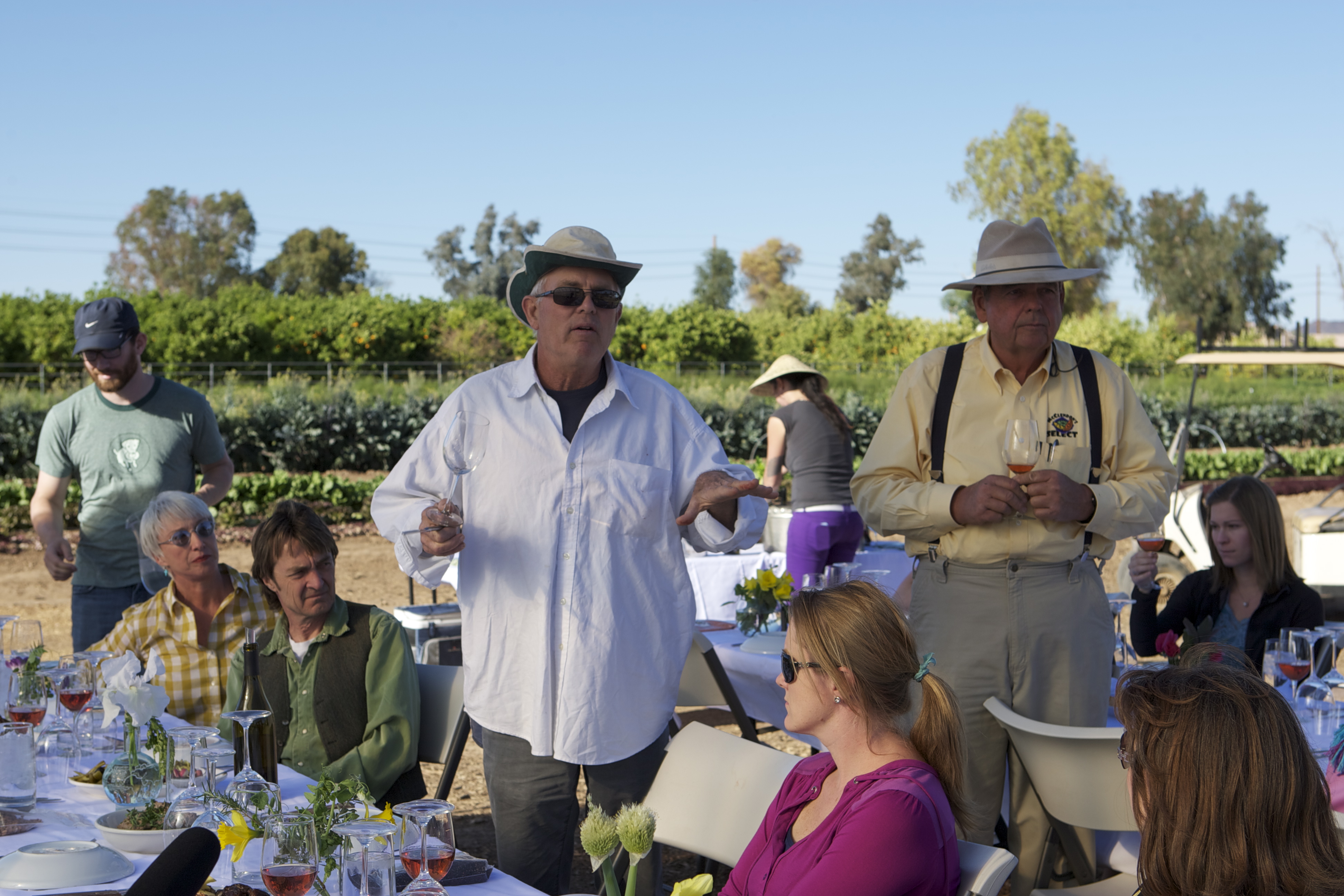
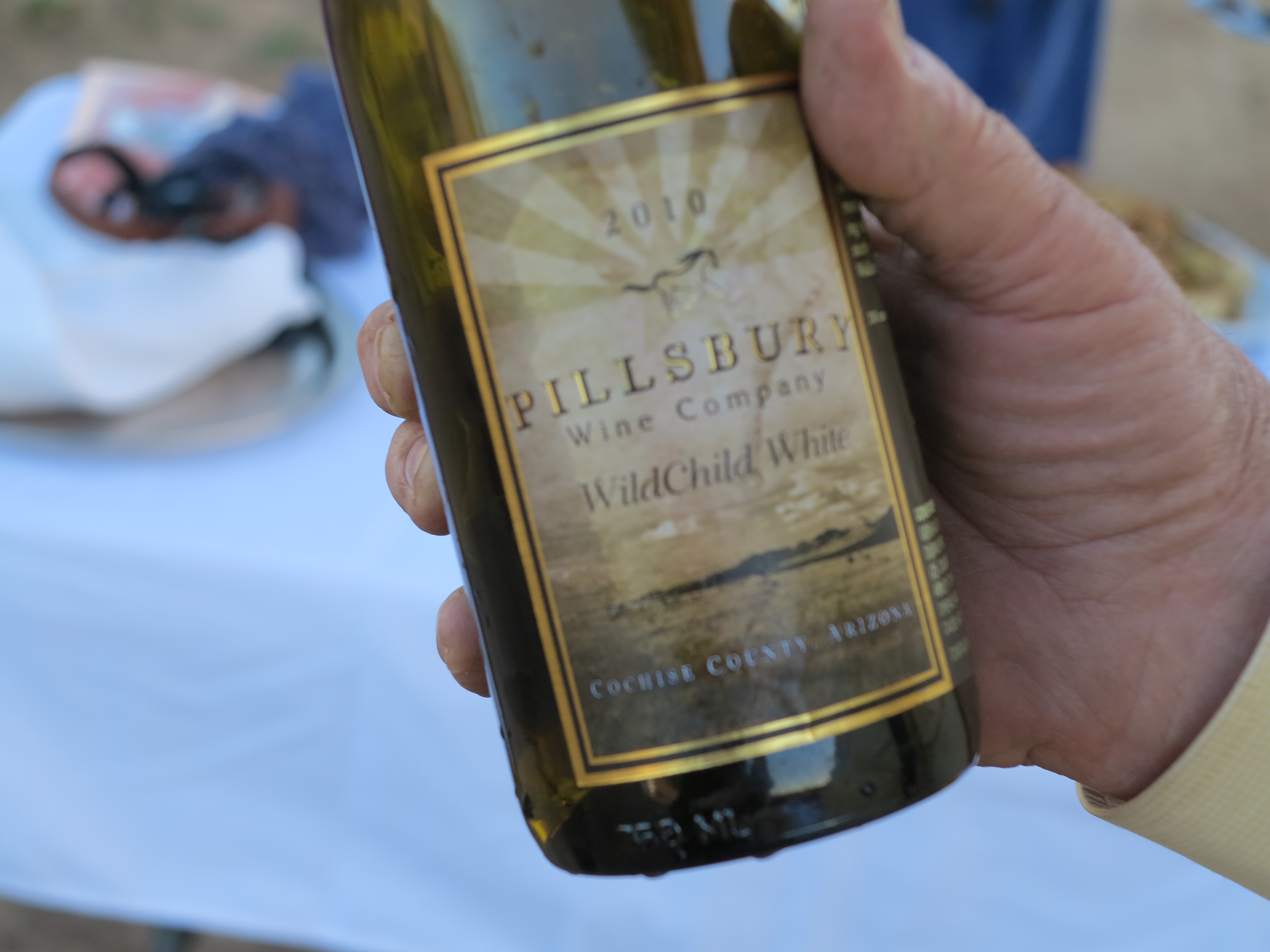
Sam had a different variety of wine for each new course, along with a little information about how it was produced. It is wonderful to enjoy wine of that caliber produced right here in Arizona. If you haven’t tried Pillsbury Wines, make sure to stop by when you are at the Old Town Farmers’ Market next time and pick up a bottle or three. His WildChild White is a personal favorite. His wines are served in many of the best restaurants around town and are also available for sale throughout the Valley at many local markets and wine stores.
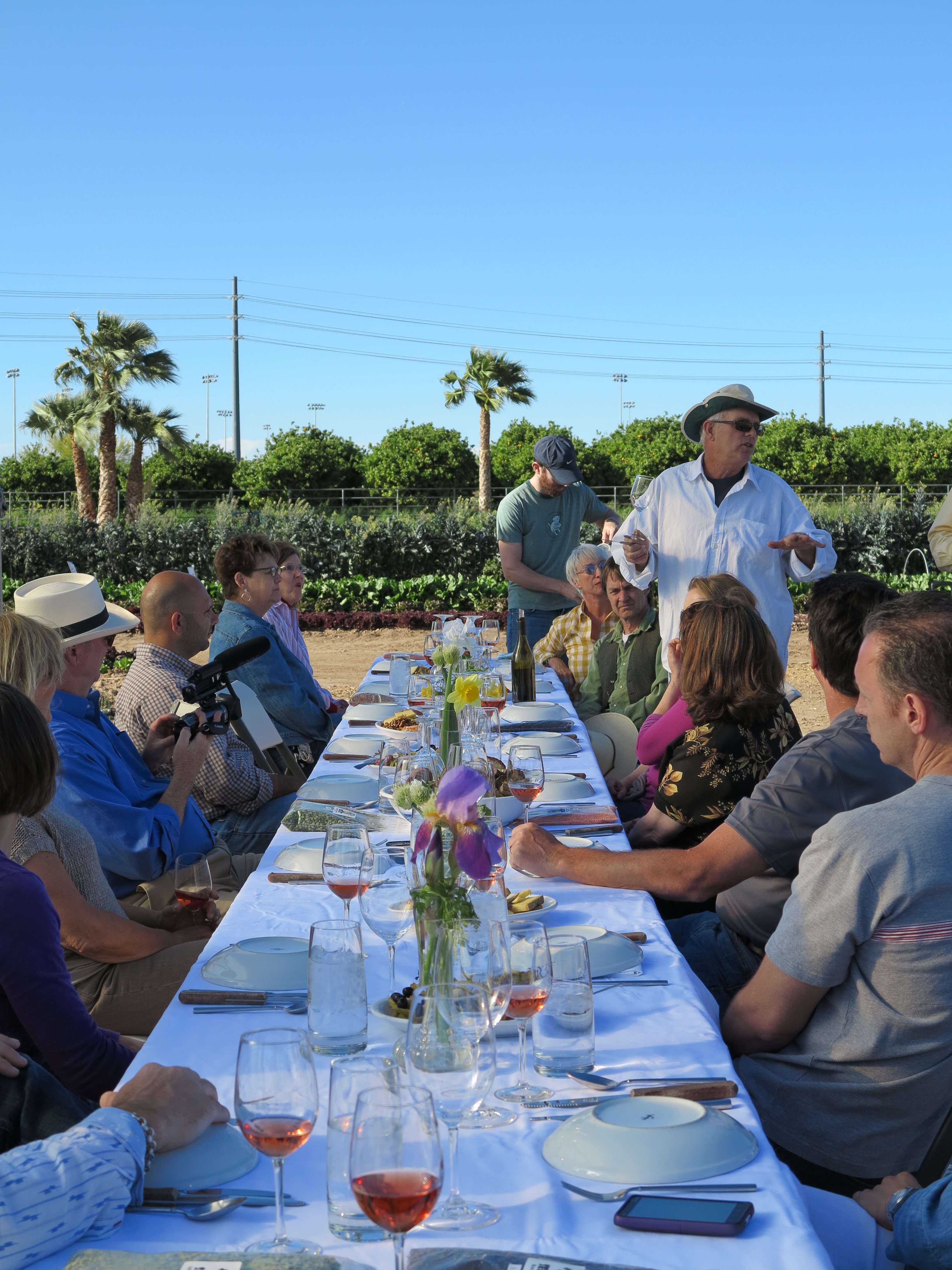
It was wonderful to see how the combined passion of growing, producing and cooking could come together to create such a special evening. Here is a little sample of what you missed…



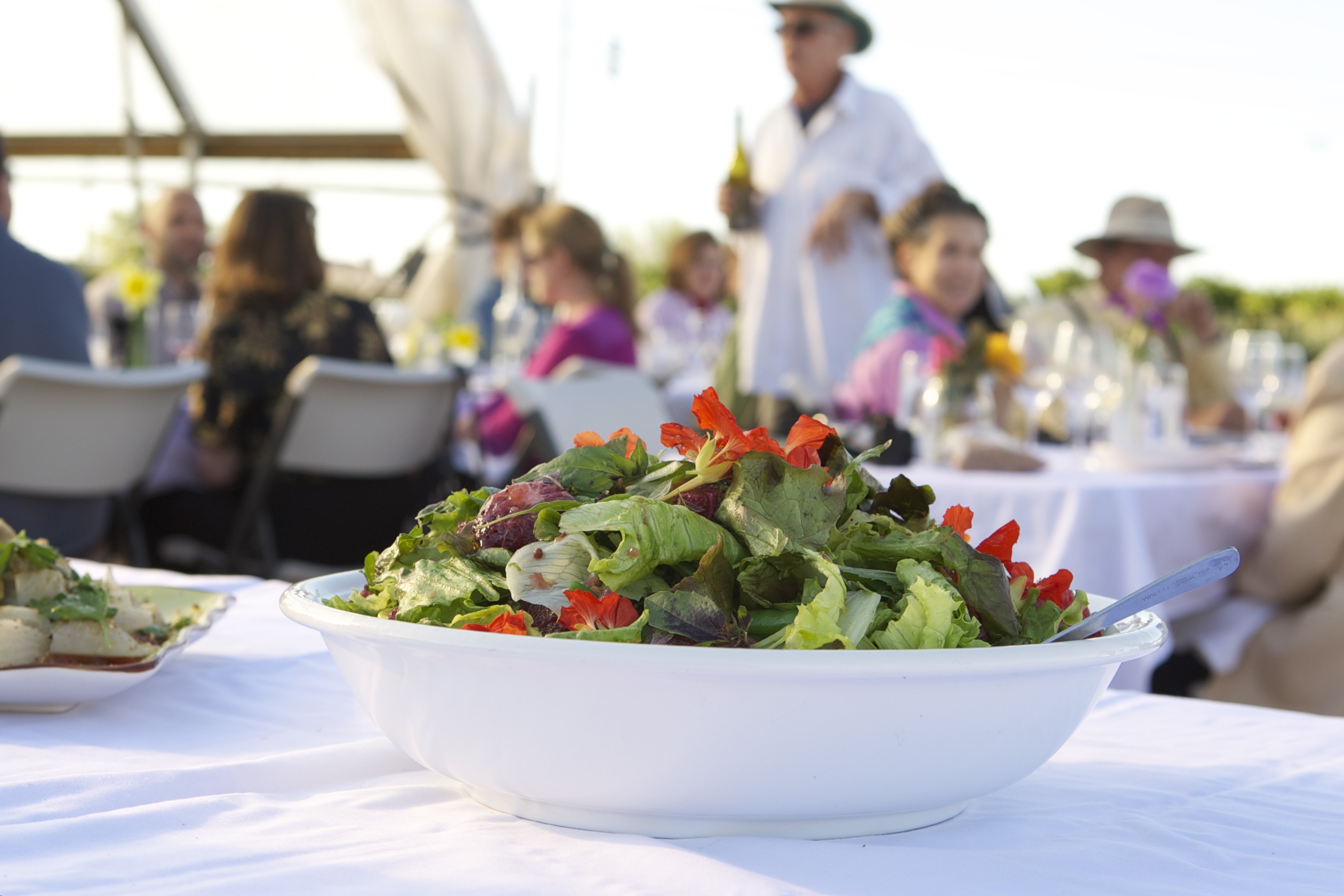


This was our first dinner like this and it was a resounding hit. Much thanks to Charleen and everyone at FnB and to Sam Pillsbury. We plan to do future events on the farm highlighting the seasons and the talents of the different chefs we work with around the Valley. I will keep you updated on upcoming events and hope that you can join us. Stay tuned!!
FnB Restaurant
7133 East Stetson Drive
Scottsdale, Arizona 85251
480.425. 9463
www.fnbrestaurant.com
Pillsbury Wine Company
480.773.4488
www.pillsburywine.com

Dating game…
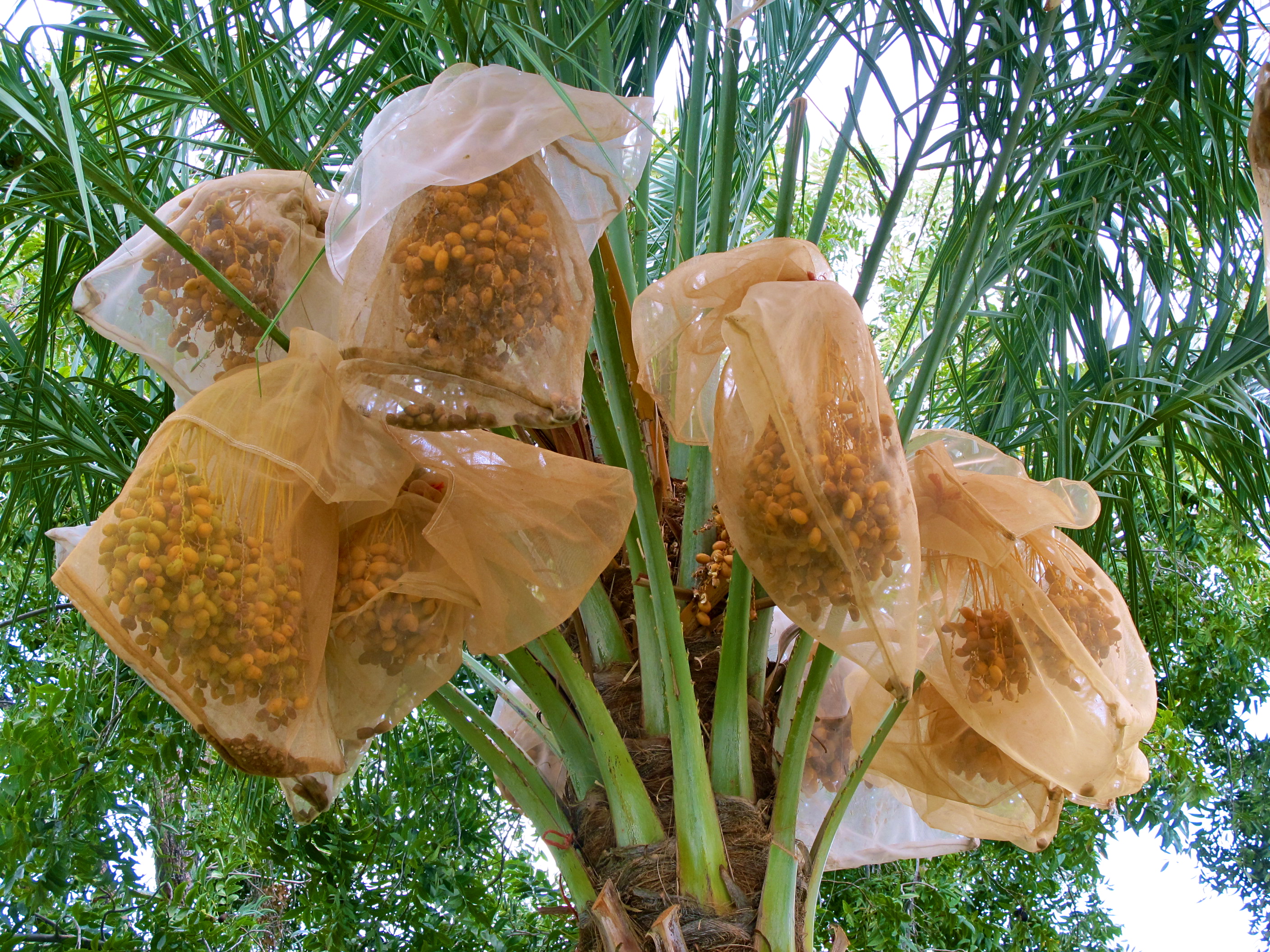
Spring has definitely come to the farm. Marsha’s iris plants are in their full purple glory, the fava beans are in their fat green pods heavy on the vine, and the roar of spring training games can be heard in the back field.
Another spring ritual was also taking place this morning. Sean was helping along with a little budding romance, so to speak.
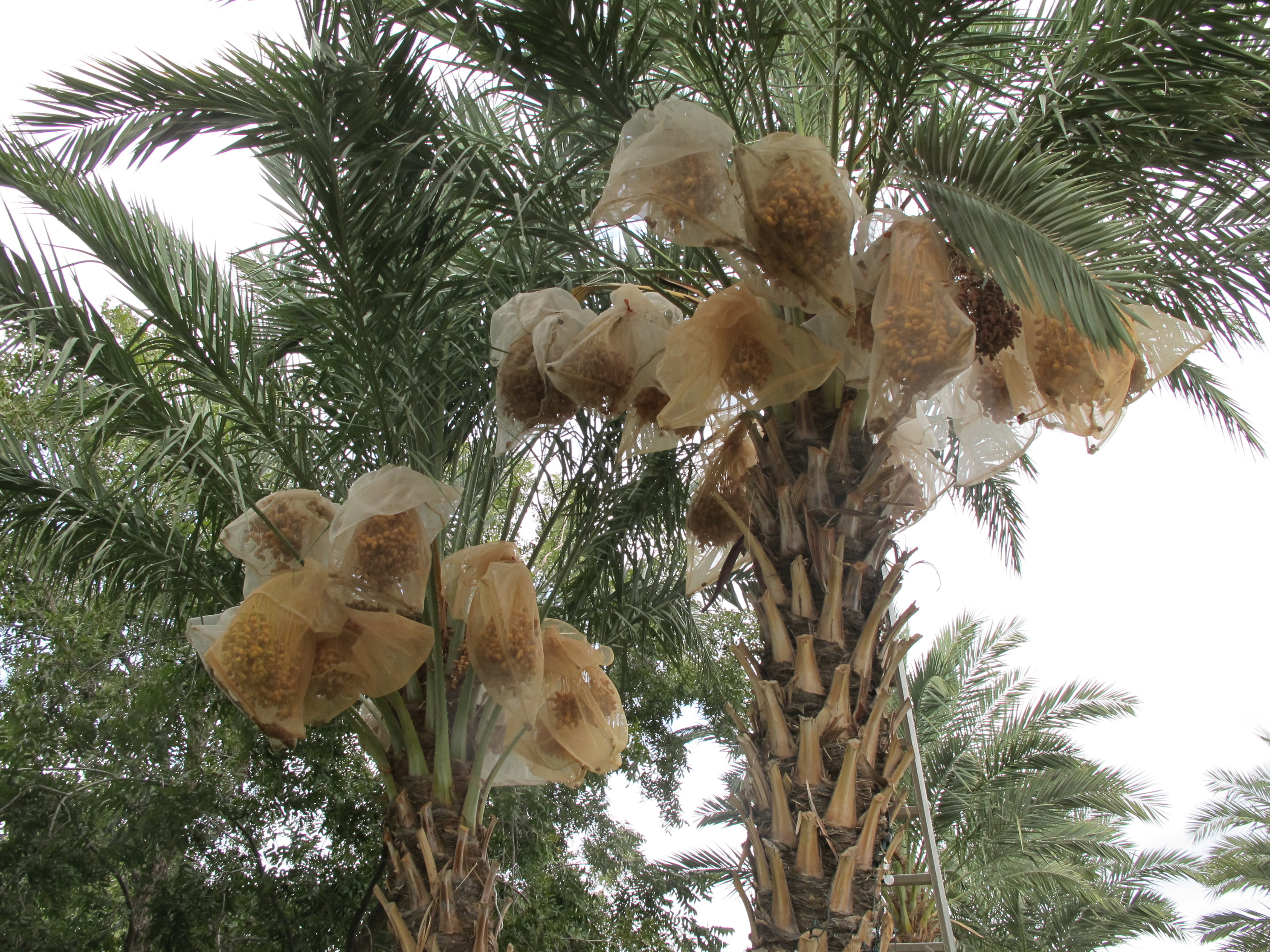
Every year around this time bees go nuts around the date palms. We have two male date palm trees in the orchard that are in bloom at the moment, and rather than wait for nature to take its course, we are having to help out a little.
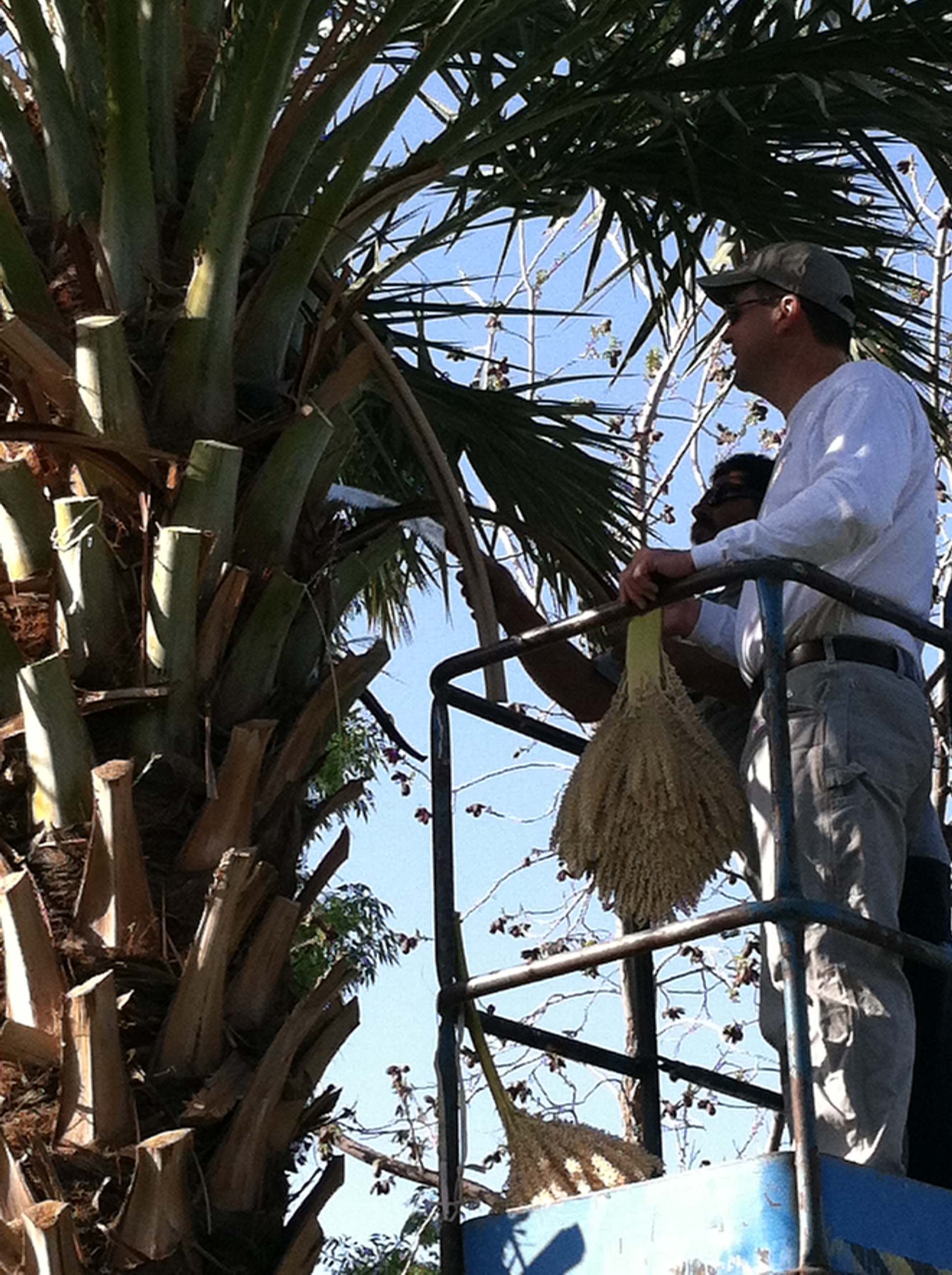
Date trees are traditionally wind pollinated. However, this only works if there are the same ratio of female to male trees. Since only female trees bear fruit, we can have a more abundant harvest by having more female than male trees planted. One male tree can pollinate up from 50 to 100 female trees with a little assistance. The bees do their part too in spreading pollen, but only to a point. The bees work also better when the ratio is even. So, this morning, Sean was helping out with in the dating game.
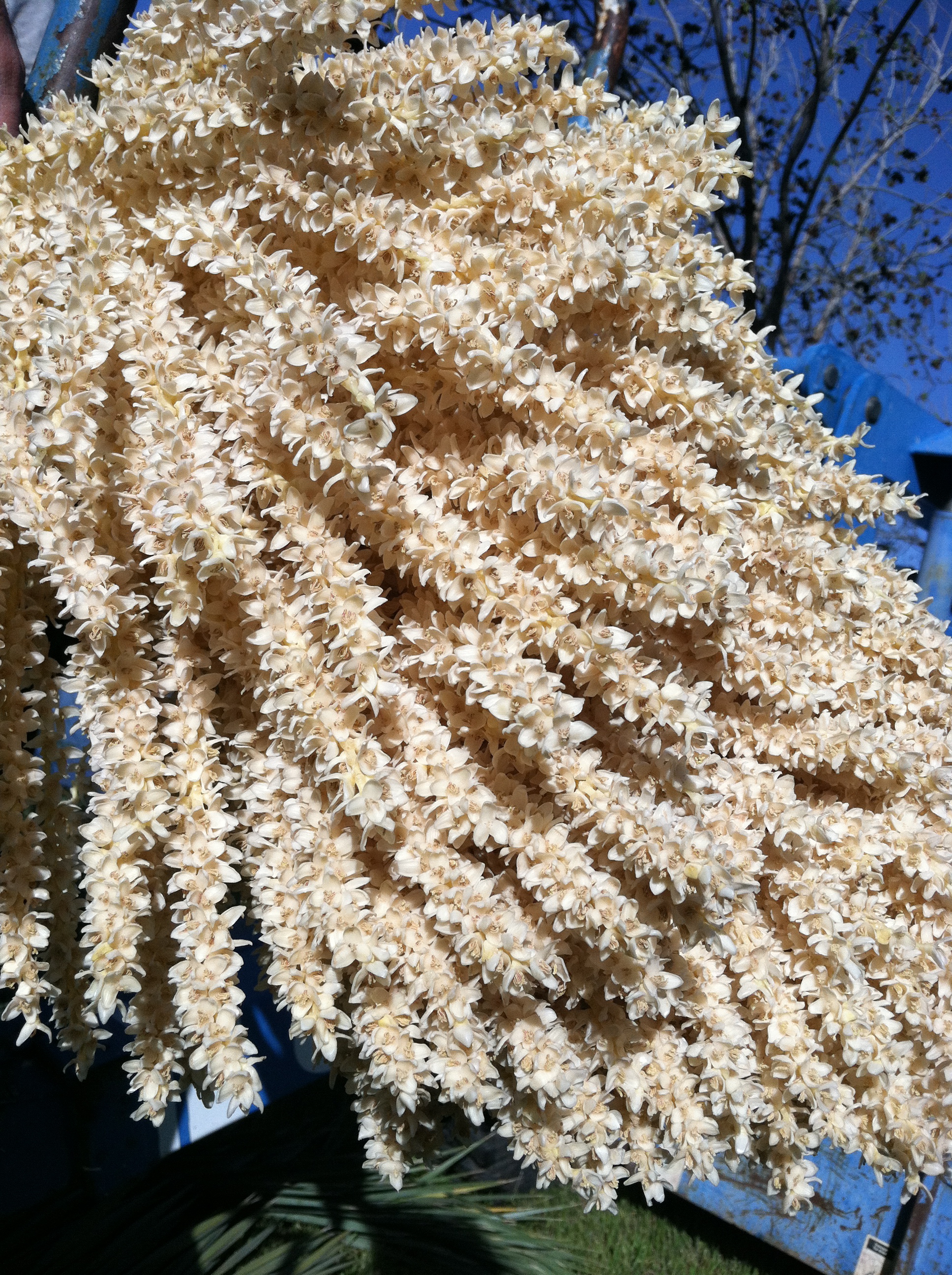
Both the male and female buds on a date tree are called spath, and they open naturally when they are matured. To manually pollinate the date trees, Sean had to first cut the spath from the male trees. In some areas of the world where dates are grown, pollinating and cultivating date trees involves the agility and skill to climb a 60-foot ladder balanced or tied to a tree, while carrying a machete to trim the tree while making the ascent. Once at the top of the tree the palm fronds in the way need to be trimmed, since they have razor-like thorns that will slice your hand. Sean thankfully was able to use a genie lift instead going up a ladder with a machete. I was grateful for that.
Once he has the spath from the male tree, he then uses the genie lift to reach the top of the female trees and then the pollen is shaken over the spath in those trees. It looked like yellow puffs of smoke up in the trees.

Dates have been a diet staple in the Middle East for thousands of years. They are believed to have originated in the Persian Gulf region. There is evidence that date cultivation goes back as far as 6000 BC. Later traders spread dates into Northern Africa, Southern Europe and Southeast Asia. They were introduced to Mexico and the U.S. in the 1700s. The uses and roles of dates in history are as varied and widespread as their nutritional benefits. Ancient Egyptians used dates to make wine and medicines, some Arab cultures would grind up the date seed to use as a flour for breads, others would cook the leaves from the palm hearts and eat as a vegetable. Their importance was such that the date motif has been incorporated into historic and decorative symbols from the mosaics of Byzantine Rome, to the Dome of the Rock in Jerusalem and the Great Mosque in Damascus. The Saudi Arabian royal emblem has a date palm in its center. Date palms have also been recognized across different faiths with mentions throughout the teachings of the Jewish, Islamic and Christian religions. The upcoming Palm Sunday owes its name to the fourth century observances in Jerusalem, where the faithful gathered on the Mount of Olives and proceeded through the city carrying palm and olive branches.
With their ability of flourish in dry climates and to keep for long periods of time when dried, dates were a necessary staple for survival. High in fiber, iron, calcium and more potassium than bananas, they are wonderful for muscle development. They have also been cited as having a number of medicinal benefits and are apparently good for curing a hangover when they have been soaked in water overnight.
With all of that said, I am glad Sean was able to help the date palms along this morning. Because dates are also pretty tasty with a little blue cheese, honey and a nice glass of wine.
Farm Dinner with FnB and Pillsbury Wines… April 1st

You are cordially invited to a Farmer + Chef + Winemaker = Connection dinner!
We are excited to invite you to our first dinner on the farm with FnB and Pillsbury Wine Company on Sunday, April 1st. In celebration of spring we will be hosting a tour and dinner highlighting the beautiful bounty of the season and inviting you to come enjoy our veggies while dining on the farm.
We will start with a guided tour of the farm with Bob, Sean and Aidan, followed by a reception and a multi-course feast prepared by Charleen Badman and Pavle Milic from FnB. Sam Pillsbury from Pillsbury Wine Company will be pouring local wines from his vineyard.
Arrival Time: 2:00pm
Guided Tour: 2:30pm
Reception: 4:00pm
Dinner: 4:45pm
Location: McClendon’s Select Farm – near 75th Avenue and Bell Road
Cost: $180/per person (includes tax and gratuity)
Hurry – space is limited to 30 guests!!
Call Pavle at 707.206.2919 to make your reservation. For more information, you can go to the events section on FnB’s website, here. We look forward to seeing you on April 1st and to celebrating spring on the farm!
*Casual, farm attire encouraged… comfortable walking shoes are best.
Believe it…

Charleen Badman and Pavle Milic have created FnB into a magical little gin joint in Scottsdale that serves dishes so delectable that they have garnered national press and a crazed following. (Myself included.) One more than one occasion, I have found myself wishing that Charleen’s jidori chicken would just appear, or that leeks would stay in season forever so I can again order the braised leeks with mozzarella. Her butterscotch pudding, well, that speaks for itself. And you don’t even want to know what she is doing with brussels sprouts right now, because if you did you would have to go and have them, twice, like I have in recent weeks. (Here’s a hint, they are roasted with a balsamic and grapes.) But it is more than just what they are serving there that keeps me coming back, it is the whole atmosphere. They all just seem to love what they do. It doesn’t feel like they are waiting on customers, but more like they are trying to make sure all of their guests are having fun at the party. There is just something bewitching at FnB that will cast a spell that lasts long after your meal.
Apparently I am not the only one who feels that way, because since their opening Charleen and Pavle have received question after question begging to know where to buy a jidori chicken, or leeks, or her butterscotch pudding, for those nights when a reservation is not to be had. And, for that matter, where did Pavle find that wonderful local wine? And what about those freshly made donuts and honey lemonade they used to have at the Old Town Scottsdale Market? Since they opened their doors, there have been many wanting to know how and where to find some of the local goodness that FnB serves up. So, in their continuing manner of being the hosts with the most, Charleen and Pavle have opened not one, but THREE new places to help satiate their loyal fans.

Right around the corner from FnB, you can now take a short walk (four minutes by Charleen’s count) to their new ventures, Bodega, Baratin and AZ Wine Merchants. Just as you would expect from Charleen and Pavle, these three concepts are the perfect pairing to what FnB is serving. And just like FnB, they play so well together and have that same happy atmosphere that guarantees a good time. Both Charleen and Pavle pride themselves on sourcing as much as they possibly can from local sources. They don’t just buy locally, they want to know the farmer, producer, creator behind the products they are using at the restaurant. Charleen is at the farm frequently out communing among the Gilfeather Rutabaga (a crop she introduced to us) and the leeks (a crop she has helped make popular at the markets). And Pavle is not just a connoisseur of local Arizona wines, he is their champion, bringing well-deserved attention to Arizona wineries that are producing noteworthy vintages. And now with Bodega, Baratin and AZ Wine Merchants, you too have a source for the best local items Arizona is producing.


AZ Wine Merchants is Pavle’s personal wine selection that he has curated with local Arizona wines on one side, and imported half-bottle selections on the other. Pavle, and business partner Brian Reeder, have selected interesting wines that will change regularly. Pavle has a discerning palate and has found some wonderful local wineries that are creating serious wines right here in Arizona. I have developed a new appreciation for Arizona’s wine producers thanks to Pavle, and it is nice knowing where I can find them now too.


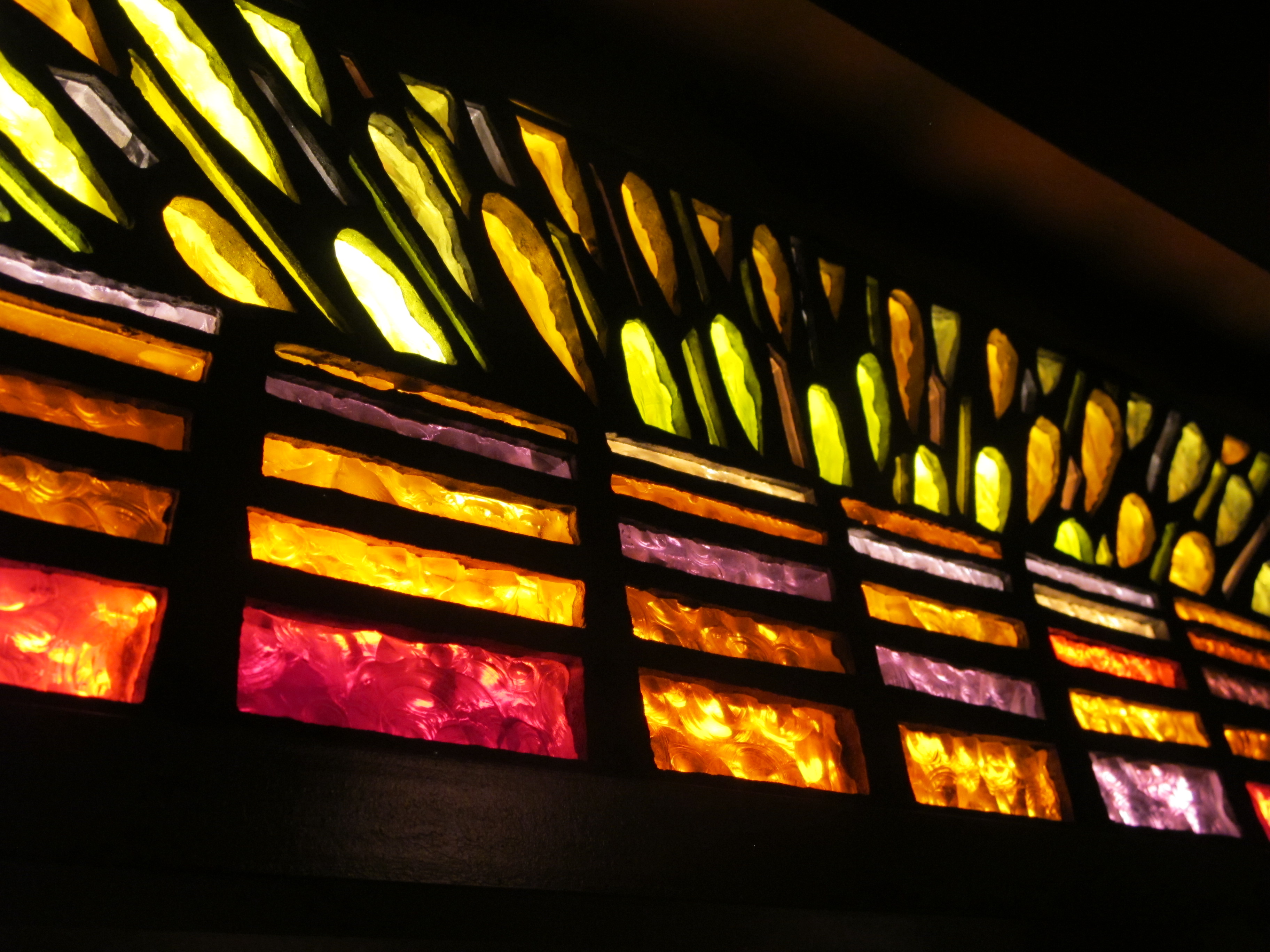
Connected to AZ Wine Merchants by a shared patio, is Baratin, the little sister to FnB. Baratin is a smaller, bistro-like version of FnB, with a limited menu with of nicely-priced items including some of those amazing sandwiches Charleen used to serve at the Old Town Scottsdale market, along with a killer cheese plate, fresh veggies, and some of her famous desserts that change regularly. It is the perfect place to enjoy a glass of wine before your FnB reservation, or to grab a bite with friends before a movie at the Camelview. It is a lovely, warm space that glows at night, and best of all, you can enjoy one of those lovely bottles of wine selected by Pavle, and then buy another one next door to take home.


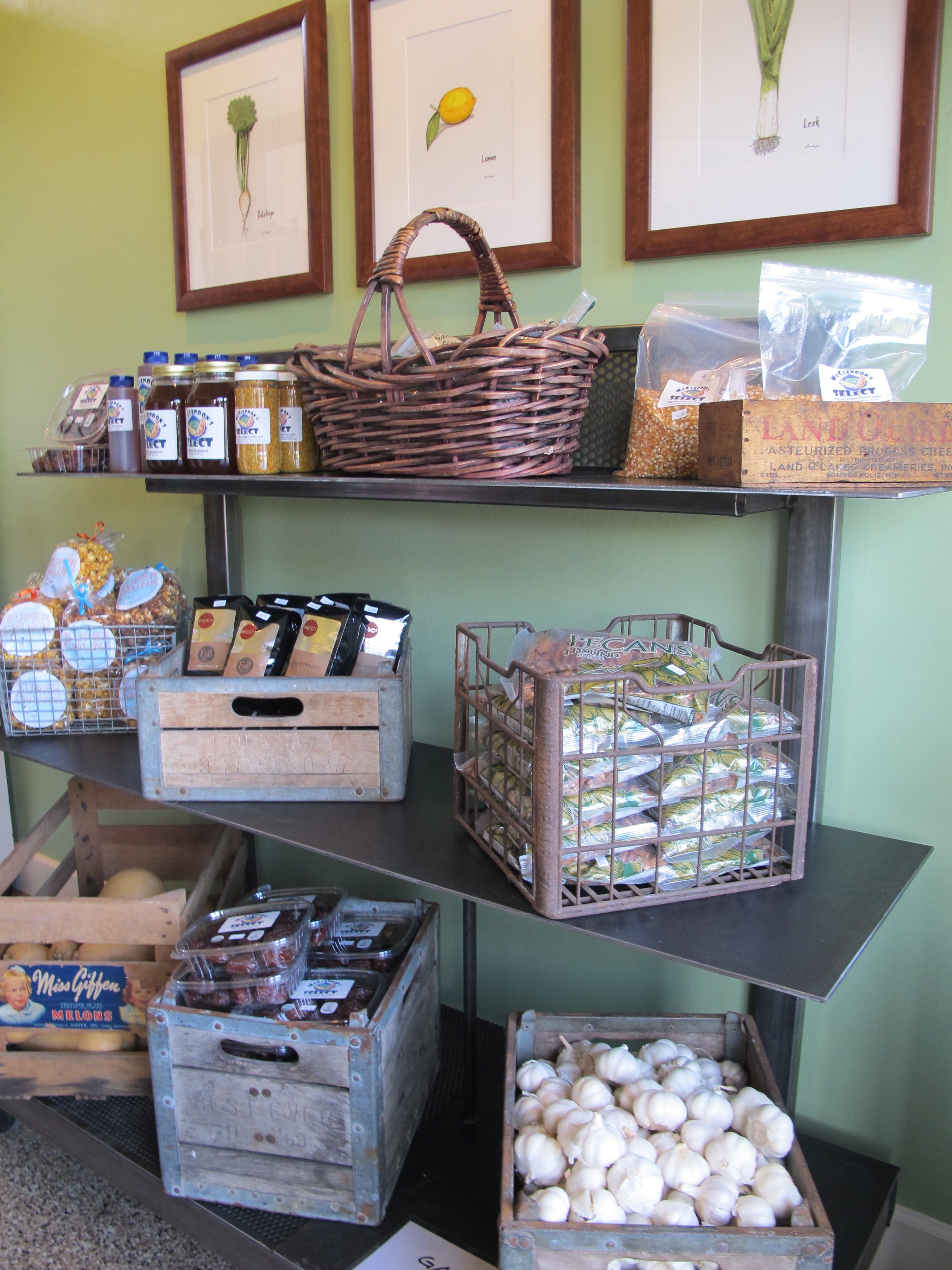
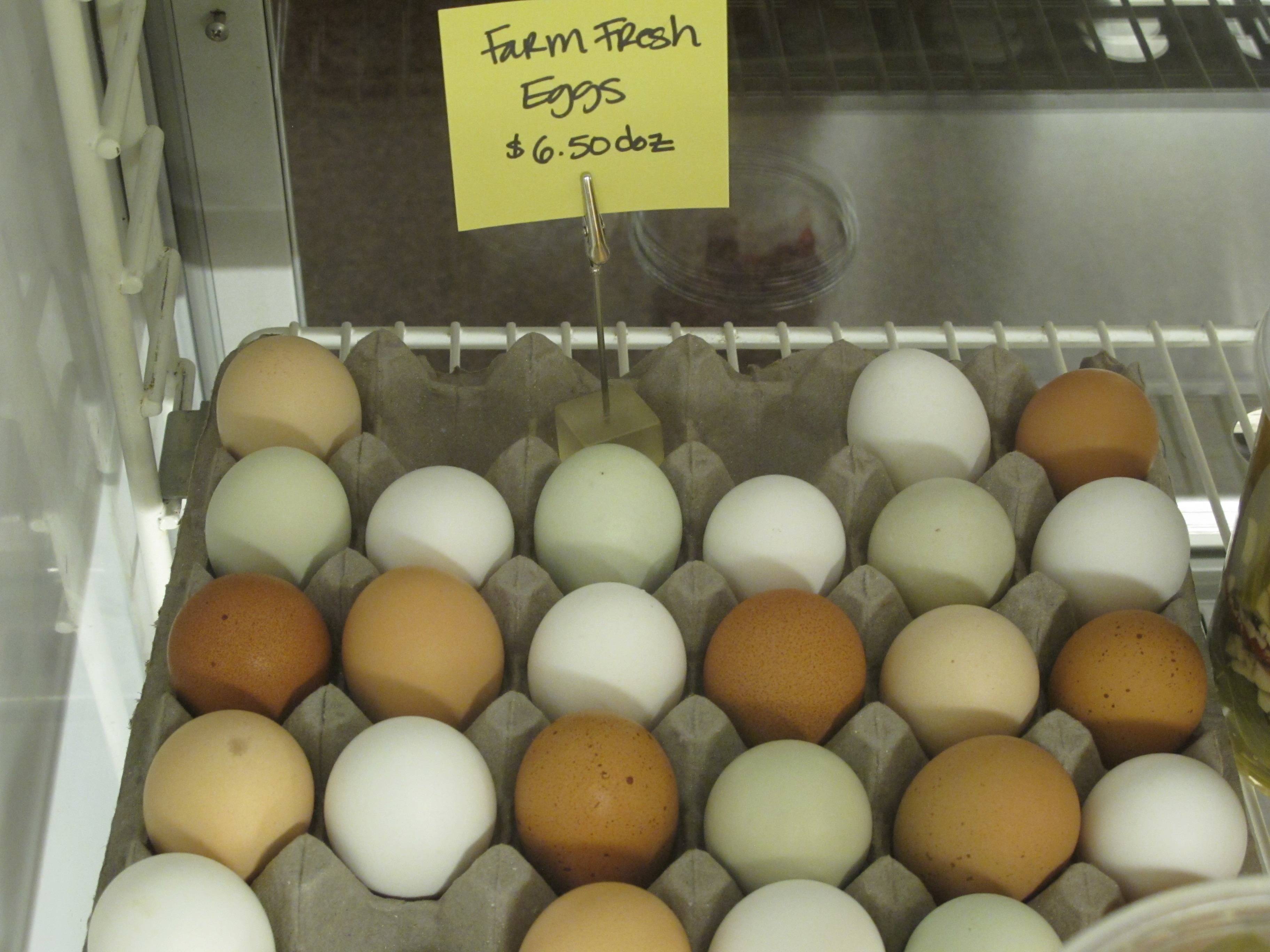
And finally, next to Baratin is Bodega. Named in honor of the corner stores in New York that Charleen loved, she wanted her Bodega to have a little of everything that she uses at FnB. You can find local fresh eggs, an entire meat case with, of course, some jidori chicken, Crow’s Dairy products, Sweet Republic ice cream, Super Chunk popcorn, Rainbow Valley butter, MJ Breads, jars of Charleen’s wonderful preserved lemons, Queen Creek Olive Oil, and…
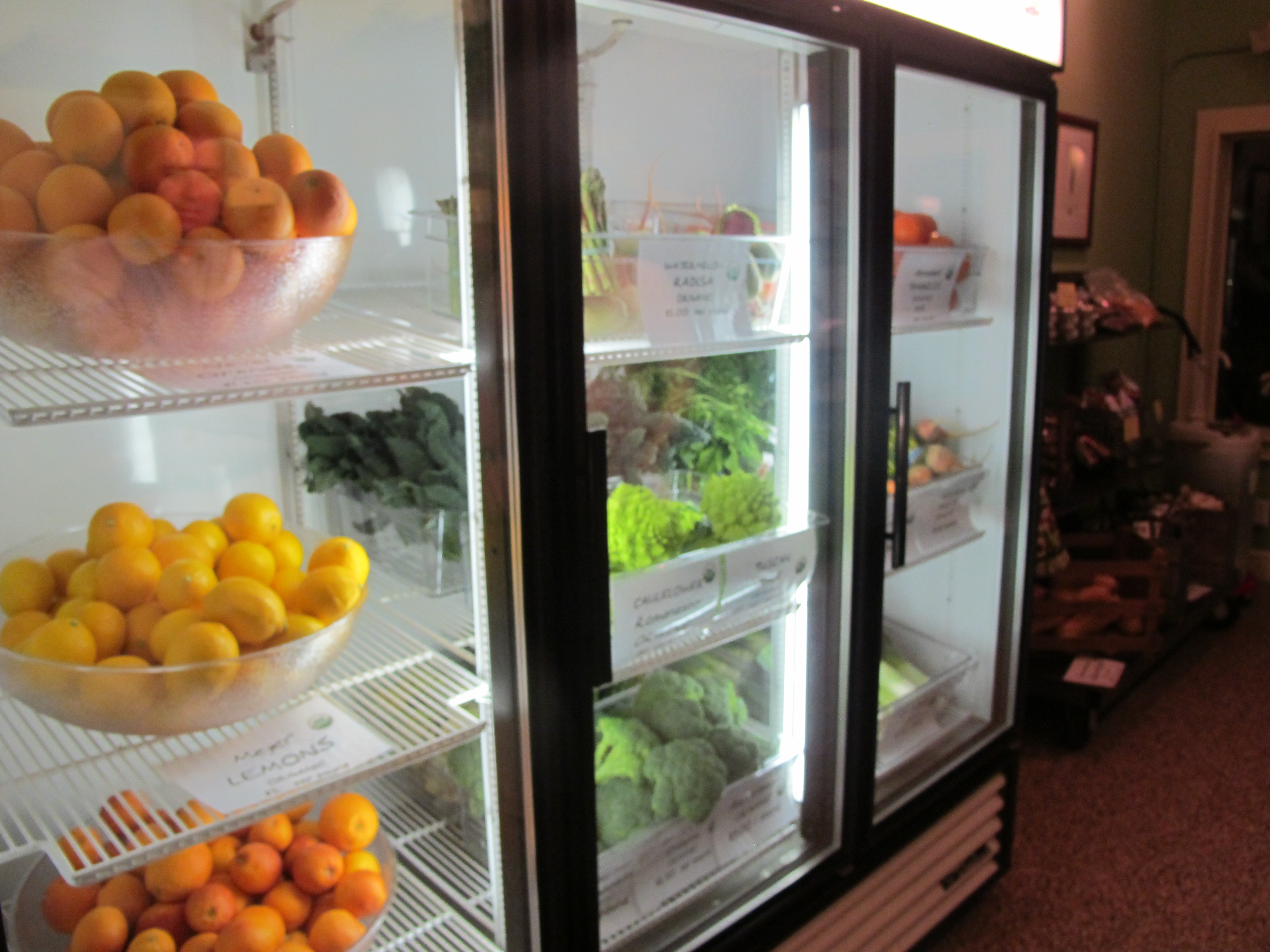
a whole case of fresh veggies from our farm. You don’t even have to wait for a market day to find our produce, dates and beans. Charleen and Pavle never cease to amaze!
AZ Wine Merchants
Baratin
Bodgea
7125 East 5th Avenue
Scottsdale, AZ 85250
480.588.7489
www.baratinrestaurant.com
FnB
7133 East Stetson Drive
Scottsdale, AZ 85251
480.425.9463
www.fnbrestaurant.com
Queen Creek Olive Mill
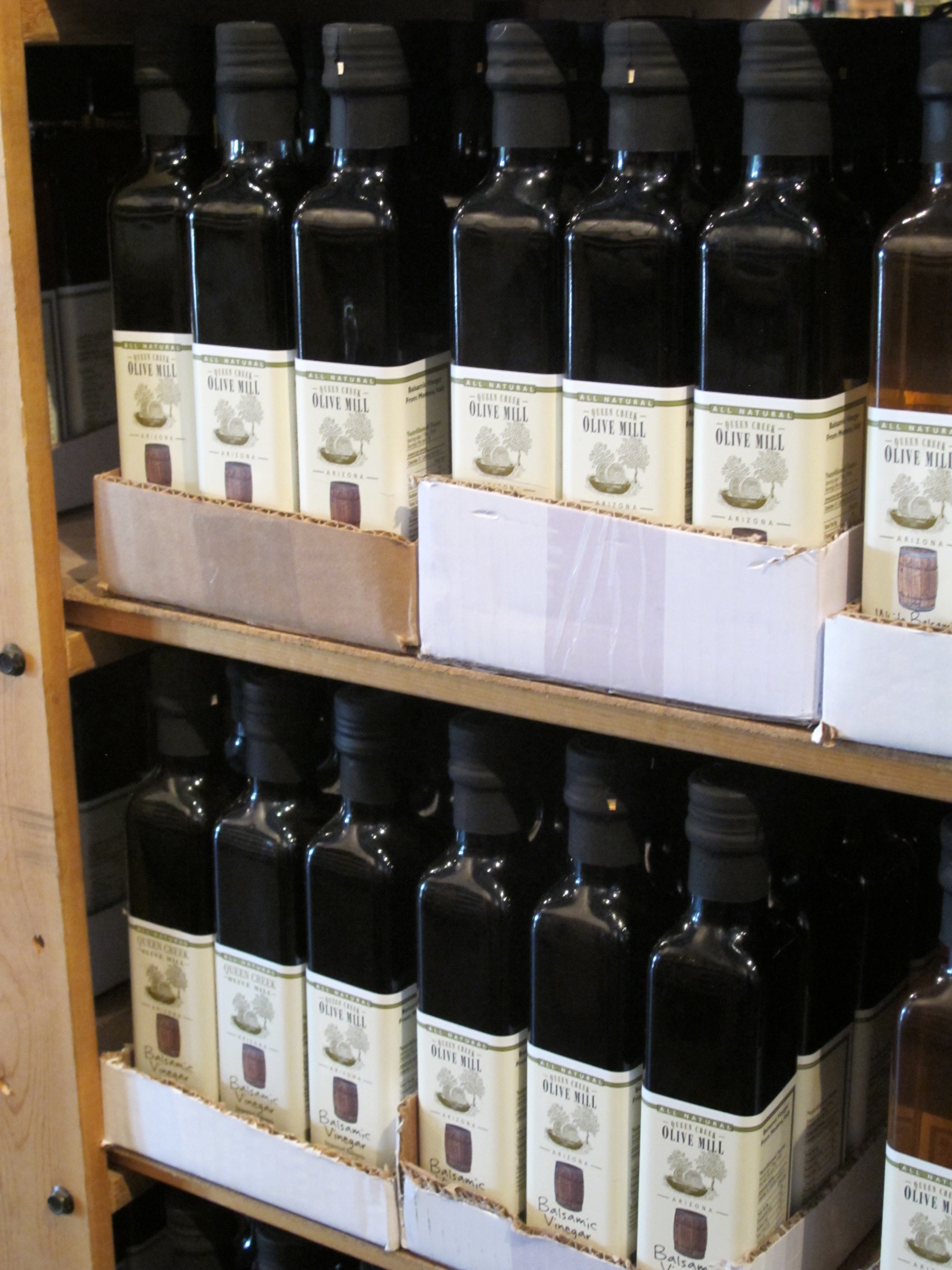
Remember when you could bring liquids on an airplane? In your carry on? That will be my “those were the days” refrain to Aidan someday as I recount how I lugged a case of olive oil (and maybe a bottle of wine or two) home from Italy years ago in my carry on. That olive oil was like liquid gold, rich, buttery and with that deep, distinct aroma of fresh olives. It was too special to be cooked with, instead I used it sparingly, as a dip or dressing, or sometimes just to accompany a really lovely heirloom tomato. A really good tomato and a nice olive oil don’t really need much more than each other.
Of course, you can’t always fly to Italy for your olive oil, and gone are the days of walking on a plane with a case, much less a bottle, of olive oil in your carry on now. However, you don’t really need to go to those extremes anymore, not when you can find a premium olive oil made right in Queen Creek. Arizona now boasts it’s own sublime extra virgin olive oil that has that same heady aroma of rich olives, with a slightly fruity taste and a little touch of pepper direct from Queen Creek Olive Mill. As an olive oil snob, I was so happy to find them.
For the last few years now, I have been obsessed with Queen Creek’s Olive Mill’s olive oil, in fact, at the moment I have no less than four bottles of their olive oils on my kitchen counter. I could say that I like them because they are a small, family-run business (like us), or that they are a local farm (also like us), or that they were featured on an episode of “Dirty Jobs”, Aidan’s all-time favorite show ever. But, in truth, all of that is really just icing on the cake. Queen Creek Olive Mill puts out an incredible line of olive oils that are masterfully blended and have full, rich flavors that work so nicely with all of the wonderful things we grow. I use their olive oils daily for cooking and baking, as well as serving with dishes as a dressing. Their Mexican Lime Olive Oil is my favorite to use on our salad greens. It is light enough to not weigh down the greens or coat them so much that their flavor is lost, but it adds a nice citrusy note that works well on its own or with a little balsamic vinegar. And truthfully, if I am going to serve our produce, I would much rather cook or pair them with a heart-healthy oil than anything with trans fats.
Robert Holmes, the General Manager at Queen Creek Olive Mill, was nice enough to give me a private tour. He felt like a kindred spirit as we compared notes about our farms. We had much in common. Their operation is impressive. Perry Rea, the owner and master blender, started the olive mill in 2005 and it has since grown to include a charming marketplace with a restaurant, as well as on-site catering for events.

During their season, Queen Creek Olive Mill presses 5 tons of olive a day. Olive trees produce one crop a year, starting with the trees waking up in late February and flowering in April. The olives form in May and are ripe and ready for pressing in October and November. Queen Creek Olive Mill looks for a mix of 40% green olives (early harvest) and 60% dark purple olives (late harvest) for pressing. For any given olive variety there is only a 2-3 week window of opportunity to harvest, which makes deciding when to harvest critical. The ripeness and maturity of the olives are as influential as the variety of olive to the oil’s flavor.

Robert walked me through their process and showed off their shiny new olive press. They are fanatical about the olives they use, pressing only those harvested by hand (never fallen olives) and cold pressing them within 24 hours of picking. Olive trees have no natural predators or pests in the Arizona climate, which allows them to tend their groves without using pesticides or mold inhibitors. This means that all they really need to clean off of the olives before pressing is dirt. They begin their process by first grinding the olives into a coarse paste, with the pits, seeds and flesh included. Using the entirety of the olive helps the flavor of the oil’s characteristics, with the majority of the oil coming from the flesh of the olive. The paste is then blended slowly in a large mixer and then at a high rate of speed in a centrifugal decanter allowing the oil to separate from the paste. This separates the oil from the flesh, pits, and most of the water. The olive oil is then decanted in an oxygen-free stainless steel storage decanter, where the oil and water are able to naturally separate.

It is at this stage that Perry and his team begin to blend the oils. Queen Creek Olive Mill’s signature oil is the Tuscan Estate Extra Virgin, but they have a whole range of oils including infused olive oils with flavors such as Vanilla Bean, Blood Orange, Chili, Meyer Lemon, Garlic, Truffle, and my beloved Mexican Lime. All of the oils and products at Queen Creek Olive Mill are from Perry’s recipes, and he blends and tastes every one to insure their quality. To keep the oil at its freshest for their customers, they blend every 6 weeks and bottle every 3 weeks. Olive oil stays fresh longer when it has been stored in a cool (but not refrigerated) temperature, with zero light and oxygen. Unlike wine, olive oil doesn’t improve the age. So use it and enjoy!

Robert also took me outside and showed me their olive trees. Olives only grown on second year wood, meaning that every time they prune it is two years before olives will bud on the new branches. This makes pruning a delicate and precise science. In order to expose as much of the tree as possible to sun, they prune the branches on the inside of tree, hollowing out the core of the leaves essentially, to allow sunlight in to more branches. New trees can take 3 to 5 years before they show olives, and it isn’t until their eighth year that they have a consistent production, but after that, with good pruning and care they can live and produce for a thousand years.

Which also means, hopefully, that Queen Creek Olive Mill will be around for quite a long time with their wonderful olive oils. I loved my afternoon out there exploring. Sean and I had made the trip before to enjoy lunch under the olive trees, but it was fun to go this time and learn about their process from Robert. It is a perfect destination venue for a nice afternoon out or for a special event. They are even doing weddings now on the grounds.


The marketplace is filled with not only all of their olive oils, but an array of products to compliment them, including balsamic vinegars, tapenades, spreads, herbs, and of course, olive. As well, they have a line of bath and beauty products, gourmet foods and a nice selection of wines. You too can take a tour of Queen Creek Olive Mill. They offer a 30 minute tour of the mill and explain the process of how they press the olives. It is much closer than a trip to Italy and well worth the drive.
Trust me, if I can make the drive from Peoria, you can too.
Queen Creek Olive Mill
25062 S. Meridian Road
Queen Creek, AZ 85242
480.888.9290
*Their products are available for sale on their website. As well, they have a wonderful butter-to-olive oil conversion chart on the site to help when baking with olive oil, along with a whole host of recipes.
Justin Beckett 2012!!
The Valley’s own Justin Beckett from Beckett’s Table was nominated for Food & Wine magazine’s The People’s Best New Chef award. Justin and his team have done such an amazing job at Beckett’s Table and could not deserve this award more. We are doing our part to help get out the vote (it is an election year after all) and would encourage all of you who have enjoyed a night out at Beckett’s Table to go to www.foodandwine.com/peoples-best-new-chef/southwest to add your vote. The Valley dining scene is starting to really make a name for itself and it is because of wonderfully talented chefs like Justin Beckett.
So – go vote and let’s support Justin and the outstanding team at Beckett’s Table!

And for a little more about Beckett’s Table, you can read previous posts here and here.
Sunset on the farm…
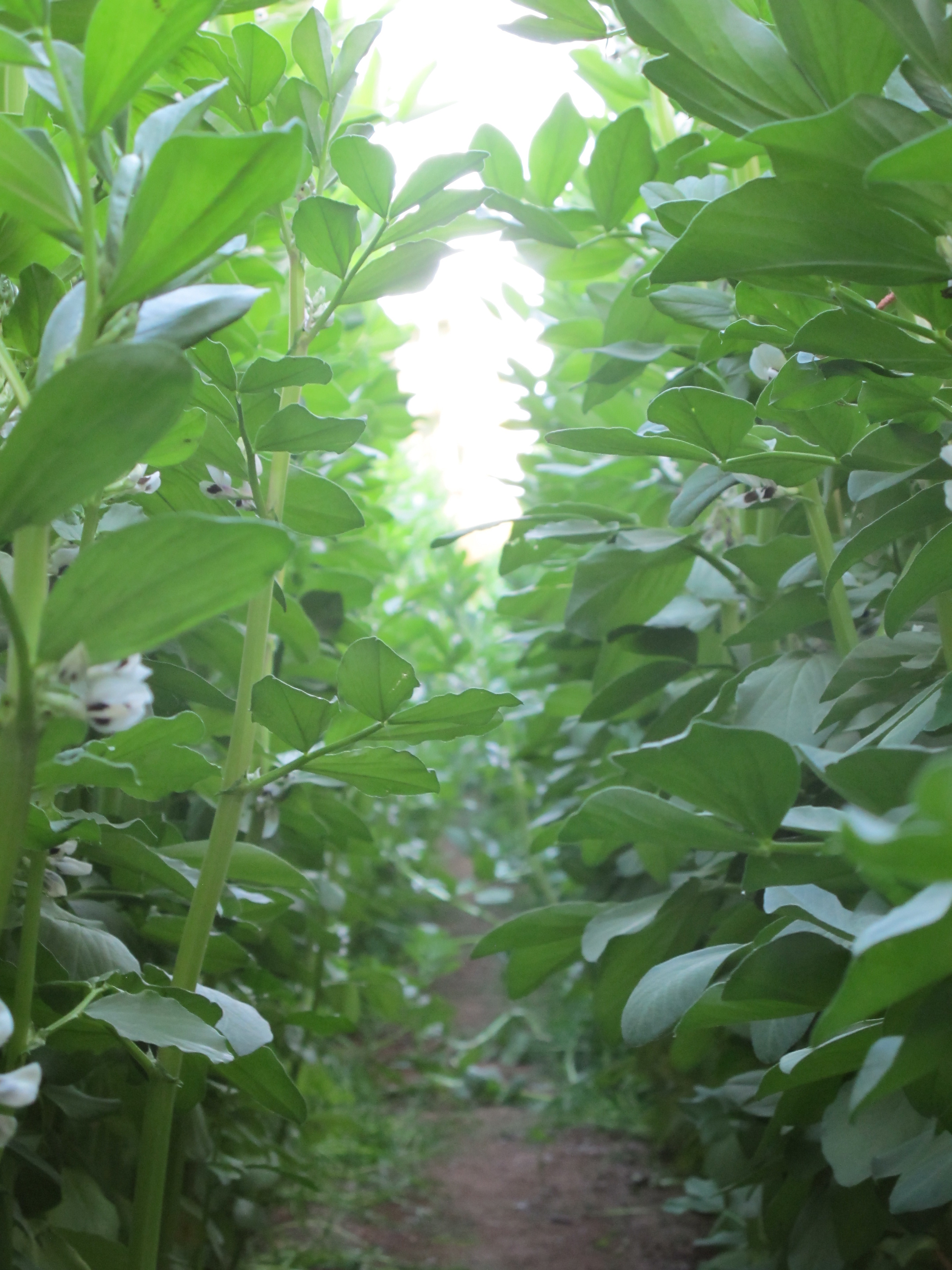
The beautiful part of spring is getting to see all of the fruits (and vegetables) of our labors when they are at their most glorious. There is much in bloom right now and much going into the ground for later. We have had a busy time around here. Over the past few weeks over 3,000 basil plants have gone into the ground. A thousand heirloom tomato plants were planted in the high tunnel last week (18 different varieties in all). Next up, eggplant and peppers and then squash, okra and cucumbers are in line after that.
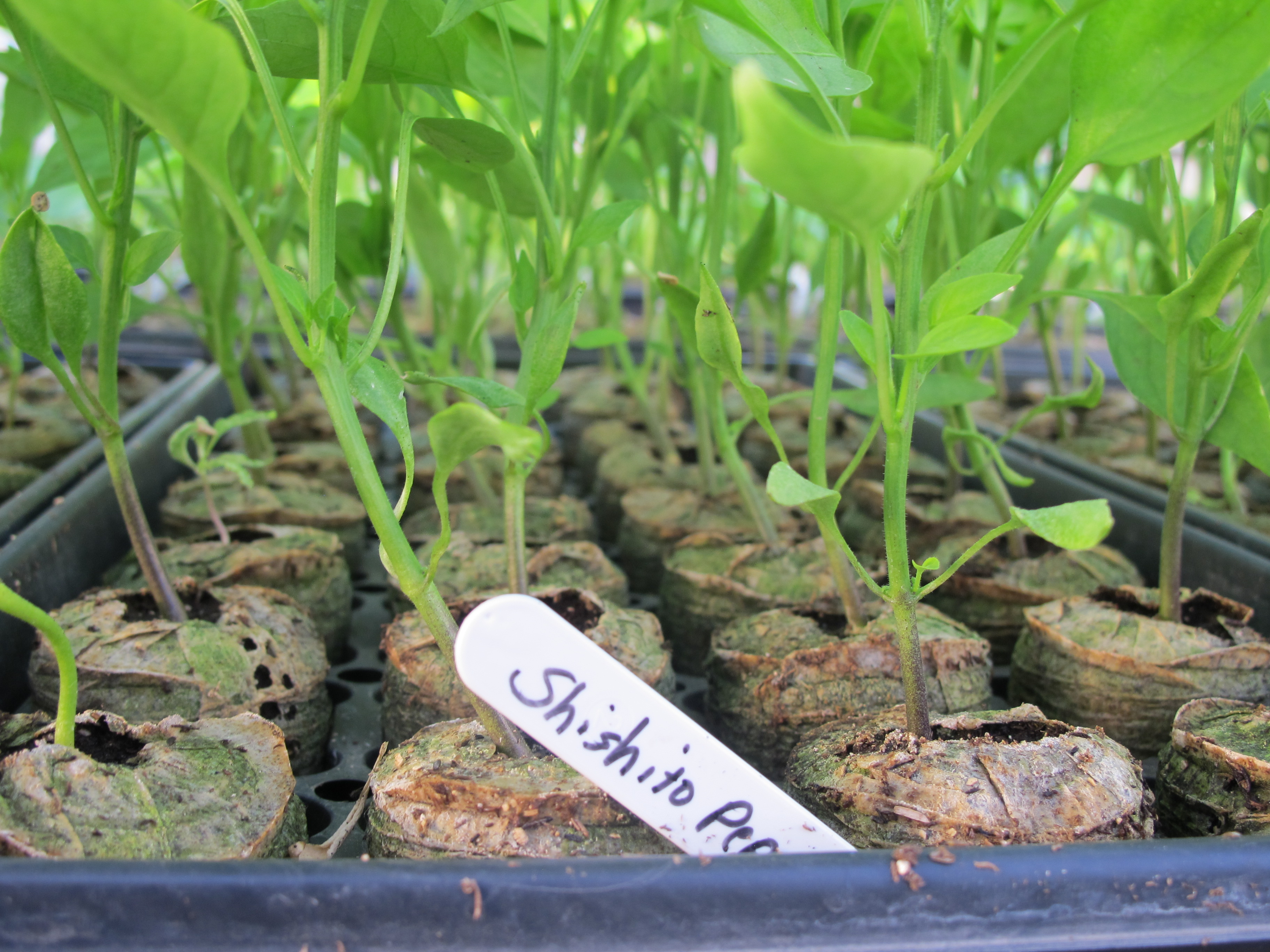
After a long day behind a computer, I took an evening survey of the farm. Nothing is better to clear your head than to walk between the rows of sugar snap peas or the fava beans. I like poking into the green house, the basil houses and the high tunnel to see how things are going. It is prettiest first thing in the morning or early evening light. Well, you can see for yourself…
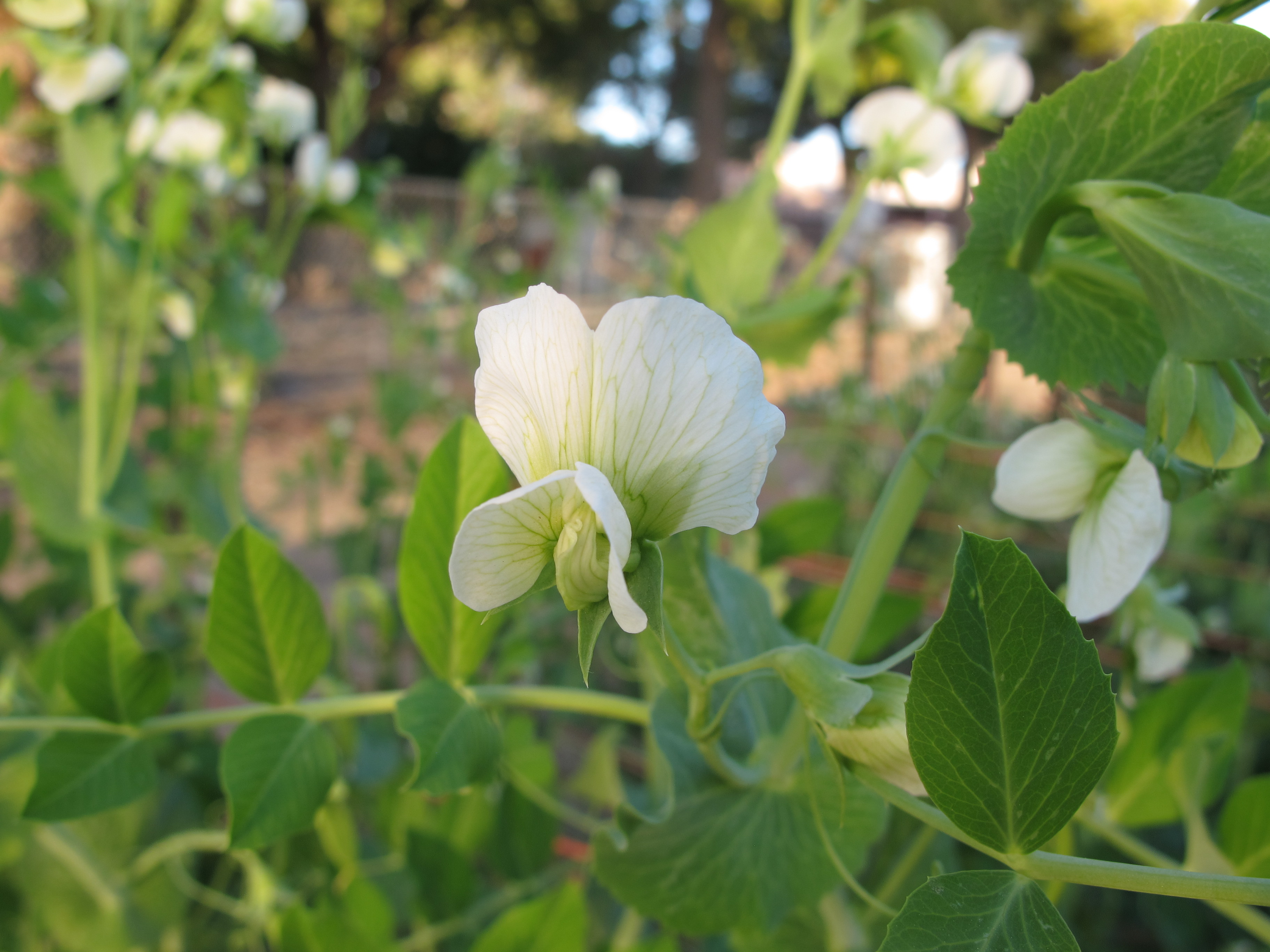
Blossoms from the sugar snap peas in the evening shade. Sugar snap peas have been making there way into Aidan’s lunch box every day. I don’t think that they are making it all the way to the lunch hour though!

These little flowers are from the fava beans. They have such a lovely clean scent, slightly floral with a little something akin to clean laundry. The top picture on the post was taken inside the rows of fava beans, where I could have stayed for hours. I want my whole house to smell like the fava bean rows. (P.S. One of my all-time favorite dishes ever was one that Payton Curry made at the Welcome Diner last year using fava beans. I was so nuts over it, he made a gallon and sent it home with me. It didn’t last long!)
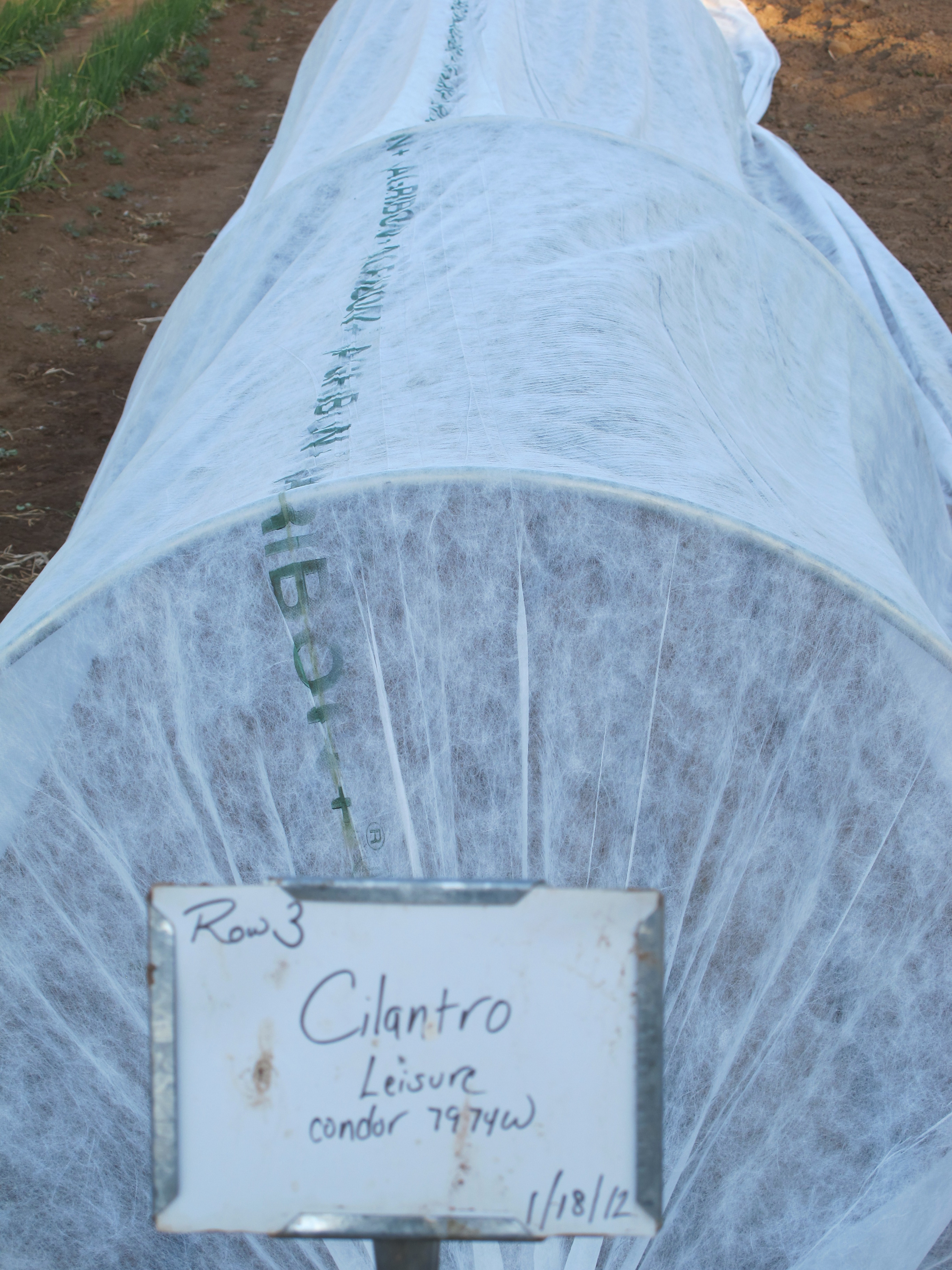
Cilantro under the hoop house…
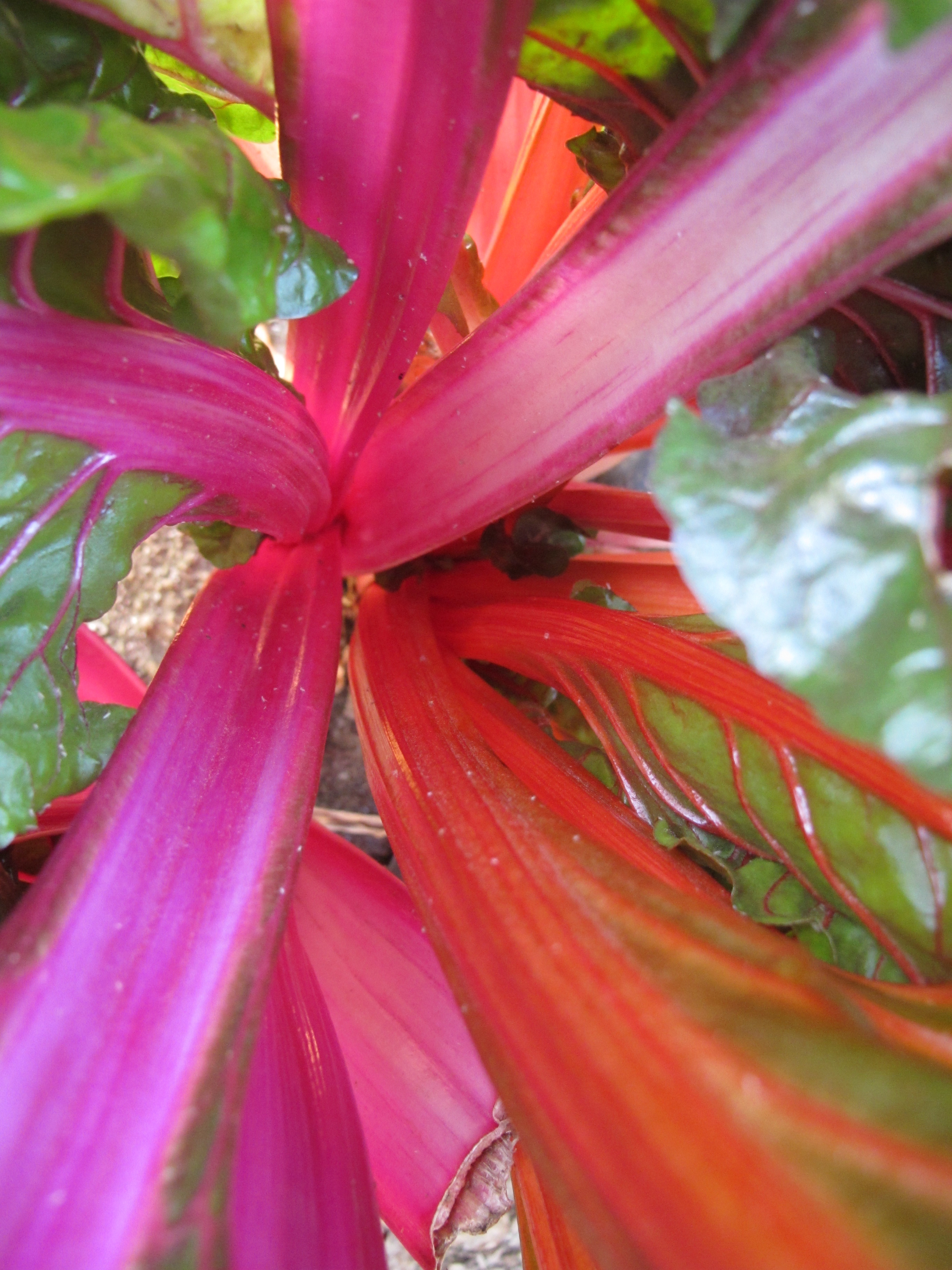
Rainbow chard in full color…
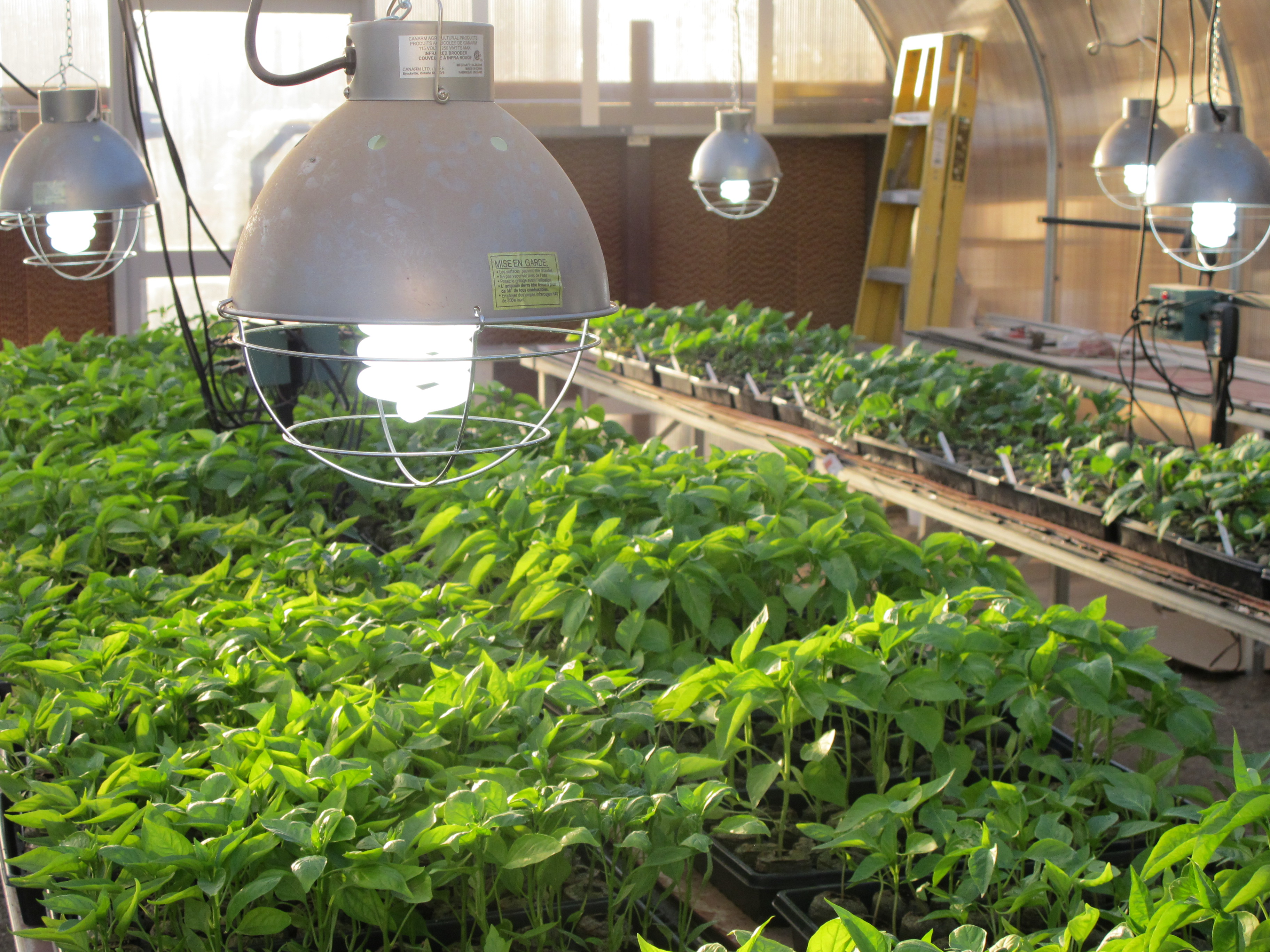
Lights clicking on in the green house…
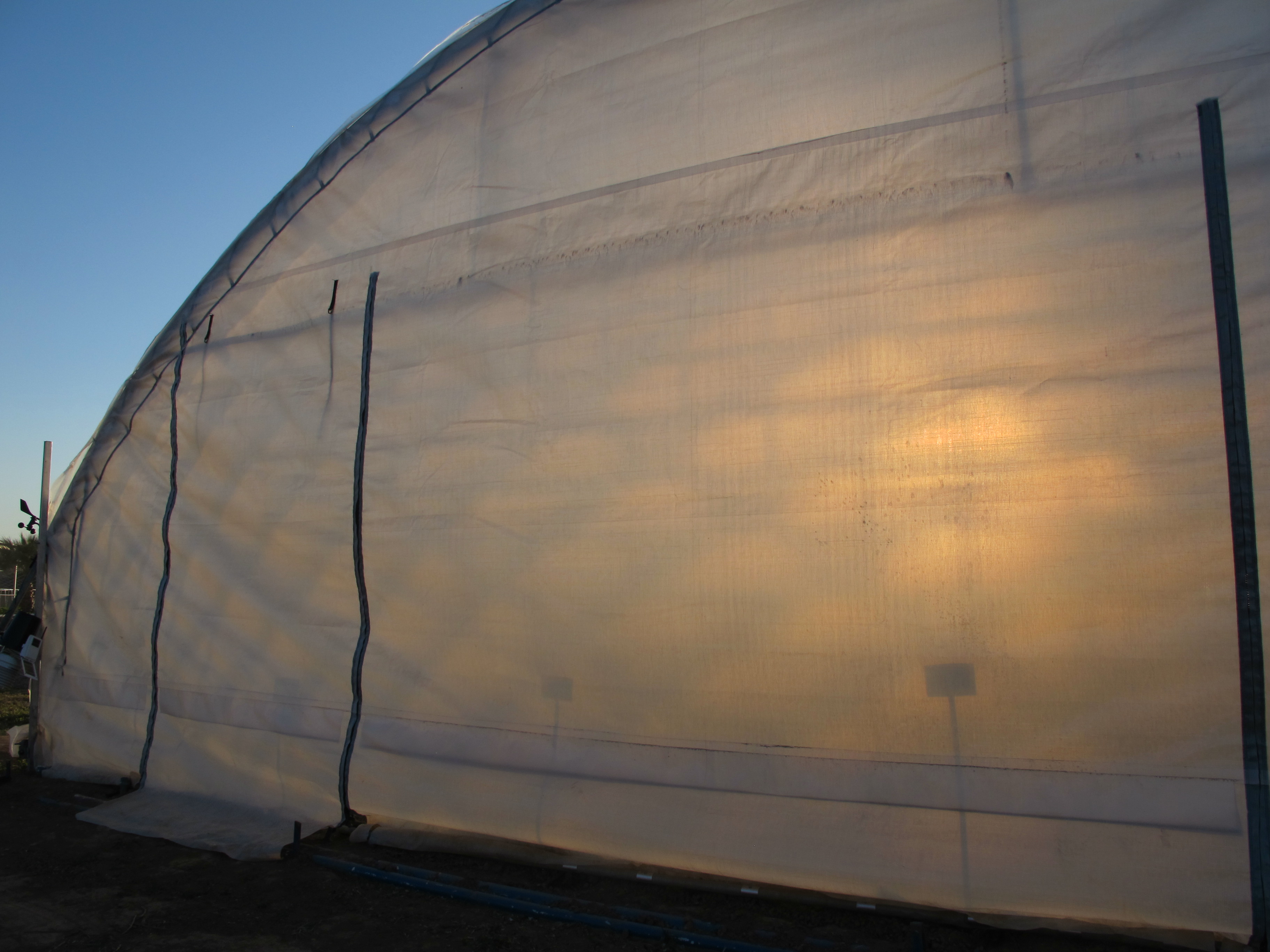
And a little of the last evening light keeping the high tunnel glowing. Good night.
Food for healing… (Part Three)
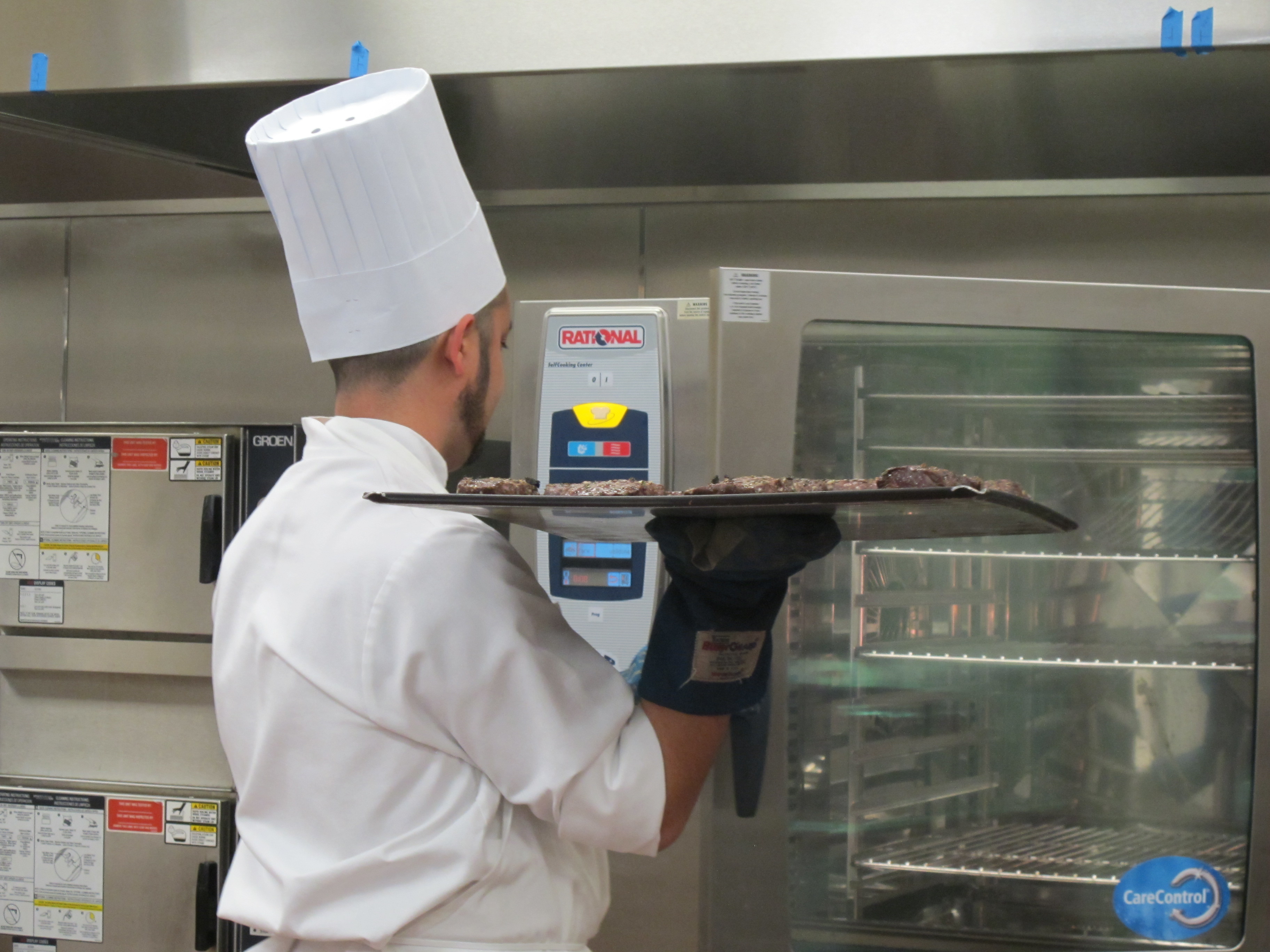
Cancer Treatment Centers of America – Part Three: The Kitchen
On my second visit out to the Cancer Treatment Centers of America (CTCA) I had a chance to meet with Executive Chef Frank Caputo. Since our relationship began with CTCA I have heard from Bob time and again about Chef Caputo. He and Bob hit it off immediately. When I met Frank I knew why instantly. Chef Caputo is not only as fanatic about organic produce as Bob, but they also share that same unstoppable work ethic, attention to detail, palette for quality, and sincere love and compassion for the people they serve. Those traits in a chef make for excellent dining in any restaurant, but when you health is on the line, having Chef Caputo in the kitchen is like having a prizefighter in your corner.
The CTCA wasn’t an obvious choice for Chef Caputo. As a graduate of the Culinary Institute of America, Chef Caputo had built a career heading up the kitchens of upscale restaurants and country clubs along the East Coast. Cooking wasn’t just a passion it was in his DNA. He grew up working in his family’s Italian restaurant outside of Pittsburgh. His Italian roots had long held a close relationship between the chef and the farmer. He had learned early the value of always knowing where his food came from and who grew it. When he went to the Culinary Institute of America he wanted to master the classic French techniques to go along with his old school Italian cooking, and he wanted to work for a chef that really knew how to cook. It was at the Culinary Institute of America that Chef Caputo met his mentor and closest friend, Chef Jack Shoop, the same man who would introduce him to the CTCA years later.
In his years since graduating from the Culinary Institute of America, Chef Caputo spent his time and talents perfecting the art of haute cuisine and enjoyed working along side his mentor Chef Shoop many times. He credits Chef Shoop with expanding his culinary education and continuing to lead and inspire him in the kitchen. When the idea of opening the kitchen and dining room for the CTCA in Goodyear was first introduced to him by his friend, Chef Caputo balked. Chef Shoop was heading the kitchen for the CTCA in Philadelphia and felt like it would be a good move for Chef Caputo as well. But for Chef Caputo moving from fine dining to a hospital kitchen felt like a step backwards, or maybe like one off a cliff. After years of perfecting his talent, this was not in his game plan. He had cooked for world leaders, celebrities and athletes that were name brands, and he was building a name for himself in the culinary world. A hospital kitchen seemed like the antithesis to everything he had done. But the thought wouldn’t go away, and during a time of real personal reflection, he decided that he needed a change and wanted to focus on doing things for others. When he shifted his thinking outwardly, the CTCA became the natural choice. This kitchen was not about him, his ideas, recipes, or talent; it was about serving others. Meals at the Cancer Treatment Centers of America have the power to change lives, in hearing Chef Caputo talk, it sounds like they changed his as well. He came out to the CTCA in Goodyear to open the kitchen and get them started and has been with them ever since. He says he can’t imagine being anywhere else.
From the moment Chef Caputo arrived at the CTCA, his focus was completely on creating meals that had as many cancer-fighting properties as possible, while maintaining the quality and flavor that he had built a career on. Just as Sharon Day, the CTCA’s Director of Nutrition, Chef Caputo’s goal is to introduce as much variety and quantity of fresh, organic fruits and vegetables into every dish served to patients.
McClendon’s Select organic produce is used every possible way in the CTCA kitchen from the freshly juiced drinks and smoothies in the café to adding vegetable purees to dishes as a substitute for other ingredients. They are found on every plate. Chef Caputo wants those antioxidants and nutrients available to patients as much as possible, and in whatever flavor, form or recipe that will appeal to them the most. On an average week, Chef Caputo makes about 35 gallons of vegetable stock from scratch. In fact, his kitchen makes everything from scratch, so he may control the quality and purity of the ingredients as much as possible. (I even spied ketchup made from scratch in the refrigerated walk-in.) I didn’t see anything that came in a can, but instead the kitchen shelves were filled with organic beans, rice, and grains of every variety. The meats, dairy, including cheeses, and even the coffee are all 100% organic. Chef Caputo has even gone as far as to find organic spices and sesame seeds to use. He is a fanatic for detail. Cornstarch or tapioca is used as a substitute for flour; fruit juices are used to substitute wine in recipes; salt and fats are cut out. He admitted that it was hard getting away from using flour, but he did it and doesn’t look back. He wants everything that goes into the food served at CTCA to be working for the patient in their cancer fight.
Do not be fooled into thinking that this is just hospital food with organic ingredients. Chef Caputo is creating the classic French dishes that he has done throughout his career, along with reinventing the Italian dishes he grew up on. But his culinary education has expanded now to look critically at the nutritional value of his food, as well as the flavors. He wants his food to be on the same level and standard as everything else at the CTCA, meaning exemplary. I can personally attest that when walking into the kitchen the smell wafting through made my mouth water. Marsha and I both wanted to pull up a chair and have a bowl of whatever was cooking. That was not a reaction I thought I would ever have in a hospital kitchen. He has elevated hospital dining to such a point that dignitaries are once again coming to Chef Caputo’s dining room. He even recently cooked for one of the presidential candidates. But for the chef, it is all about the cancer patients now. They are the ones that Chef Caputo is honored to serve, and he speaks of them with reverence.
Chef Caputo regularly works fourteen-hour days in the kitchen, but he will tell you that the most important part of his day is during the dining hours. He spends mealtime in the dining room so he can get to know the patients, their families and caretakers personally. He asks each of them what do they need from him. He sits and talks with the patients to find out what flavors they like, what dishes they make at home, and what would provide them comfort during a time when they need it the most. Often times Chef Caputo will bring patients back into the kitchen to give them a tour. He gives them recipes, teaches cooking techniques, does demonstration classes, and offers nutritional advice. But this isn’t just about food. He asks about their diagnosis and treatment plan and what issues are they having as a result. He wants to know their story and how he can help. And his help comes in many different forms, far beyond the kitchen.
One patient he met had been diagnosed with throat cancer and had been told to visit an oral surgeon to have his teeth removed, as they would likely be lost as a result of radiation anyway. For someone who loved food and eating, this advice was as shocking as the diagnosis. The patient rejected that advice, and instead came to the CTCA for treatment. He wanted to maintain his dignity. He had once been a big man with a big appetite for food and for life, but when Chef Caputo met him, he was emaciated. His throat was raw from his treatments leaving him unable and unwilling to eat. Dietitians were encouraging him to put on weight so that he would have the strength to continue his fight, but he was rejecting the suggestion of a feeding tube. That seemed again like a humiliation that he couldn’t face. Chef Caputo sat with him and asked what he could do. What did he eat before his diagnosis? What flavors did he crave?
Chef Caputo then went to the kitchen and fixed this patient five different meals, each pureed versions of food this man had once enjoyed. When he went back to check in on the patient to see if any of these dishes might encourage him to eat once again, he was surprised to see that the patient had finished all of them. He hadn’t just finished his meal, but for the first time since his treatments had begun, he had enjoyed food once again. It was a step forward that gave him strength well beyond the physical to continue his battle. This, Chef Caputo told me, is why he can’t imagine being in any other kitchen. This particular patient has now been in remission for over two years, with his appetite back and his dignity intact. This was just one patient of the Chef Caputo, I could tell that he has many more similar stories of patients who need his help just as they need their doctors’. When he speaks of the patients, he talks of them like they are his own. He says that he wants his patients to feel spoiled, like they are at a country club with their every need met. He wanted this dining room to have an open arm feeling and it does. This is a calm, healing place where patients can relax and forget for a moment why they are there. They don’t have to worry about what they are eating, how it was made, and if it will work with the advice given by their doctors, because Chef Caputo has already done that for them. He keeps in touch with many of the patients he meets, checking in on them when they are back home, sending recipes, good wishes and encouragement. He told me that his dining room is filled with a lot of laughter and smiles and said that many have told him that they miss his kitchen.
Imagine that – missing a hospital kitchen.
Having seen it for myself, I completely understand.

Cancer Treatment Centers of America
at Western Regional Medical Center
14200 W. Fillmore Street
Goodyear, Arizona 85338
623.207.3000
www.cancercenter.com
Food for Healing… (Part Two)

Cancer Treatment Centers of America – Part Two: The Nutrition
Since we began supplying organic produce to the Cancer Treatment Centers of America (CTCA) in Goodyear, everything that Bob had described in his visits and meetings there painted the picture of a world-class run operation. Their goal of putting the patients first had created an environment as un-hospital-like as possible while offering care that far surpasses what other cancer treatment facilities are doing. With an organization so driven and professionally run, it came as no surprise that the people I met while I was there were warm, professional and incredibly knowledgeable. They were all individuals you would want on your side when you are in the fight of your life.
Sharon Day is the Director of Nutrition for the Goodyear CTCA. Her role at the CTCA is to not only oversee all of the dieticians working with patients, but to work closely with the chef in their dining room to make sure that all of the meals served to patients work with their individual dietary needs. This seems like an obvious thing to do; however, having seen the meals served in hospitals, it is very clear that this is not the norm.
As dieticians, their first goal is to prevent or reverse malnutrition that can result from cancer treatment. Their next goal is to be a resource to patients to educate about foods that have cancer fighting potential and to help them make gradual changes in their diet and habits for long-term success.
When patients come to CTCA after receiving a cancer diagnosis, they meet with a dietician on their first day and continue to throughout their treatment. Dieticians work with each patient individually to assess their current diet, the type of cancer they are dealing with, the effects of the treatment they will be receiving, how to help patients make the diet changes they need to assist in their healing, and to give them the information and tools to continue this course when they return home.
These individual dietary plans outline the foods they should focus on for their healing. While they may differ from patient to patient, they all focus on increasing the quantity and variety of organic fruits and vegetables. Depending on the course of treatment, some patients face loss of appetite that can lead to malnutrition. Other patients may need to make adjustments to their daily meals to change their protein intake, sodium levels or to avoid food allergens. Each patient and diagnosis is different, and dieticians work with the individual and their clinicians to assess their specific needs so that their diet can work in tandem with their treatment.
To help patients successfully make these changes, Sharon also works closely with Executive Chef Frank Caputo at CTCA. Together they are creating a database of every meal prepared and served at the CTCA and analyzing the nutritional value for each meal. This is time-consuming and monumental, when you think of the size and scope of a kitchen serving an entire hospital, but it has proved to be invaluable to patient care. In effect, they are creating a nutritional label similar to one you would find on any food label at a grocery store. But these labels they are creating are not for packaged foods, but for meals prepared fresh and made from scratch daily in their kitchen. They are analyzing every ingredient to fully evaluate the complete meal served to a patient. Patients are also educated on how to properly read nutritional labels, so that they are making the best choices. Each patient room at the CTCA is outfitted with televisions that have the meal selections on them for patients to access and request. Only the meals that fit within a patient’s dietary plan are displayed, eliminating the temptation for selections that would work against their diets, and allowing patients to see the host of options that fit their goals. Having seen the kitchen and what the types of dishes that Executive Chef Caputo creates, these are meals that can stand the scrutiny of restaurant critics. The food created here is intended to meet all of patients medical needs, while also satisfying their basic need to enjoy the meal before them. This may be a hospital, but they are not serving ‘hospital food’.
Through the process of analyzing the nutritional content of their meals, Sharon is able to collaborate with Chef Caputo to adjust how meals are prepared to reduce the fat, sodium or sugar in a recipe. Both know that meals that do not appeal to a patient won’t be eaten, so recipes are adjusted with both the nutrition and the flavor in mind. Having a chef and dietician work together to meet these goals is yet another distinction that sets the CTCA apart. Sharon attributes Chef Caputo’s ability to show patients that good nutrition can come without sacrificing flavor as being huge in helping patients overcome some of the mental barriers to changing dietary habits.
But it is not just identifying what is in the meals at CTCA that helps in a patient’s treatment. One of their greatest resources as dieticians, Sharon told me, was in educating patients on foods that have cancer-fighting potential. First and foremost, they want to increase the fruits, vegetables and whole grains in a patient’s diet. They explain the benefits of foods high in Omega 3s that have anti-inflammatory properties that can help fight cancer, versus those high in Omega 6s, often found in processed foods, which create inflammation. It is through understanding food on a scientific level, that patients are able to see the direct correlation between nutrition and its impact on health.
Dieticians develop relationships with patients to take that education and help them learn how to put that knowledge into practice. They take patients to grocery stores and teach them how to shop for the food; they explain how to create meals with the proper portion size and calorie count for the diets. They also advice patients on what to look for when they dine out and try to help them avoid some of the marketing pitfalls that can be detrimental to their diet. They also involve the hospital’s kitchen staff to offer culinary demonstrations and cooking classes, and send patients recipes that will appeal to their palettes. They remain in constant contact with their patients, whether they are at the hospital or back at home, to continue offering advice, information and most of all, encouragement.
As it relates to us, patients are also educated on the difference between organic and conventionally-grown produce, and they are given the names of local organic farmers and farmers’ markets in their area. Organic fruits and vegetables are an essential part of every patient’s dietary plan, both for their current treatment and for future prevention. According to cancer studies, Sharon told me that 30 to 40% of cancer diagnoses are attributed to diet and lifestyle. In her role, she wants patients to have the most nutritious options while they are receiving treatments at CTCA, and to have the most information as possible to take home with them to continue their healing.
Food is absolutely key to the treatment of cancer, and at the Cancer Treatment Centers of America organic produce is at the heart of their dietary recommendations to patients.

Cancer Treatment Centers of America
at Western Regional Medical Center
14200 W. Fillmore Street
Goodyear, Arizona 85338
623.207.3000
www.cancercenter.com


 McClendon's Select