Loving the new Lux…

Monday started with my coffee ending up in a dumped mess all over my desk. Phone, keyboard, paperwork… nothing was spared. I hadn’t even had a sip. It was not pretty, and me without caffeine at that time of day isn’t either. It was not a great start to the week.
But at least I knew that I was going to my happy place later in the day. So there was that.
There are a few places that I know are automatic mood lifters to me, Lux on Central is one. Just walking through the door makes me smile, every time without fail.
Lux is my first stop on Wednesday mornings when I head over to the Town & Country Farmers Market. It is our last stop of the evening when we dining out in central Phoenix. It is the go-to spot when my step-brother and sister are in town. I have been known to send them taunting photos of Lux lattes when they are away at school, like this one.
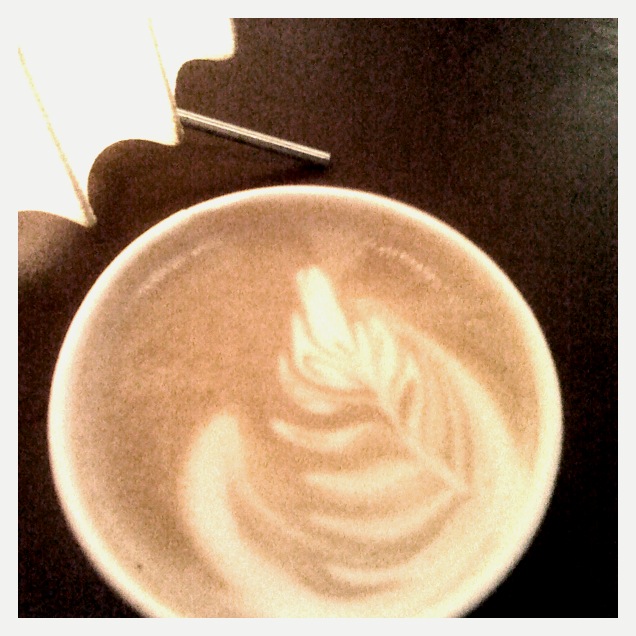
(Yes – I know it’s not nice to tease.)
So, knowing I was going to the opening evening of the new Lux last night was not going to let a little spilled coffee bring down my day.
Jeff Fischer moved his beloved coffee spot into the space next door, recreating the former boutique space into the now newly named Lux Central. There is more seating, an open kitchen, an outdoor patio and a menu of assorted comfort foods, including a killer looking mac-n-cheese. But the biggest change is now Lux Central also has a liquor license.
Yes – Lux Central is no longer just a coffee bar, it is also an actual wine, beer and cocktails bar too.

Jeff has managed to make the new space feel both homey and hip at the same time. And judging from the crowd last night, the new changes are a huge hit with the Lux loyal. Just as with before, every table was filled, but there were also plenty wandering around, drinks in hand, taking it all in. The new outdoor patio was hopping, even in the August heat. The walls all have Lux-worthy local art, that is never boring, and there were several cool vintage Olivetti typewriters throughout.
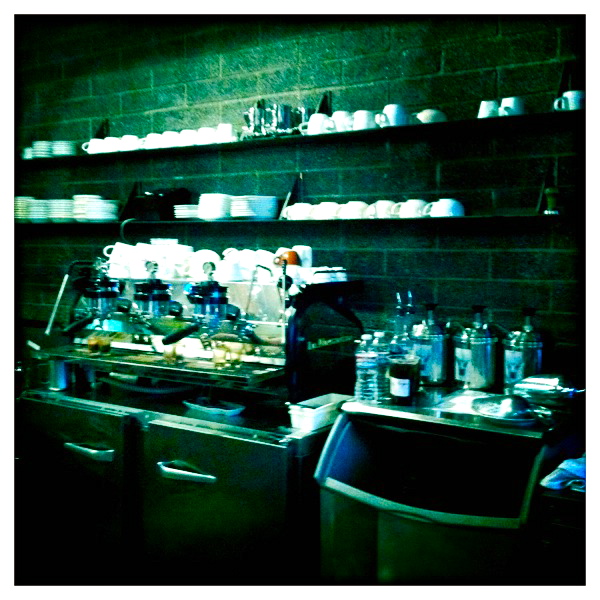
Katie Calahan, their bakery guru, was behind the counter of the new open kitchen sending out plate after plate of food. Sammy Black was at the helm of the espresso machine making his lattes look as good as they taste. He is an artist, both on paper and with steamed milk. And I was happy to see Nathan Thompson, the barkeep from Nobuo at Teeter House, behind the bar bringing his mixology science to a thirsty crowd. If you haven’t had one of his master crafted cocktails, you are missing out. He is to spirits what Lux is to espresso. To have them all together under one roof was a little mind-blowing.
So, after an inauspicious start to my day, I was more than happy to meet my stepbrother Justin, his lovely girlfriend Bianca, and his new roommate Anthony at the new Lux Central, and do something I have never done there before… have a glass of wine.
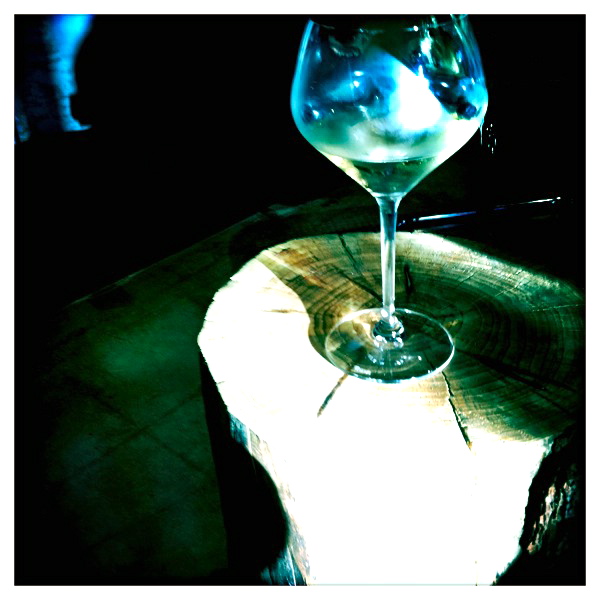
Congrats to Jeff and his team! It looks amazing and, best of all, it still feels like Lux.
Lux Central
4400 North Central Avenue
Phoenix, AZ 85012
602.696.9976
www.luxcoffee.com
P.S. Go to their website, they have a cool time lapse video of the build out in progress.
Spruced for a run…
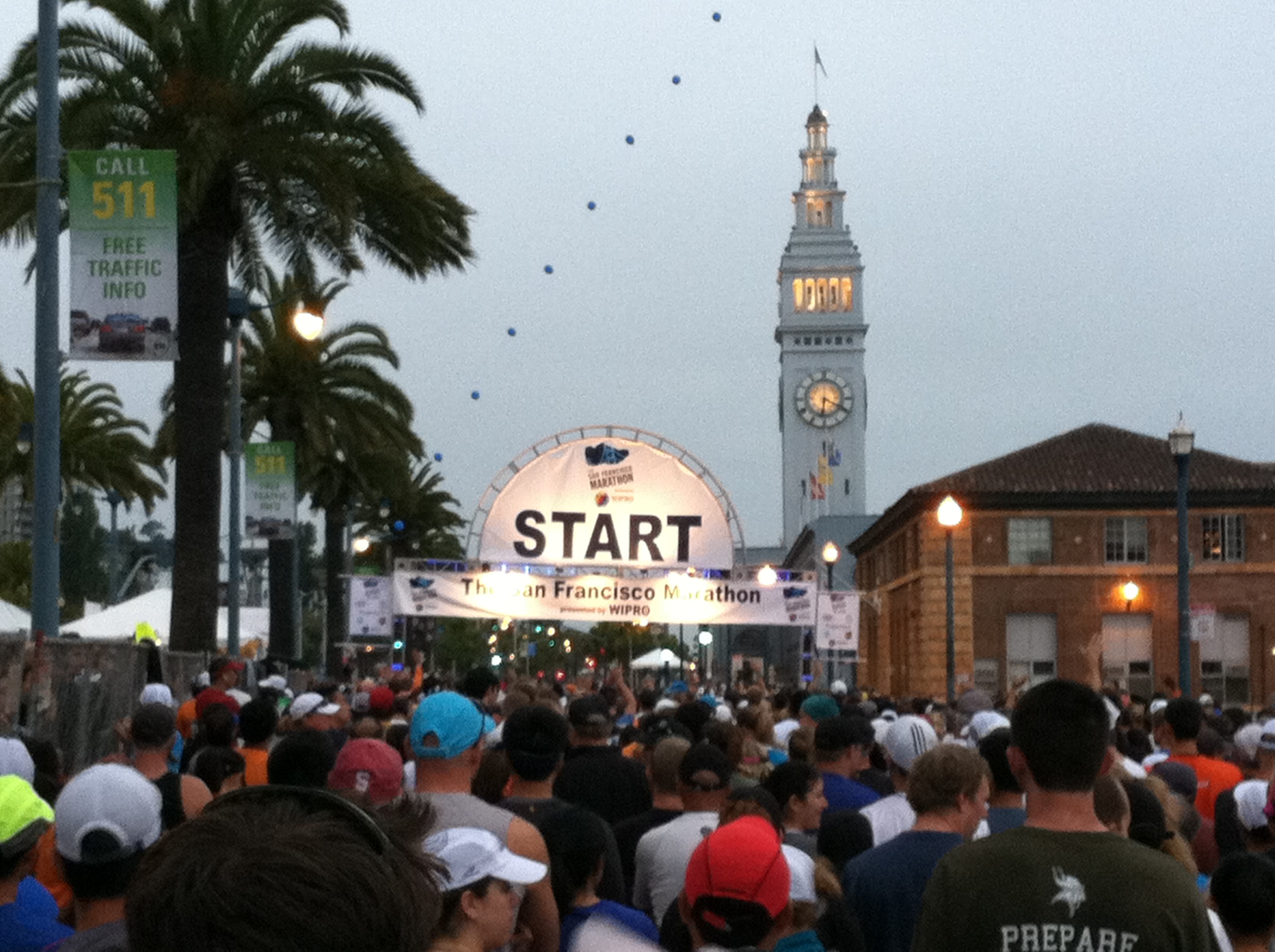
Last week I ran the San Francisco half marathon with my stepmother and stepsister. This was our second year making the trip and run. Let me qualify this by saying that I hate running. I have never had the runner’s high. Running is actually wildly overstating what I do. I jog, I limp, I shuffle even.
That said, I love the San Francisco race.
Something about race day makes all of those months, those hours logged in the park or on the treadmill worth it. People run for their own reasons, and mine are all based on food. With a big milestone birthday looming next year and a passion for cooking and eating at the incredible restaurants we work with, a girl has to do something. Love it or hate it, for me that something is running. If I am going to run, then focusing on San Francisco and the bay views, glorious bridge and amazing selection of incredible restaurants, makes it all a little easier.
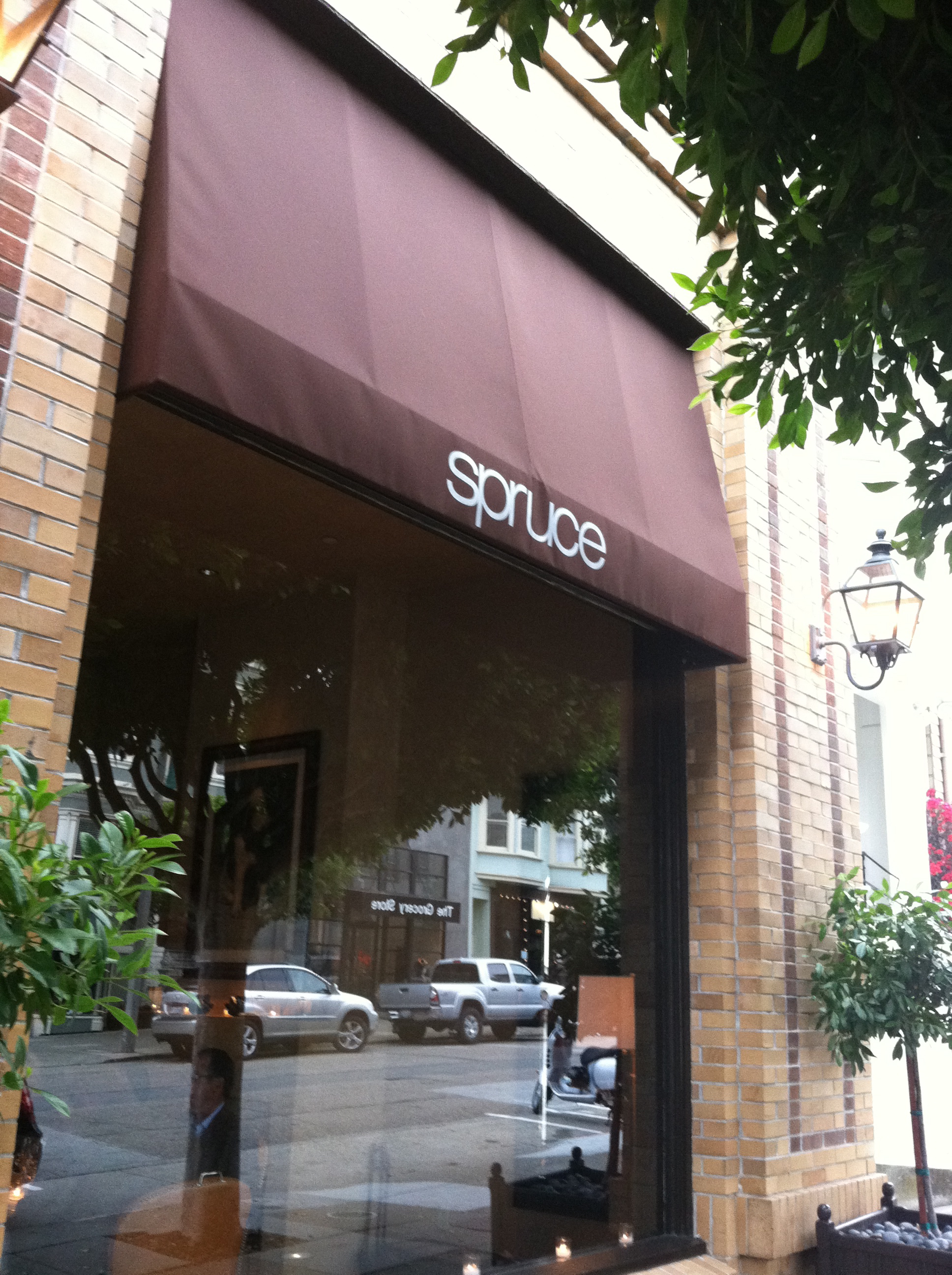
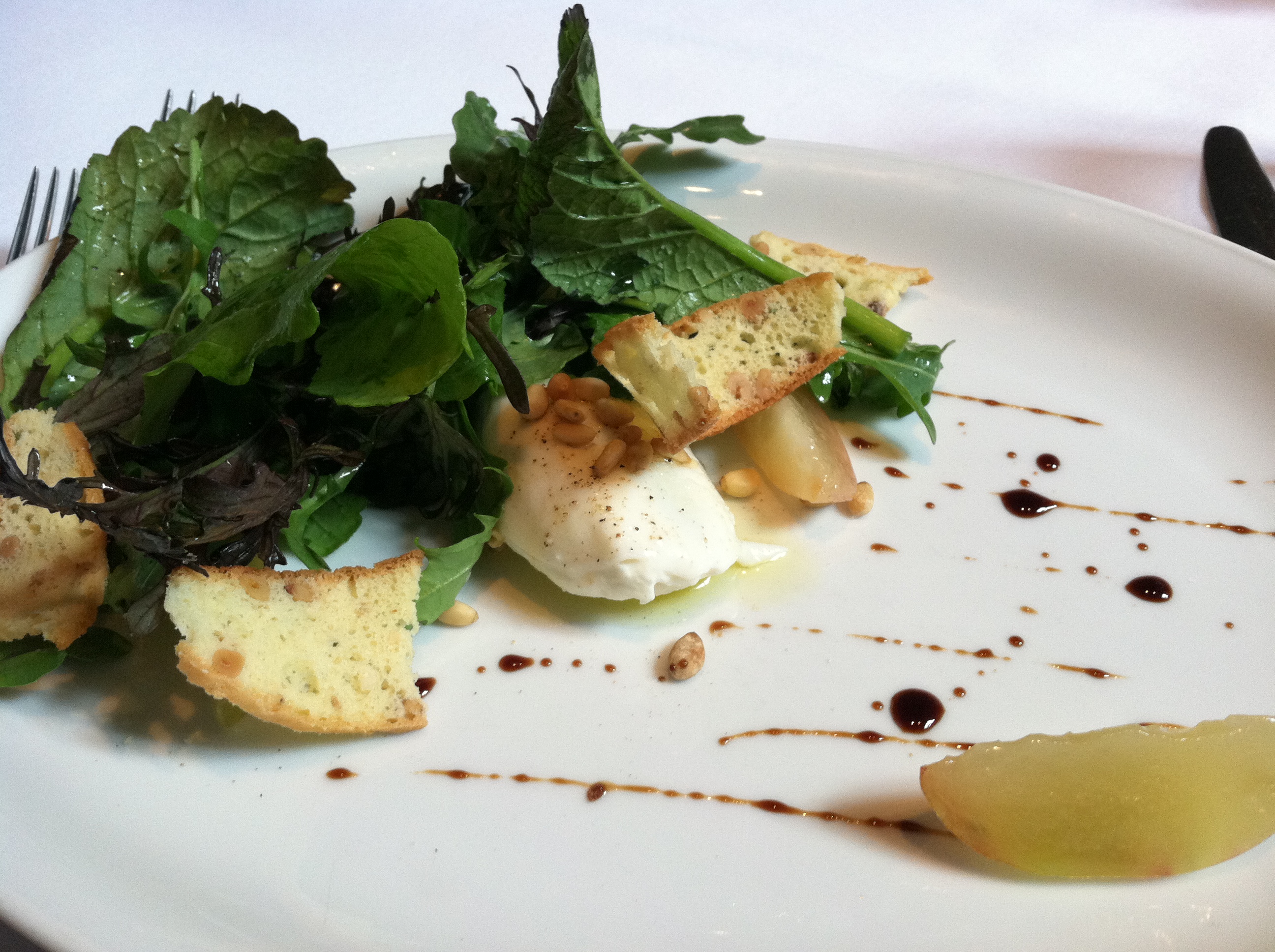
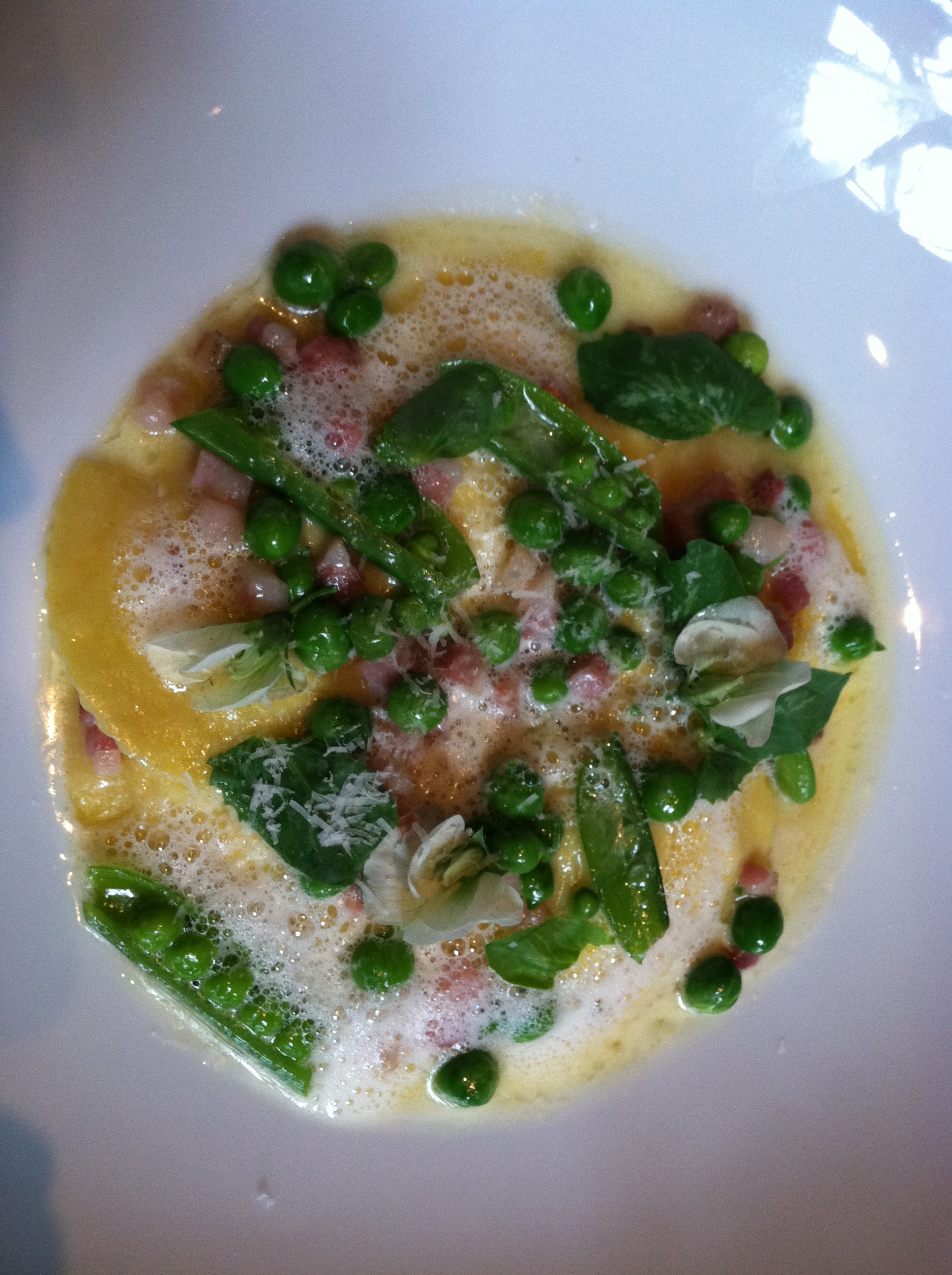
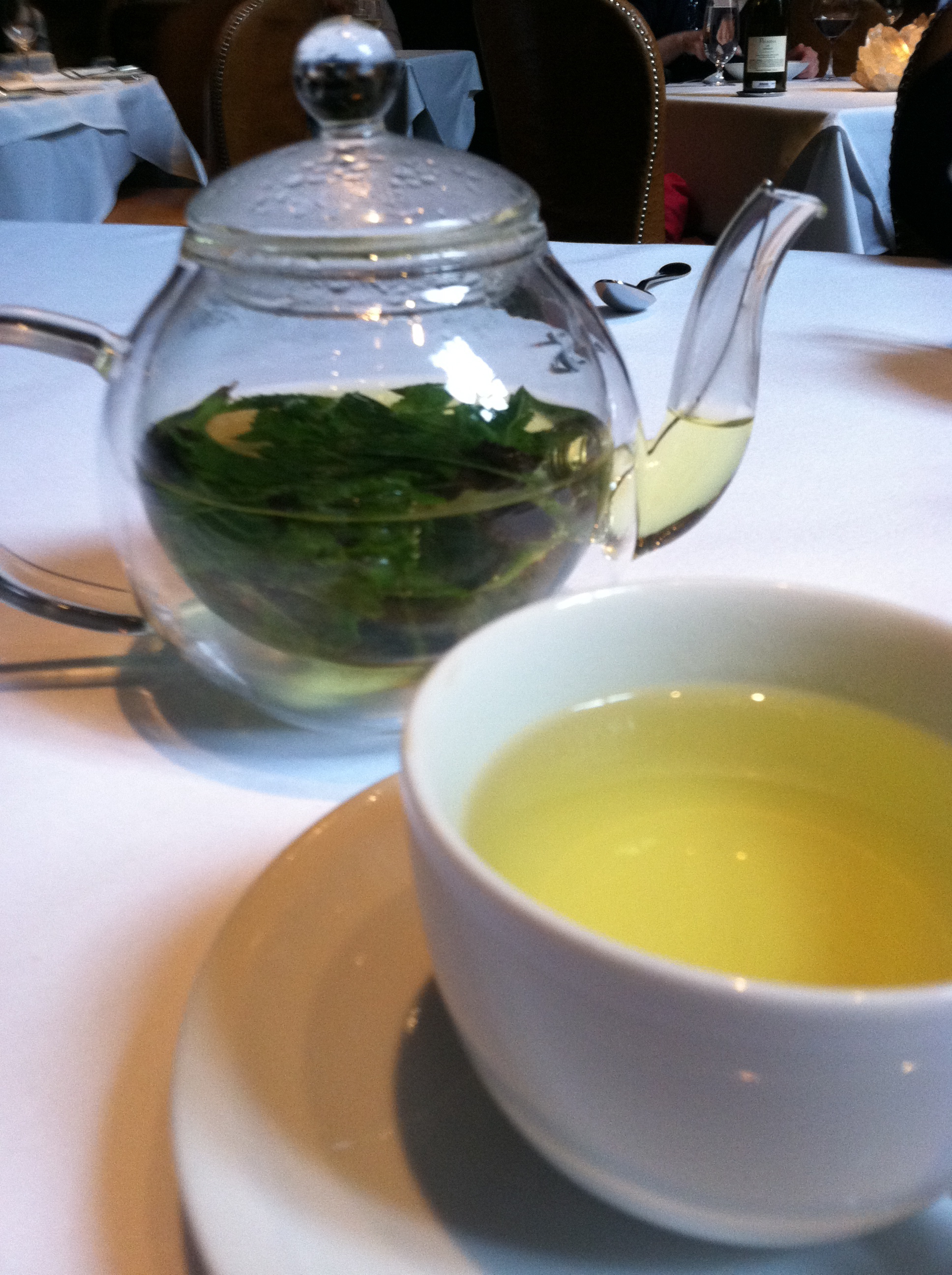
Following a great recommendation, our little team of three chose Spruce for our pre-race dinner and it turned out to be the perfect place. We spent the evening in beautiful surroundings, with incredible service and a meal that helped feed our anxious appetites and calm our nerves. All three of us started with the White Peach and Burrata salad, because wouldn’t you? It was bliss on a plate. Perfect salad greens, the sweet crunch of an almond biscotti and a thick balsamic vinegar to tie it all together. I longed for the slow roasted short ribs as an entree, but instead choose the Ricotta Ravioli with Sweet Peas and Pancetta. It was an excellent choice and came with these beautiful little pea blossoms on top. The mint tea at the end of our meal had the most elegant presentation in a clear glass teapot with floating mint leaves and the smell when it was poured was exactly what I needed to relax and clear my head.
Spruce also has a café near the entrance with these wonderful looking cookies. I was so tempted, but didn’t. Maybe next time. We all agreed that should we do this race again, Spruce would be the treat we give ourselves after we have finished, when we can properly indulge. Having the freedom to carb-load was a lovely feeling, denying ourselves their incredible wine list and dessert menu, not so much. Don’t feel that you need to run thirteen miles to go, although I would recommend highly that you do get a reservation.
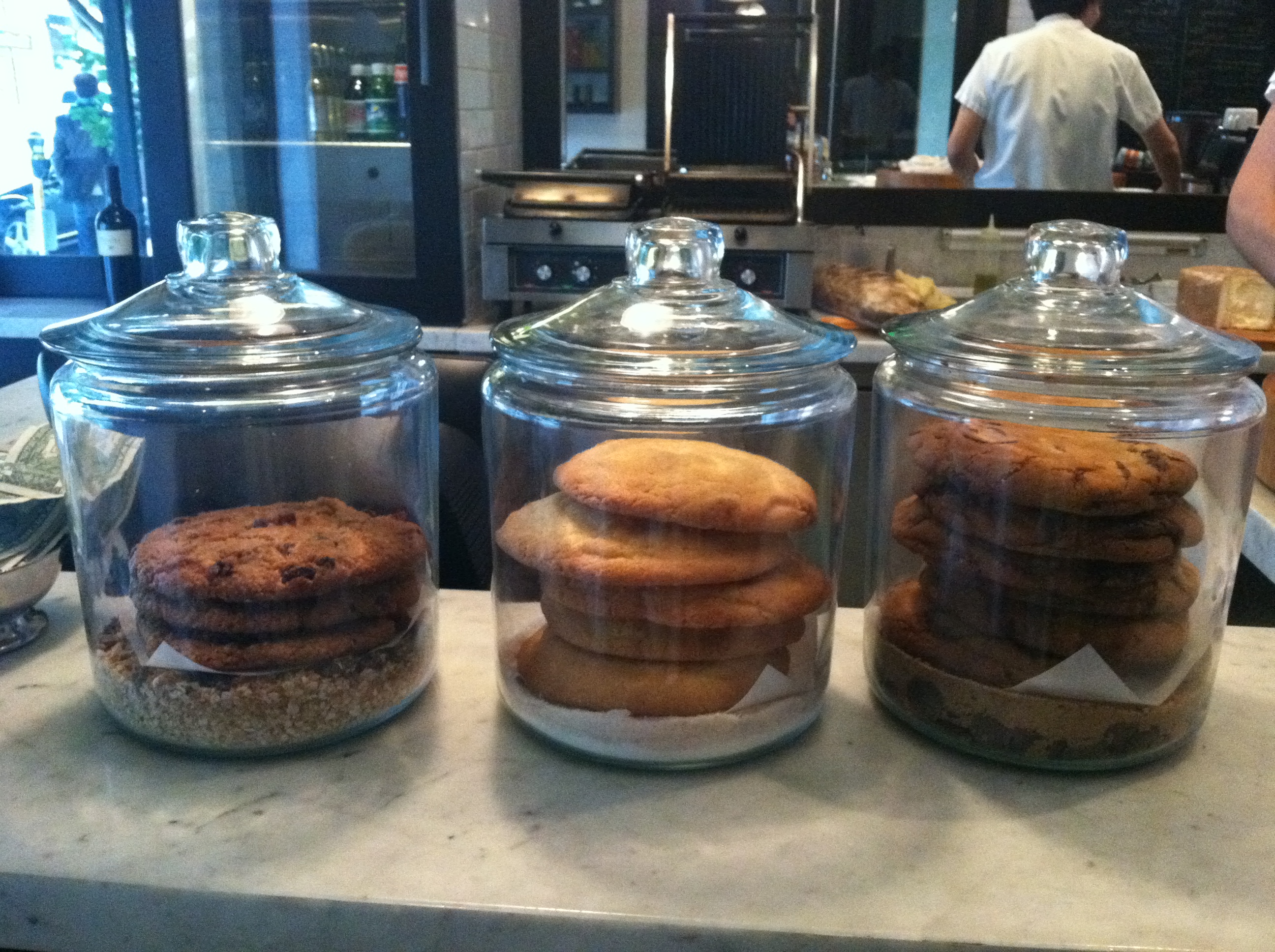
The race the next morning was so filled with the electric charge of nerves, excitement and camaraderie that you can’t help but feel pumped up. We started near the Ferry Building before dawn and the quiet clapping of a sea of sneakers against asphalt was just the loveliest sound. Where else can you sightsee like this while you run?
We ran along the Embarcadero, passing Fisherman’s Wharf with the smell of sour dough bread being freshly baked for the day, and then headed along the waterfront towards the Presidio. The first hill at Fort Mason is a challenge, but nothing compared to the hills at miles five and ten. At a certain point, it becomes more about climbing and less about running. The Golden Gate Bridge is the icing on the cake for the whole event. I couldn’t help but grin when I stepped foot on it. Just getting to run across the bridge and back en masse was a big, wonderful adrenaline boost. Everyone around me seemed to feel it too. We then continued on back through the Presidio and along the cliff above Baker Beach and finally into charming San Francisco neighborhoods weaving our way through the streets to the finish in Golden Gate Park. I loved every minute, the views, the enthusiastic people cheering us on, the swarm of colorful jerseys and personalities running along side me, and the personal satisfaction of seeing the finish line.
Maybe I do get a runner’s high.

Big thank yous to Annie and Lisa!
Spruce
3640 Sacramento Street
San Francisco, CA 94118
www.sprucesf.com
415-931-5100
Handling your food…
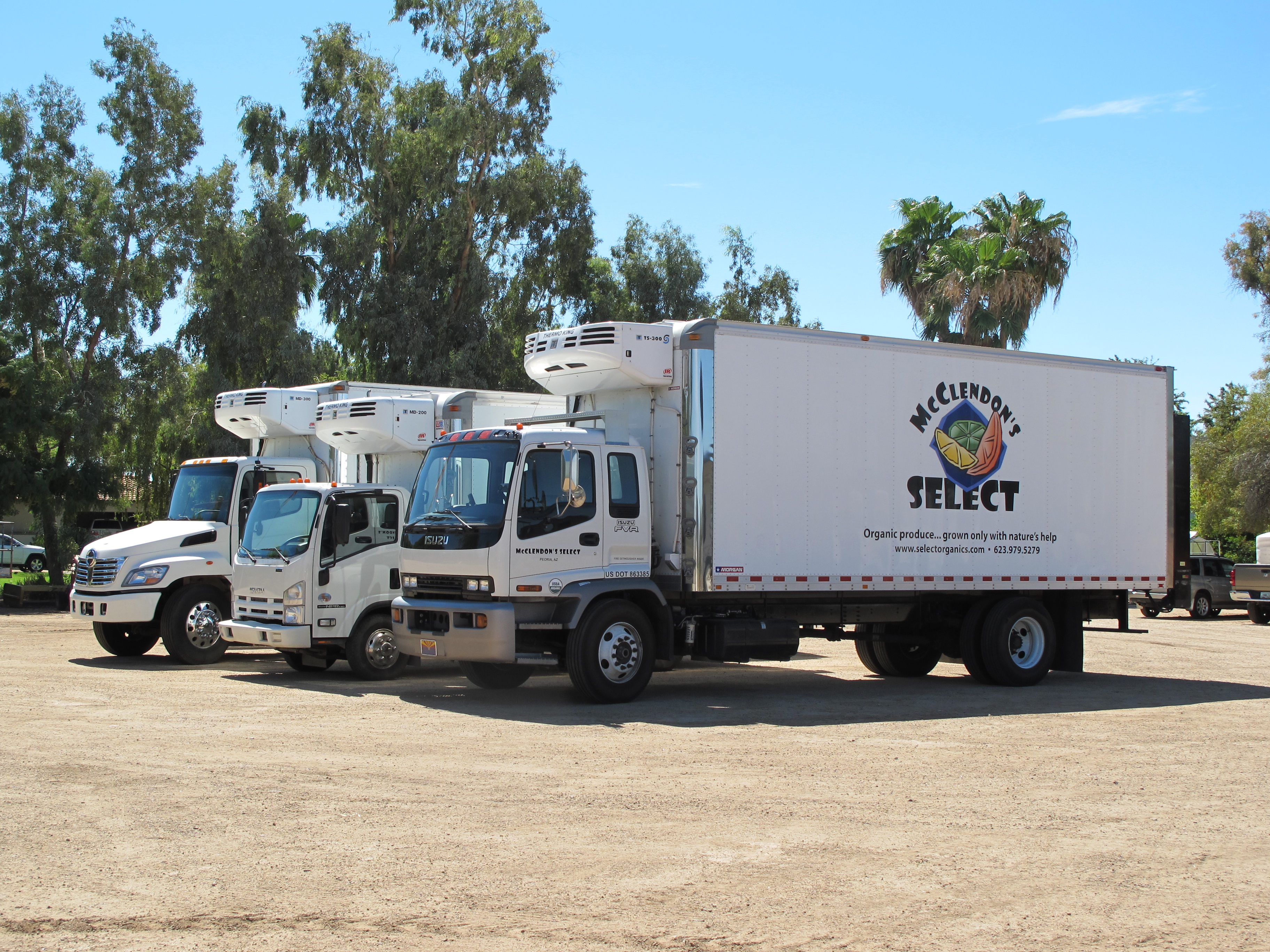
Laura Ungvary recently completed a training session offered by the University of Arizona College of Agriculture and Life Sciences on Good Agricultural and Food Handling Practices. Laura recently joined us at the farm as our new Growing Manager and Food Safety Program Coordinator. She holds a Bachelors and a Masters degree in Horticulture from ASU, and has been a wonderful addition to the farm.
Food handling and safety has always been of the utmost importance to us on the farm. We have always practiced careful and safe handling of produce in every step, from picking and packaging to transport and storage, to insure that our customers receive the freshest produce. The program Laura attended is the next step in helping us to refine our processes and to receive certifications in Good Agricultural Practices (GAP) and Good Handling Practices (GHP). Right now in the state of Arizona there are only eighteen large farming operations that hold both of these certifications. We are working to become the first small farm operation to have these certificates.
So, what does that mean?
These certifications are designed to make sure that produce suppliers and packers are handling and storing fruits and vegetables in the safest manner possible to minimize risk of microbial food safety hazards. Food outbreaks, such as the recent one in Germany, stress how poor food handling can have dangerous repercussions. By receiving the USDA GAP and GHP certificates, we will have audits of our operations to examine our farming practices, our facilities, and all of our protocols. Everything from our water usage and soils, to field sanitation and hygiene, washing procedures, storage and refrigeration and the manner in which we package produce will be reviewed. Since our products are sold directly to consumers at outdoor markets and to restaurants, taking this extra step to reassure our customers that we are handling your food safely is very important to us.
As you know, we have always taken great care to make sure that our produce is refrigerated at the exact temperatures needed to protect and store all of our different varieties of fruits and vegetables. In the Arizona heat, proper refrigeration at all stages is essential. Keeping your produce at the proper temperatures will not only keep it tasting better and staying fresher longer, it will prevent spoilage and wilting. We have even posted previously on how our customers can properly care and store our produce once they get it home. This post has been so popular that it is now a permanent link at the top of our blog home page. To print a copy, you can find it here.
These certificates are voluntary, but just as with our organic certification, we feel that taking these extra steps lets our customers know that we take organic farming seriously. Customers want to know where their food is grown, and these certificates allow our customers to know how it is handled also.
Tending to the soil…
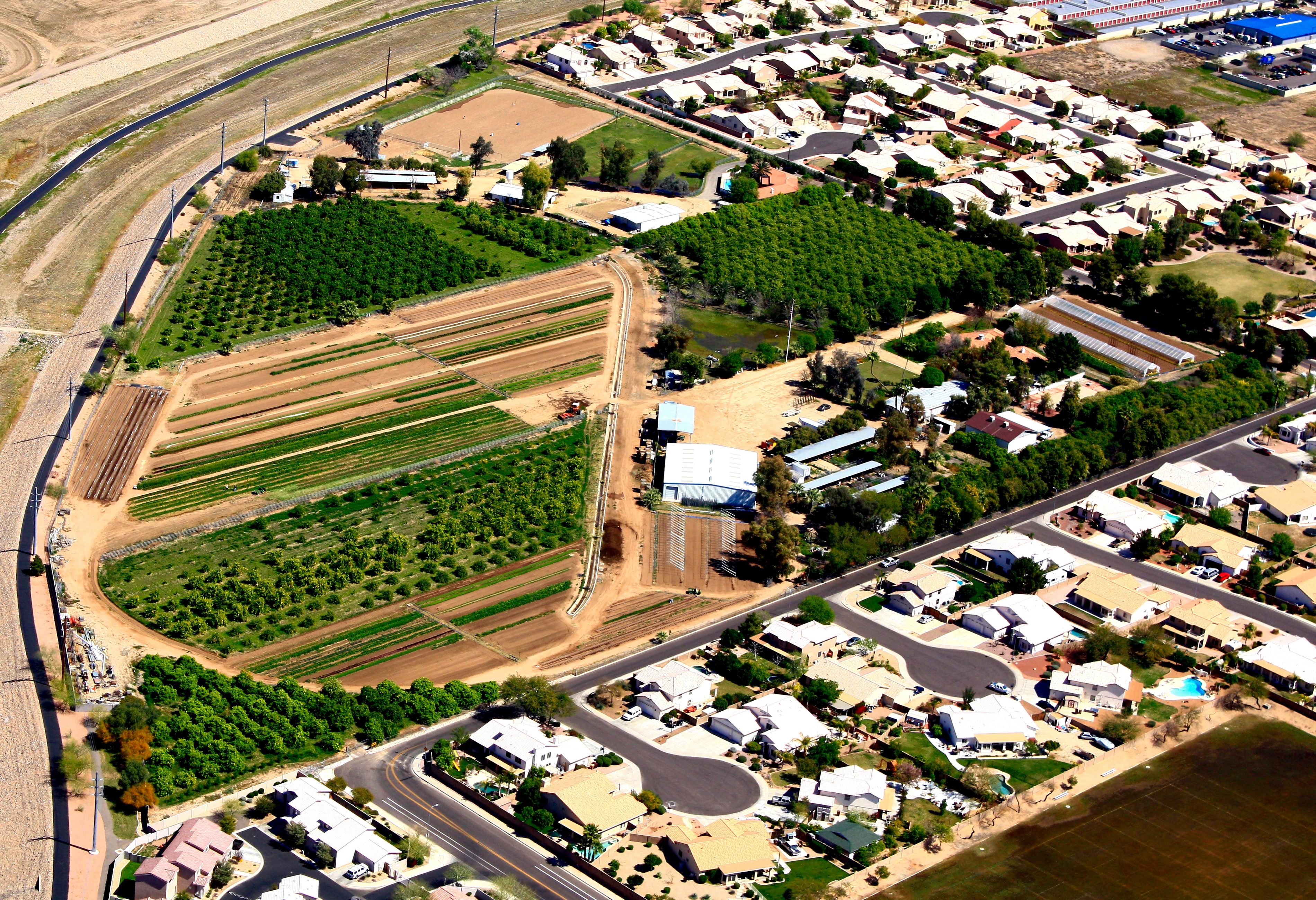 (Double click on the photo to expand it to a larger size)
During these summer months the biggest thing we do is tend to our soil. As any farmer will tell you, soil is a living, breathing component on a farm that needs to be nourished, nurtured and replenished, just as much as any living creature. Taking care of our soil allows us to give back and revitalize it after it has given to us so generously all year long.
We start by first spading under the crops in the field. This time also allows the ground to rest and for a natural composting to occur. The ground is then tilled and laser-leveled. Laser-leveling means making the growing surface as flat and even as possible, which allows for us to conserve water when irrigating the fields, and prevents low lying areas that create pools of standing water when it rains. Pooling water in the fields can ruin the crops in that area and creates an uneven growth.

The ground is then replenished of all of the nutritional elements to feed the soil food web. All of the microorganisms that are needed for a healthy soil are reintroduced, without this our plants would not thrive. By incorporating nutritional additions to the soil before we start planting, it means that the soil needs nothing other than water after we have seeded the beds. We use a unique formula of nutrients and beneficial microorganisms that are all OMRI (Organic Materials Review Institute) approved. For food safety reasons we do not use any raw animal manures.
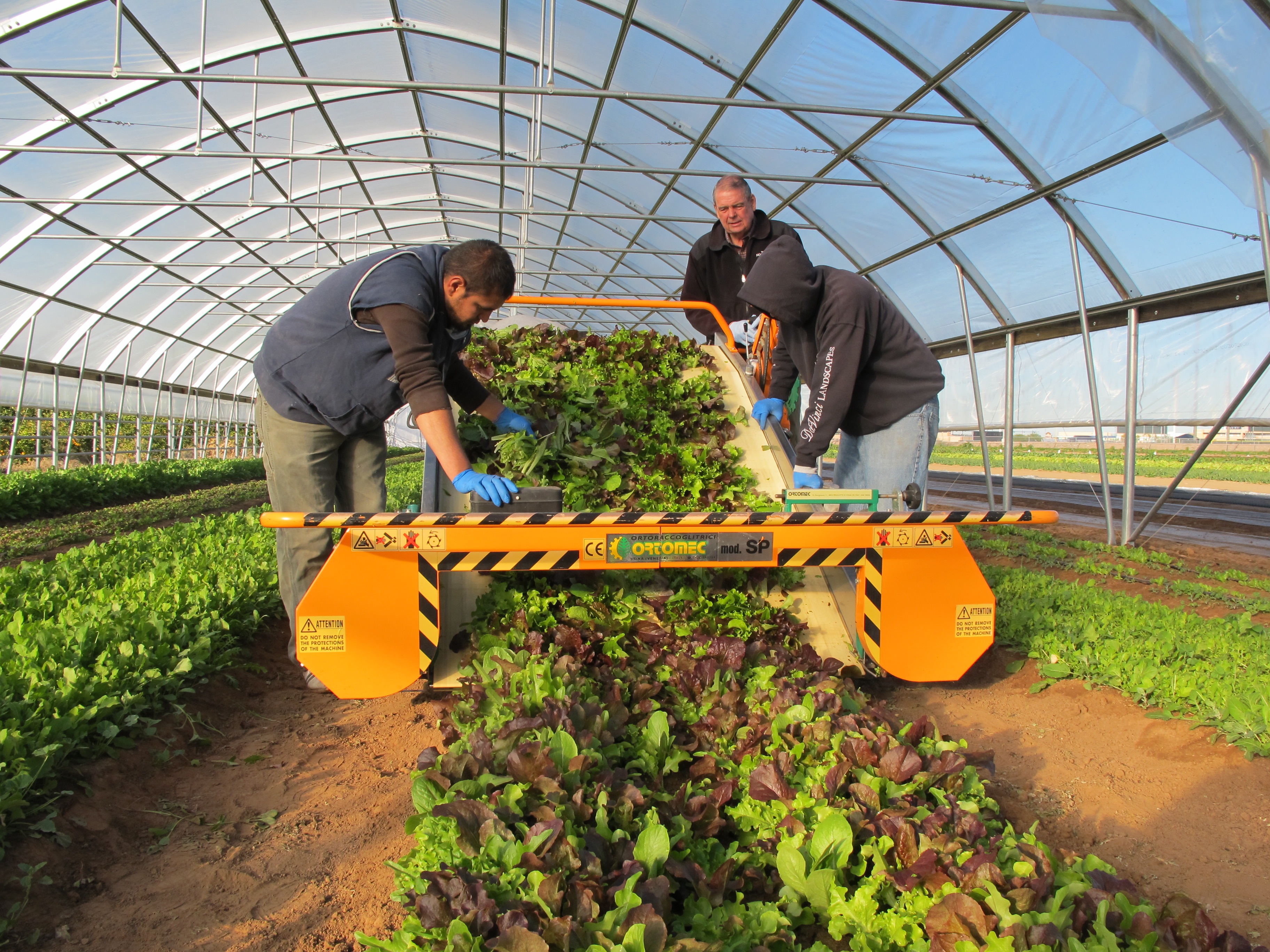
Every year when we plant, our crops are rotated between fields, so that the same items are not planted in the same spot year after year. This practice allows for better insect management and soil nutrient management. Continuing to grow the same crop in the same area creates a monoculture in the soil. Each plant depletes different types of nutrients from the soil. To have a monoculture, means those same nutrients are depleted in that area over and over again. By planting different crops, it allows the soil to balance its nutrients.
As well, insects and soil pathogens grow worse when you plant the same things in the same area. With each new planting, without a rotation of crops, these problems will also get more intense. Throughout the seasons and years we rotate our plantings to make sure our soil stays rich and robust.

We also use this time during the summer to tend to our orchards and the herbs. All of our trees, from the citrus to the pomegranates, quince and date palms, are trimmed with any dead wood removed from the past winter. All of our dates are hand-pollinated and bagged to keep the birds from eating them. And all of the herbs, including the basil, rosemary, thyme, sage, oregano and mint are trimmed, to allow for healthy regrowth.
Without proper care for our soil, we would have nothing. You might say it is the biggest thing we care for – literally.

Italy in Three Bites: Venice & Markets
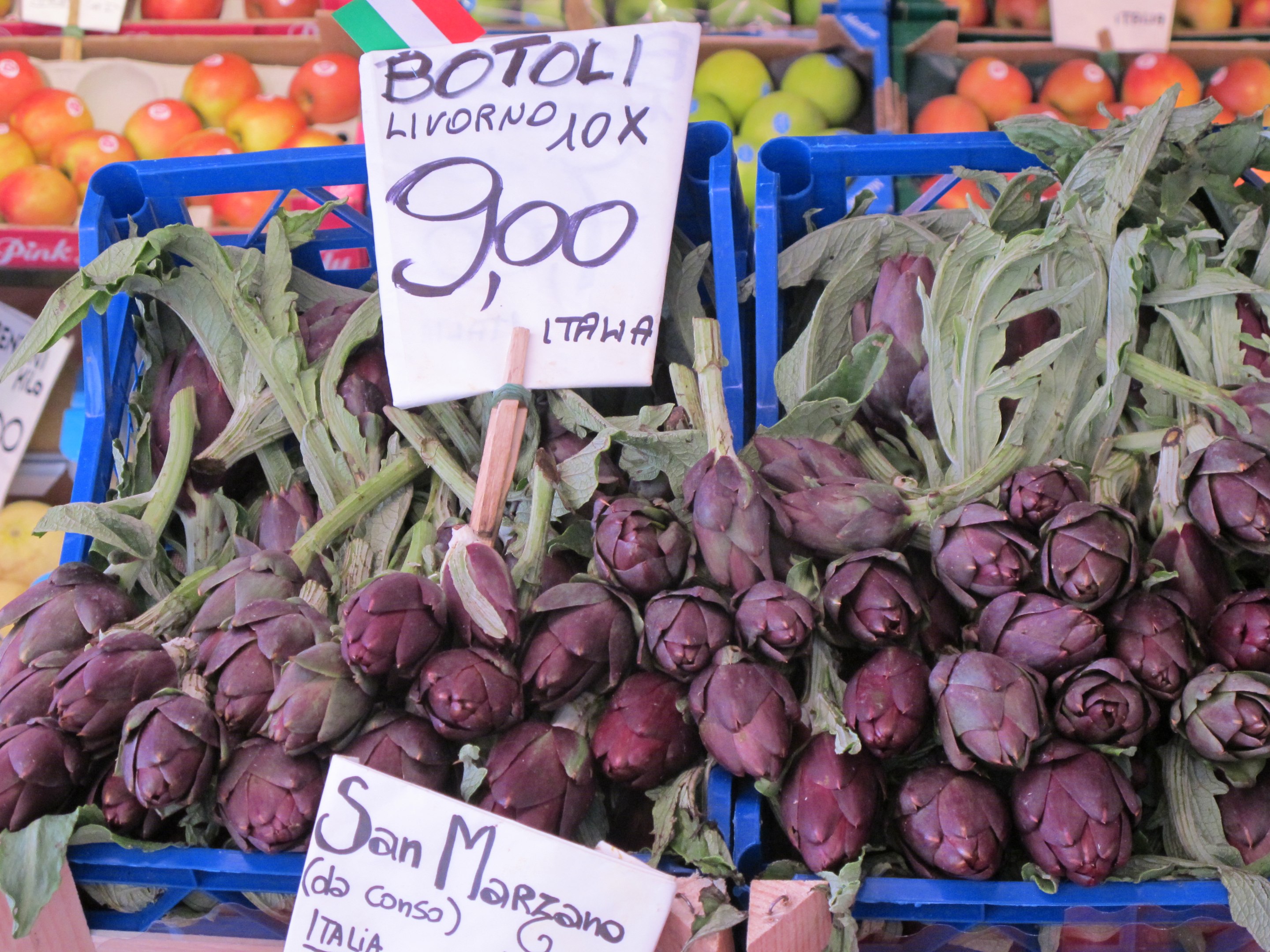
We have a tendency, when we travel, to go to farmers’ markets. Just like others who can’t be away from their Blackberry or laptop on vacation, we find ourselves drawn to markets in whatever city we visit. We have been to some amazing ones, the Green Market in New York’s Union Square, the Ferry Building on Saturday mornings in San Francisco, Pike’s Market in Seattle. But none of those come close to the colors, diversity and oddities we found at the Rialto Market in Venice.

This area in Venice has had merchants selling their wares for over a thousand years. It is said that the Rialto Market is where Marco Polo first brought spices back from this travels to the Orient to introduce to Europe. The market still has that mystic of old and new worlds coming together over a vibrant mix of just caught fish, fresh fruits, vegetables and wonderful weird food items. (Horse meat anyone? I passed.)

The Mercato del Pesce, or fish market, smelled of sea water and had fish was so fresh that much of it was still alive, having been caught just hours before. There was everything from cuddlefish and octopus to sardines and scallops still in their shells. There were many exotic choices, the likes of which we had never seen before.

Right next to the fish, were produce vendors with beautiful displays of every kind of fresh vegetable and fruit you can imagine, and several we had never imagined. Sean, of course, marveled at the logistics of bringing everything in and out by boat, as we watched the barges crowd along side the market while men loaded and unloaded with handcarts. It makes figuring out how to park our trucks seem much easier in comparison.


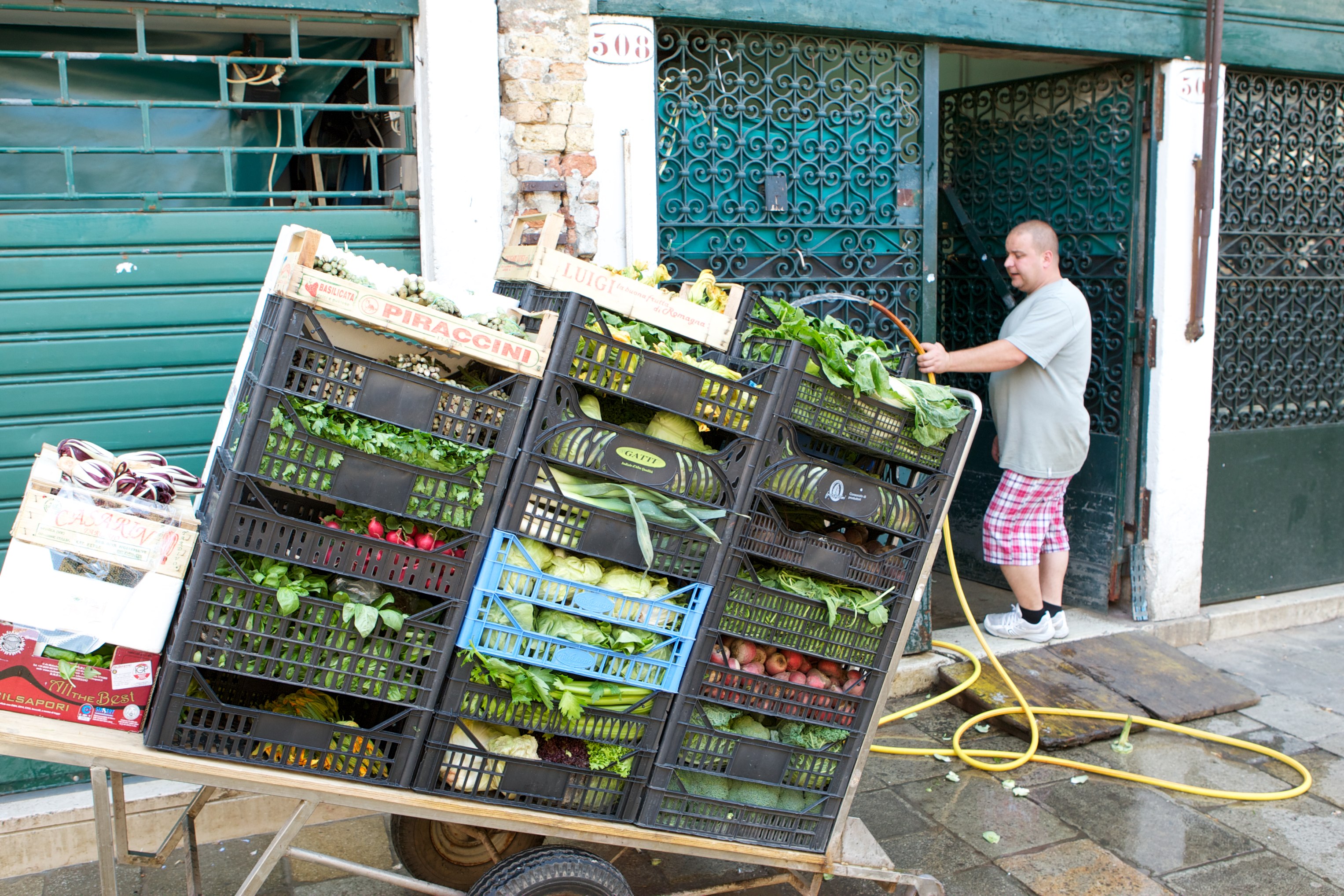
What I liked most about the market was the existence of true Venetians. Our whole time in the city we found ourselves trying to navigate away from the crowds and into the quieter parts, finding Venetian life much more fascinating than the overpopulated tourist areas. At the market, these two populations of Venice collided, but while much of Venice is for show to its visitors, at the market the tourists were kept at bay while Venetians carried out their business of finding what they needed for their homes or restaurants.

Sean loved the market so much that he went twice. Although, we learned that some things stay true, whether you sell at a farmer’s market in the middle of the desert or one along the Grand Canal. The first time we went we got there just as they were packing it up for the day. It was 1:30pm on a Wednesday, the exact time that Sean would be doing the same at Town & Country. The irony was not lost on us.

We did also enjoy the floating produce stands that we found throughout the city. Just the thought of doing a farmers’ market on a floating barge had Sean dreaming. I guess like anyone, you can’t help but think of work a little while on vacation.
Italy in Three Bites: Sorrento & Farm
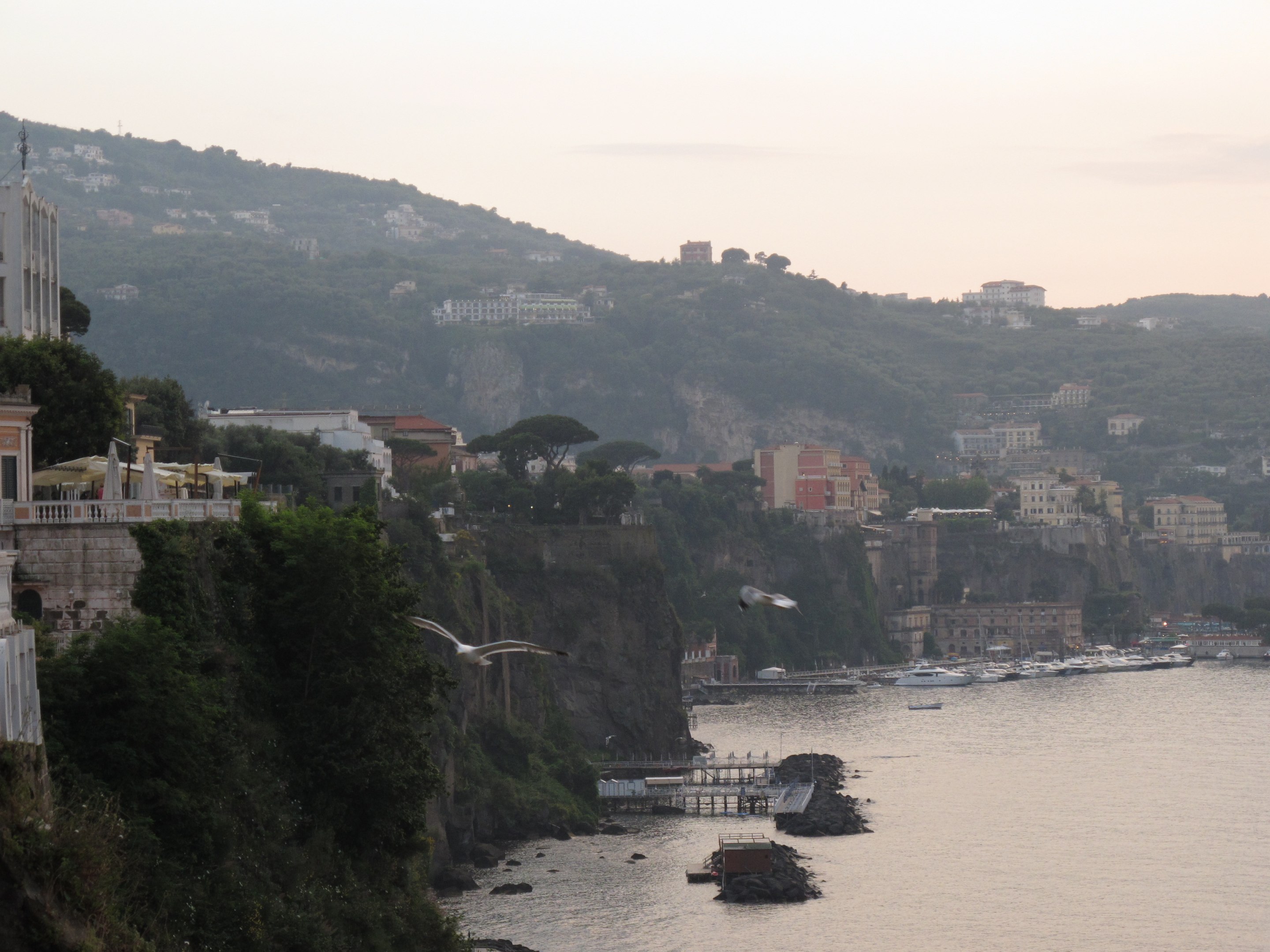
The bad thing about the Amalfi Coast is that once you go and see if for yourself, and realize that it is real, you are then ruined with this knowledge once you return. That it exists an ocean away is something I now have to live with. But the good news is that is the only bad thing about the Amalfi Coast.

We had hired a gentleman named Mariano, on the recommendation of friends, to show us this famed coastline while we were there. We were told that he not only could expertly navigate the hair-pin curves that hover over cliff sides, but that he knew more about this area than anyone else. They were correct. They were also right that Mariano is a delight. He entertained us with stories, facts and the history of the area, while negotiating the Amalfi Highway alongside lumbering tour buses and stunt devils on Ducatis. He promised us the best places to take pictures, to eat lunch, to enjoy the local flavors, and he delivered.
What we had not counted on, was that after a day of jaw-dropping views and a meal that I will always remember, that the highlight of our day would be when Mariano kindly invited us to see his family’s farm. As one farmer to another, we were touched and honored.
And humbled.

Mariano’s family farm has been in his family for eighteen generations. It backs up to the Amalfi Highway on one side (which is really more of a sleepy, two-lane road in parts), and has views overlooking Sorrento on the other. He lives there with his wife and sons, his mother and siblings, and all of their children. This is a family farm tended to and loved by all. They add new homes as the family grows. One of his nieces has the newest house, the oldest is lived in by his mother, who they affectionately refer to as the “Generali”. Her house was built in 1523.

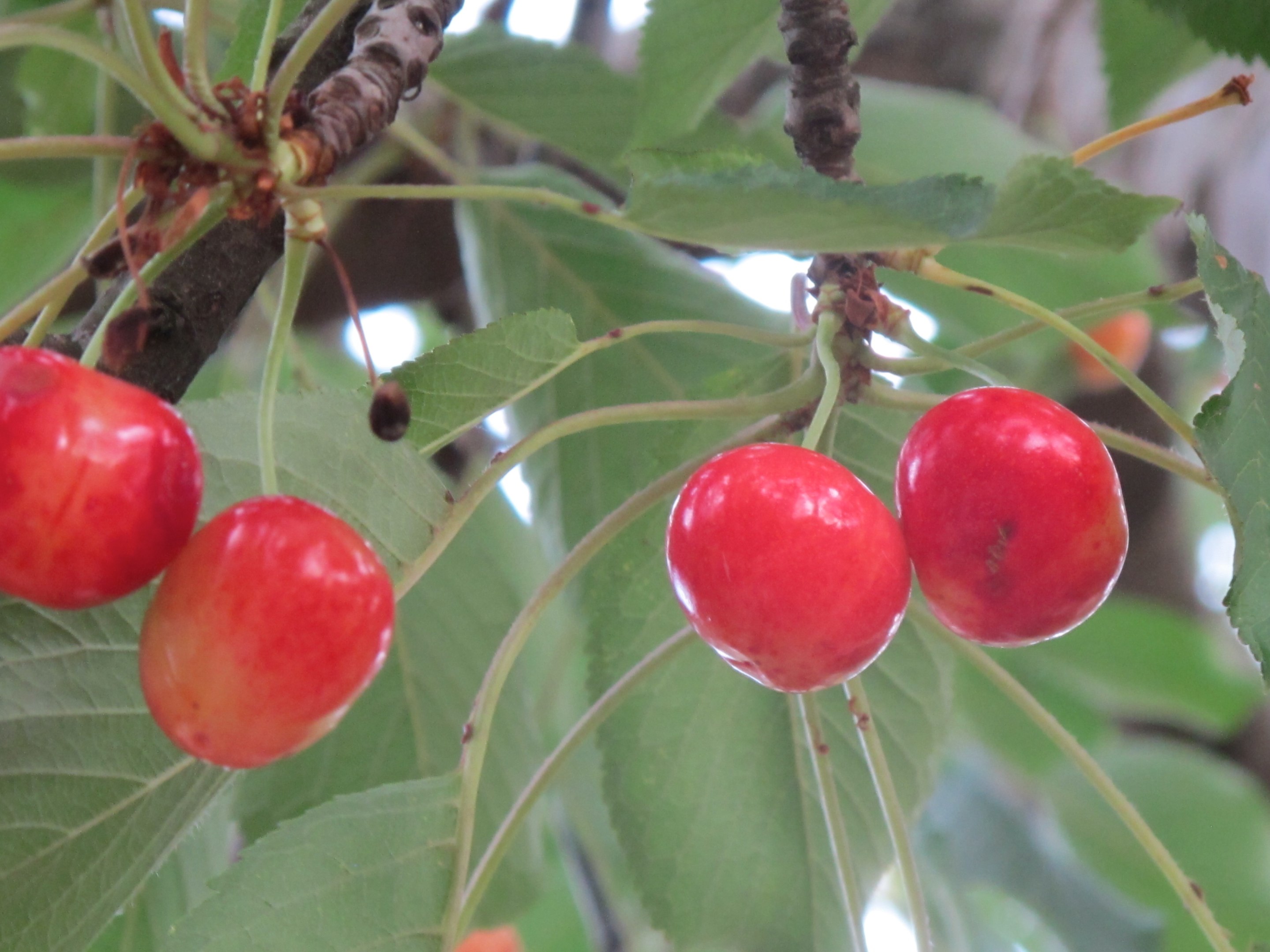
The farm itself was a magical maze of lemon orchards, grapevines, and rows of leafy greens. It felt like a fairy tale. We walked through canopied orchards of Sorrento lemons that have a wrinkly peel that smells sweet like lemonade. There were large old olive trees that had netting underneath, to help during the harvest. Their tomato plants were held up by string in perfect rows. We saw peach trees, kiwis, squash blossoms, and a large, beautiful tree with fat, ripe cherries hanging so low that they were begging to be picked. They had a hen house for their eggs, and a cow for their dairy (and fertilizer). And all around were little songbirds in cages (the Generali likes the sound), manicured bonsai trees (she likes those too), and colorful potted flowers. Aidan ran around the farm, chasing their dogs, swiping cherries and feeling very much at home.
Mariano’s wife was kind enough to invite us into their home for a visit after we had toured the farm. Her whole house smelled of something sugary warming in the oven. She offered us fresh made hazelnut cookies and lemoncello. Their farm provides the food for their family, but it is the lemons that they sell to a company down the street that bottles lemoncello. I doubt that it could have been better than what we were offered, her lemoncello was definitely the best we had during the trip. She told us her secret was to use only a very high-grade alcohol and then to add a little honey in at the end to cut the sour.
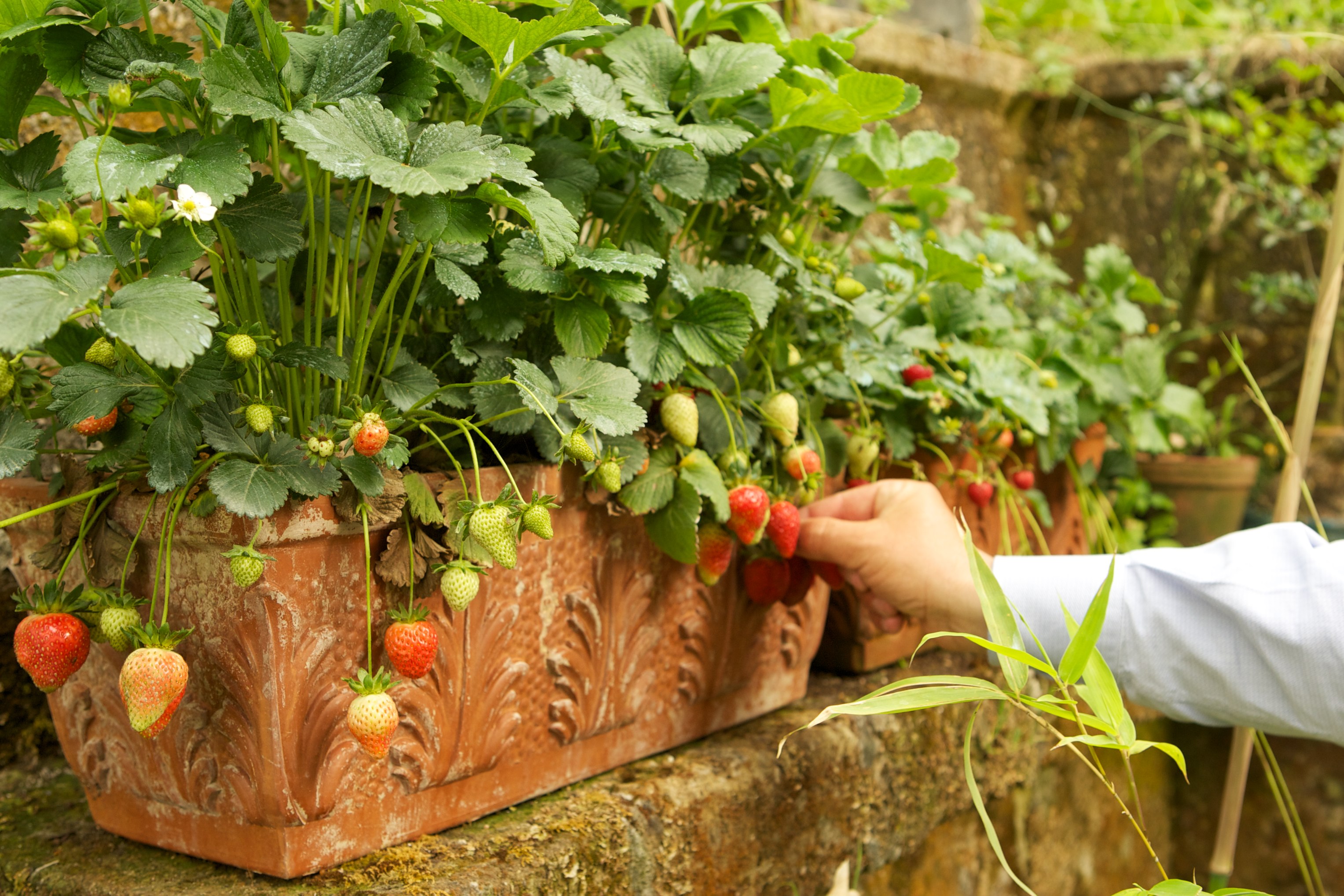
I didn’t get her exact lemoncello recipe, but found this one that sounded close that we found while we were in Capri…
CAPRI LEMONCELLO
1 litre of water
1 litre of alcohol (high-grade is best)
1 kilo of sugar
8 lemons
Honey to taste
Peel the lemons finely and put the peels down in the alcohol. Close the infusion in a jar and allow to sit for four days. After that, prepare a syrup with a litre of lukewarm water and the sugar. Add the lemon infused alcohol and mix. Let it sit for 10 minutes and then filter it. Serve very cold. (Mariano’s wife adds the honey at the very end, before chilling.)
Mariano entertained with his stories of the Generali, the much-loved matriarch. He told us how she listens for his door to open every morning, and then rushes to make him an espresso before he reaches her door, which sounded exactly like a good Italian mama. He also showed us their pizza oven and explained how they don’t use a thermometer. The Generali just puts her hand in and lets him know if its needs more wood on the fire. When Sean asked how hot the oven gets, Mariano said, “Oh, she likes it about 500-550F”. He also told us that she is a woman of strong opinions, and her thoughts about the family farm were quite clear. Recently, she had visited an attorney to cut all of her children out of her will. She wanted the farm to continue in their family, so she willed it to her grandchildren, knowing that by Italian law they could not sell it, if they so wished, until the youngest reached 25 years old. She is determined that it will remain in their family another generation.
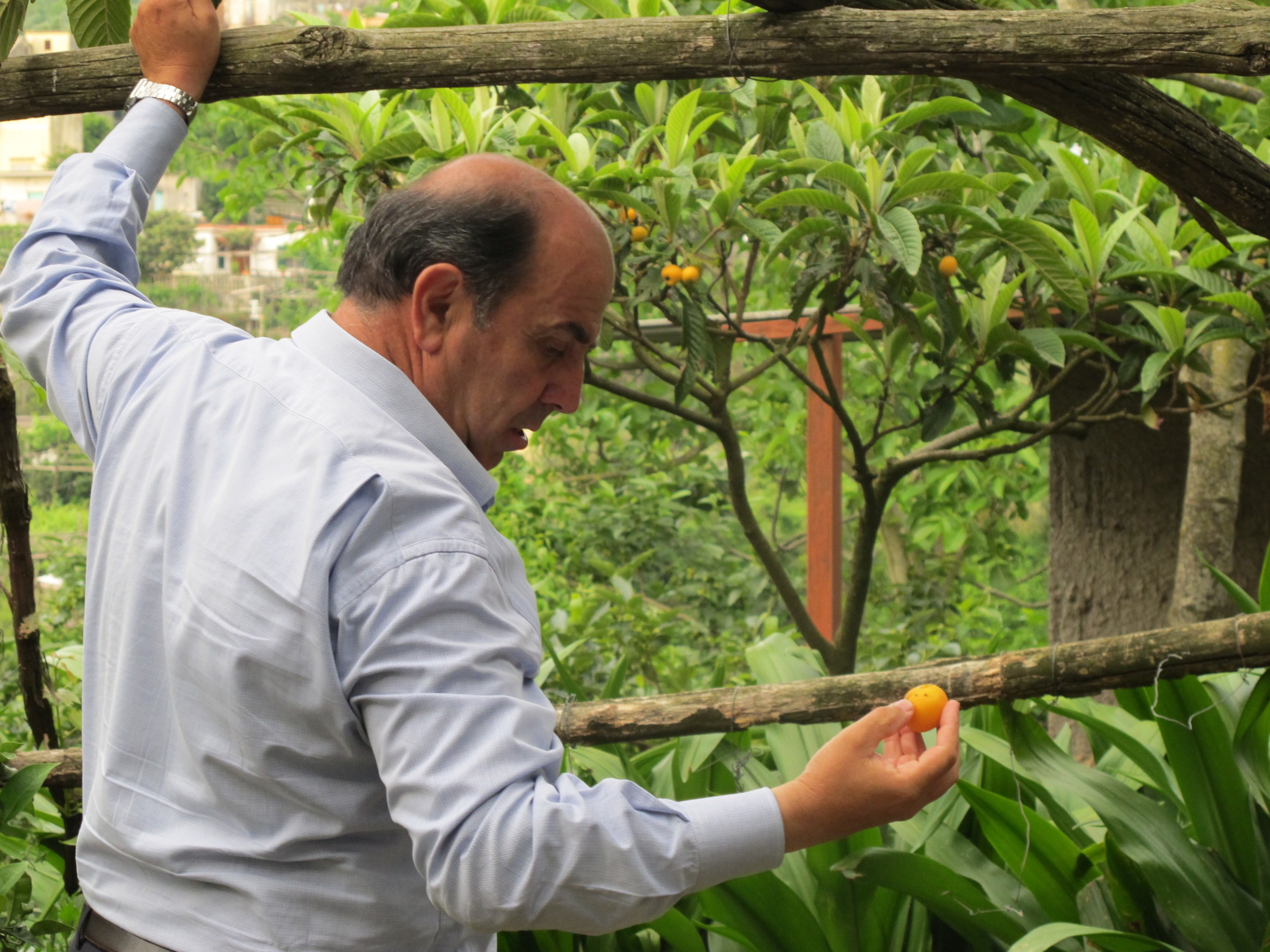
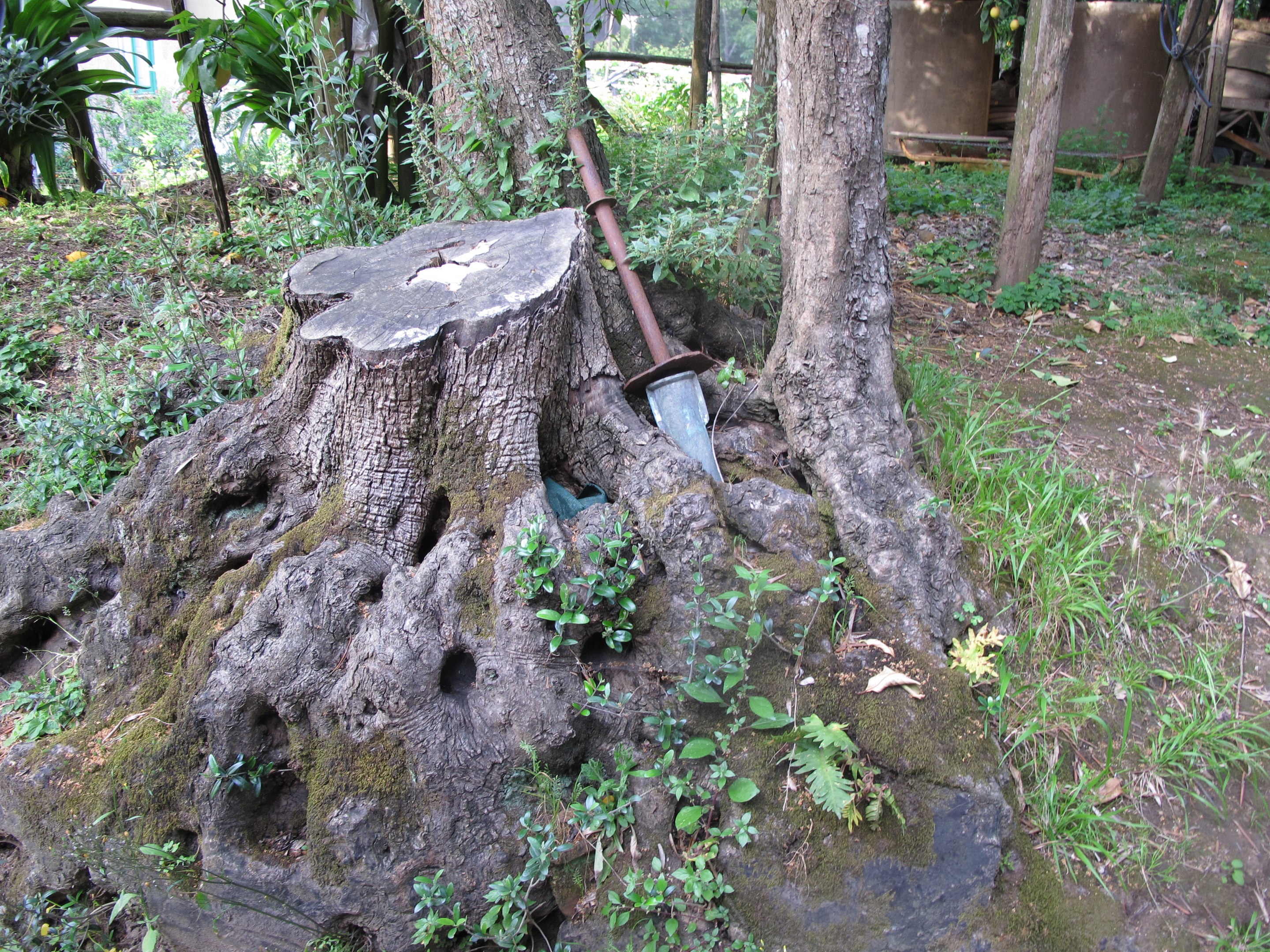
I understood Mariano’s mother and her want to keep this place in their family for as long as possible. This farm felt like a living testament to their history. It was very much built and maintained with great love and respect for one another, the land and the generations to come. When I asked Mariano about an olive tree that was growing out of a stump that had been obviously cut before, he said that about every fifteen years when the tree is done producing, that they cut it down and graft another olive branch to it. They have been doing this for about 300 years, because, after all, it is a good stump.
If you ever go to the Amalfi Coast, or for that matter, anywhere on Italy’s boot, Mariano is your guy. He knows everyone and everything about the Amalfi Coast, but he has also worked all over the country and spent a decade doing tours and driving in Tuscany. He was an absolute delight and we can not recommend him highly enough. You can contact him at info@pleasantravel.com. If you do, tell him the McClendons say “Ciao!”
Italy in Three Bites…. Rome & Food
Once upon a time eleven years ago, Sean asked me a question and I said yes. We were in Florence, in the Boboli Gardens to be precise, and he slipped a ring on my finger and asked if I would become his wife.
Since that trip we have dreamed of returning to Italy, to bring Aidan and introduce him to a place that holds such a special place in our hearts.
And we wanted to eat.
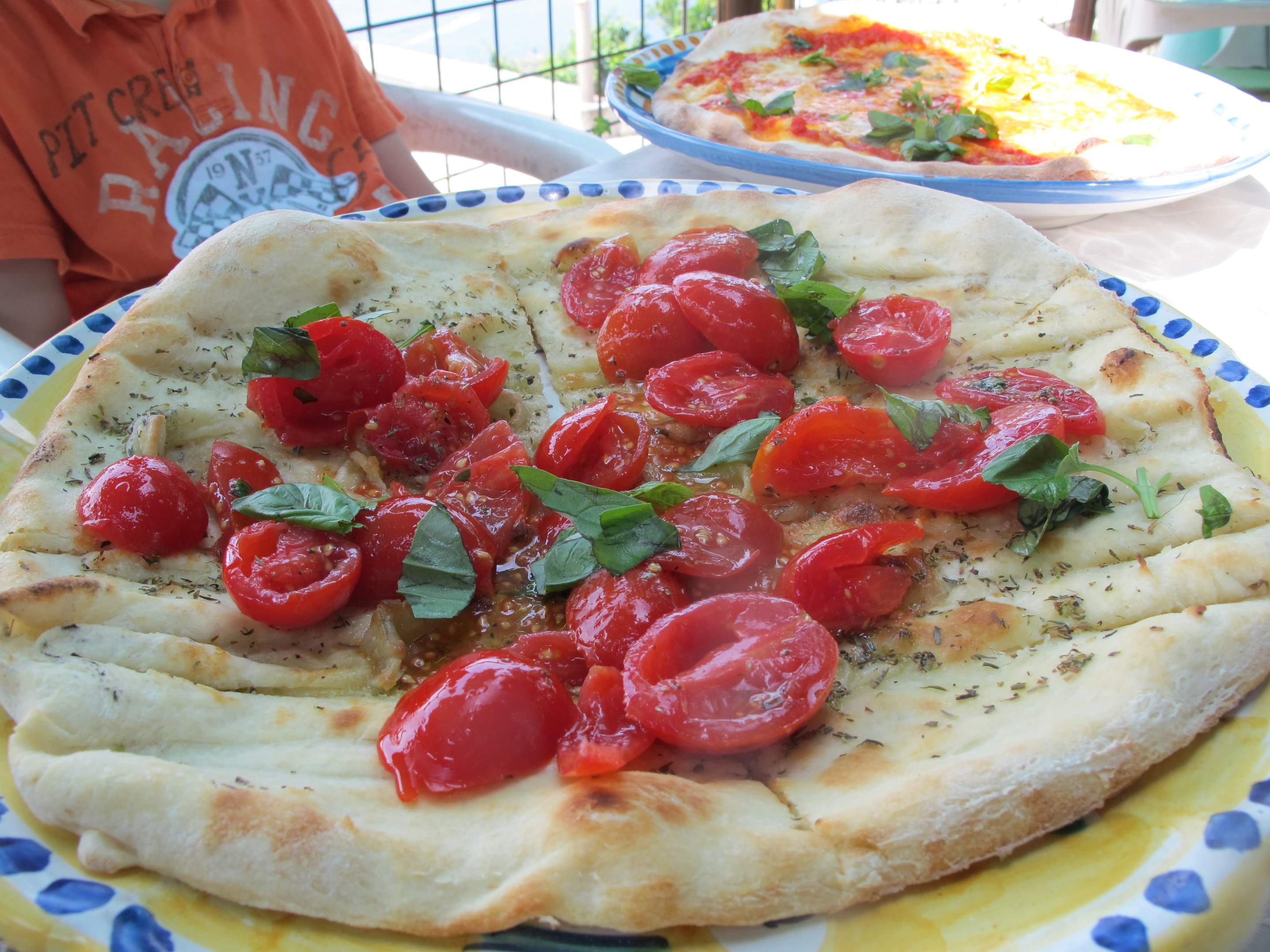
Over the past few months as I have been planning where we would stay and what we would do, the one thing that needed no planning was what we would eat. Because I knew that we would eat well, and often, and usually with wine, wonderful lusty Italian wine, and of course, with big overflowing cups of gelato afterwards.
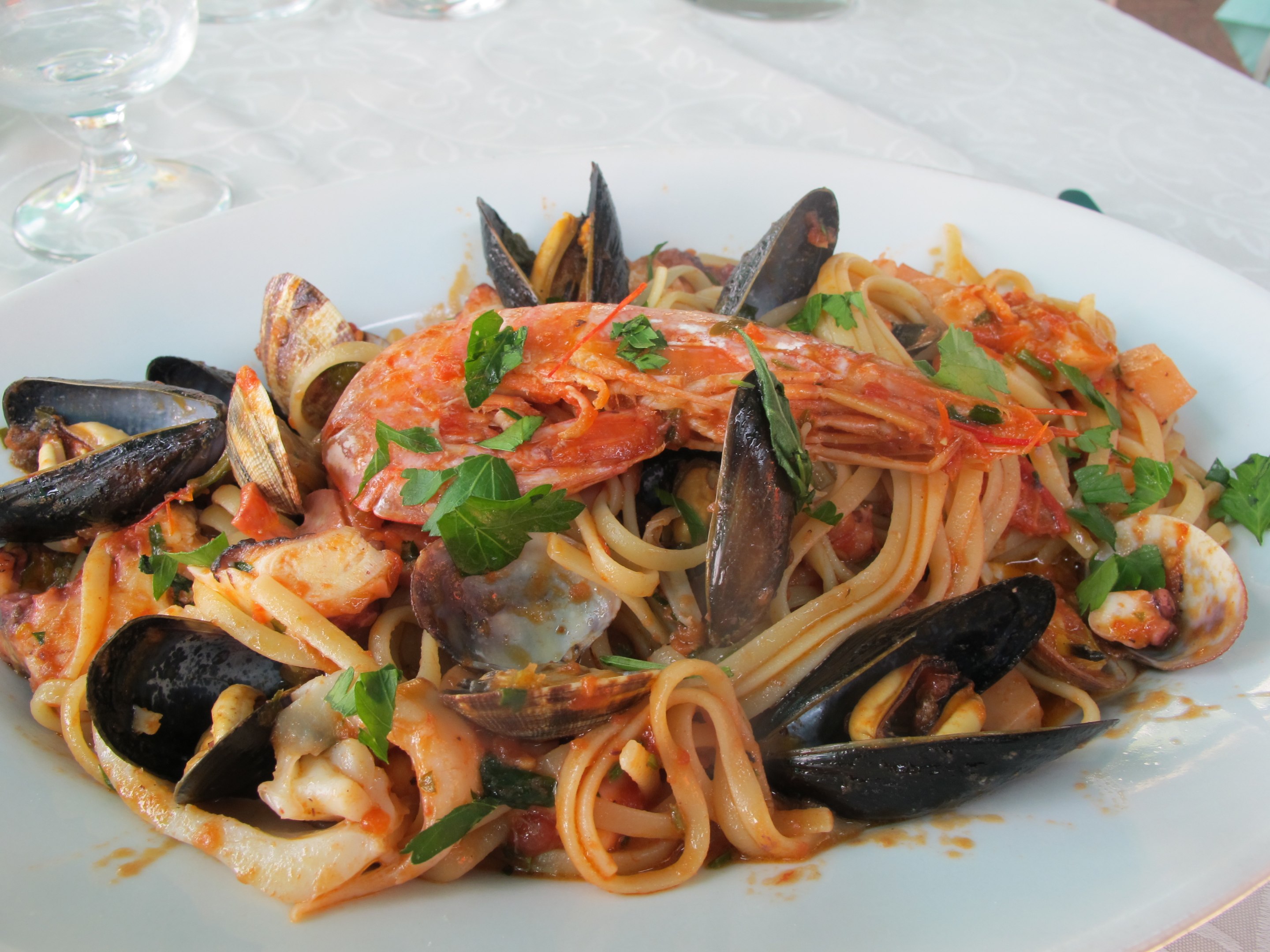
Just walking down the streets in Rome we were lured by food, warm chestnuts from a vendor near the Spanish Steps, wood-fired ovens from trattorias near our hotel, fresh pasta and cured meats hanging inside shop windows. There aren’t words to describe what we ate, although if I had to choose a few they would be fresh, seasonal, organic, hand-made.
Perfecto!

Italians eat the way we aspire to here. Eat what just came out of the ground, because that is what is the freshest and what tastes the best.
We ate dishes with ingredients so fresh they needed nothing elaborate to bring out their bold, earthy flavors. Simple, beautiful treatment with a touch of olive oil, a little sea salt, a squeeze of lemon was often all that was needed, because the produce actually tasted like something you wanted to try all on its own. We enjoyed squash blossoms, artichokes, asparagus, lollo rosa and big, fat ripe tomatoes. All of our old friends from the farm met us time and again on menus throughout the city. We weren’t seeking out places that specialized in seasonal or organic produce, because we didn’t need to. Eating seasonally is not a trend, nor a restaurant “concept”, it is just how food is done. It just makes sense.
We laughed one night when a waiter, explaining that the menu had a few changes based on what was in season, proceeded to change the description of every item on the menu. Every. Single. Item! I loved that. Why eat the same mediocre things over and over again all year long when you can eat something spectacular, even if it is only available briefly in June? That is what eating seasonal is about. Savor something wonderful when it is at its peak, as nature intended, even if it means changing your whole menu.
This is how food is meant to be prepared, served and enjoyed.

For all of the news we are bombarded these days on how Americans eat, there is a lot to be learned from our Italian friends. Meals were served with the intent to be savored. There was no rush, each bite is meant to appreciated. Portions were not eye-poppingly oversized, but rather they were rationed in reasonable quantities, enough to fill and satisfy, but not gorge. We ate our meals slowly as we discussed what we had seen and enjoyed that day. And, in my favorite tradition of Italian dining, after a fulfilling meal, we took a stroll after we ate. In the evenings the streets were filled with families, walking arm-in-arm, talking and laughing in their beautiful language that became the background music of our trip. Walking nowhere in particular, we would join in, continuing our conversation, enjoying now the scenery as we had the meal.
And we stopped for gelato.

Another cool reason to head north…

We escaped the heat this past weekend with an overdue trip up north. The summer has gone from warm to cranky hot and a respite among the cool pines was definitely in order. While in Flagstaff, Sean and I finally got to go to Diablo Burger. A destination that was a long time coming for both of us, although neither of us will wait so long again.
Diablo Burger has been a customer of ours for quite sometime, and while we have wanted to go eat there before, this was the first time we actually made it. I am now feeling sorry for my past self since I know now what I was missing.
Named for Canyon Diablo, near Flagstaff, Diablo Burger is all about keeping things local. They are faithful about knowing where each ingredient comes from, and sourcing everything locally. Every burger is made from open range-raised, antibiotic-free and hormone free beef from Diablo Trust Ranch (not affiliated, but both have the same values for high quality food and sustainability). Black Mesa Chevre was on the menu, much to Sean’s delight. And they had a selection of Arizona brews on tap and wines that come from small, family-owned vineyards from the West, including an Arizona Pinot that Sean also enjoyed. They take being a good steward to the community so seriously that they do not take credit cards (no such thing as a local credit card company up there) and they separate their waste by recyclables and items to compost.
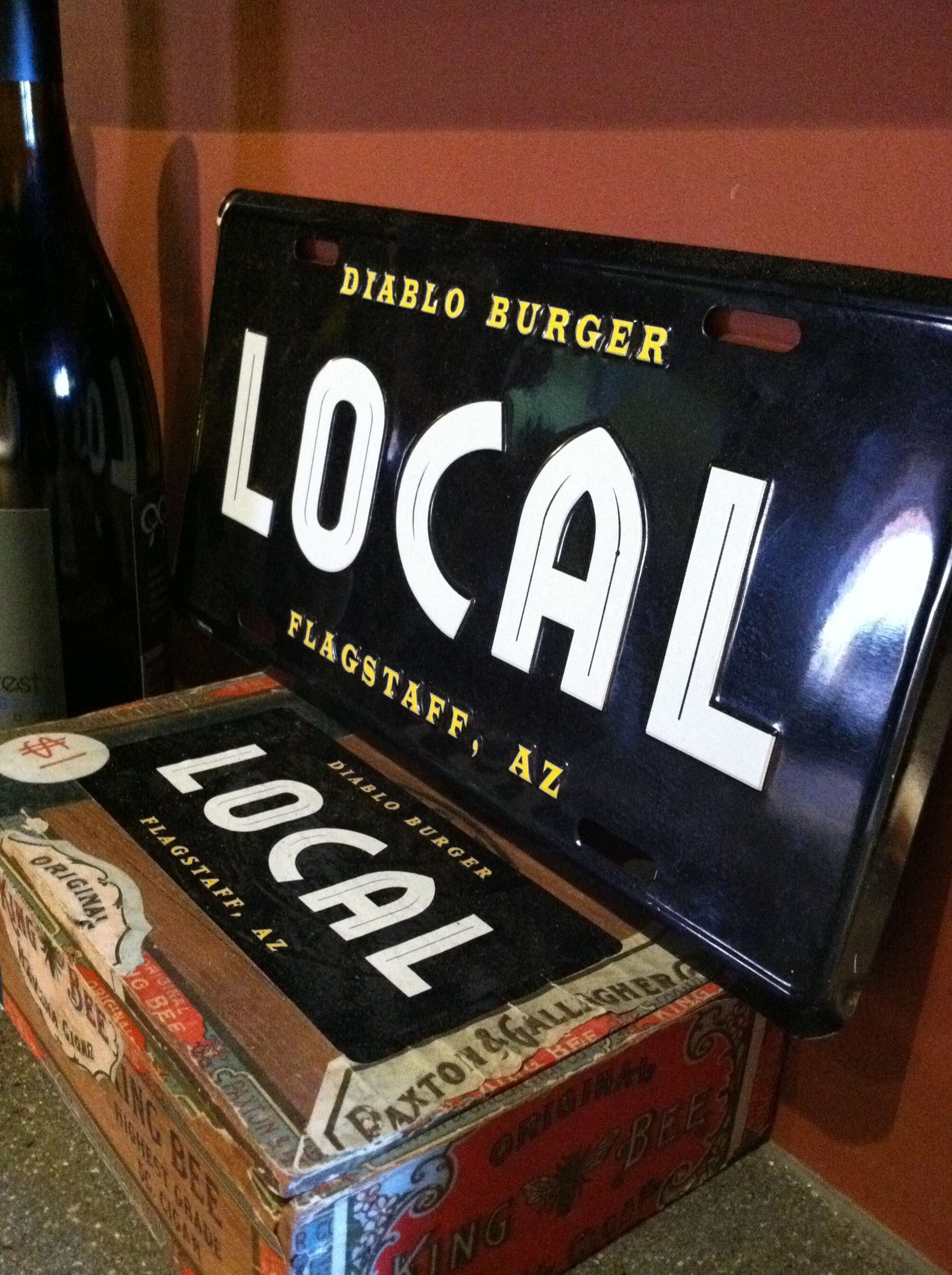
But all of that is not why there is a line out the door to place your order. Diablo Burger also makes one of the juiciest, most flavorful burgers I have ever had. It was melt-in-your-mouth good! They make your burgers to order, allowing you to select from a host of ideas that includes the “Vitamin B” with bacon, beets and blue cheese, or the “Wrigley Field” with homemade sauerkraut, bacon, swiss and honey mustard. Or there is the option to build-your-own with all sorts of toppings to customize it, from the standard burger fare to eggs overeasy, chimichurri or fresh basil. But really, you don’t need to do much to make these burgers memorable. We ordered the Marilyn, selecting only which cheese we wanted, and they were so moist and tender that we enjoyed every bite. They were perfectly cooked (they recommend medium-well since the meat is 95% lean) and are covered with an English Muffin marked with their brand, served on top of a basket of the most amazing french fries. I had to ask the waitress to take them away at one point, I was starting to lose all self-control with the basket of them in front of me. The key to those fries is double-frying in peanut oil and a little Herbes de Provence… a trick I may have to try at home sometime.

Don’t let the line put you off either, since it is misleading. We actually got in rather quickly and the service was excellent. It is a small space, so the tables inside are community seating, but there were also plenty of seats outside.
I don’t know what else to say about it, other than I wanted to go back the next day and have the same meal all over again. I still do. But I know that we will definitely make it back to Diablo Burger again, and soon.
Diablo Burger
120 N. Leroux Street
Flagstaff, AZ 86001
928.774.3274
www.diabloburger.com
Open: Mon-Weds 11am-9pm; Thurs-Sat 11am-10pm, closed Sundays
Last Market of the Season…
It’s that time of year!
Sad, but true. Next week is our last farmers’ market until next fall. We will be at the Town & Country market on Wednesday, June 22nd from 8:30am – 2:00pm, and then we are done for the summer. We will return to the Town & Country Farmers’ Market on Wednesday, October 5th.
We hope to see you next week and wish all of our customers a wonderful (& cool) summer!
Beckett’s Tomato
We may be a family of competitive eaters. Not for quantity, but definitely for quality.
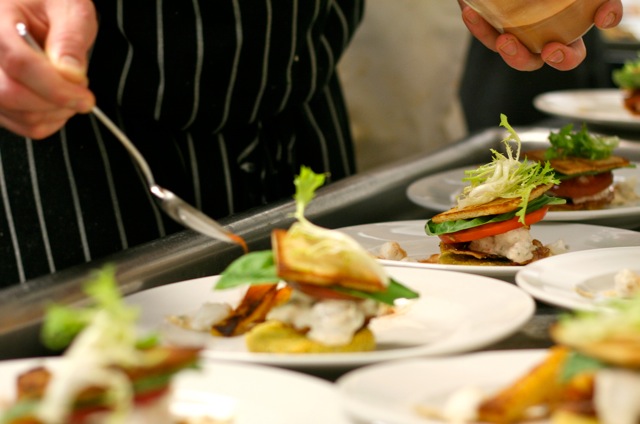
We have a tendency to call one another when we have eaten something spectacular. We send pictures, describe, dissect, boast about dishes we have had. When we can’t share food across a table, we don’t hesitate to share across phone lines or with e-mailed photos. So it came as no surprise when Bob sent us these. Sean, Aidan and I took a much needed break for two weeks (more on that later), but while we were gone, look what we missed. Justin Beckett, of Beckett’s Table, held a dinner celebrating our heirloom tomato season. He created a menu of mouth-watering dishes, each featuring a different heirloom tomato variety and paired with an Arizona wine from the Pillsbury Wine Company.

Tomato Cubed – featuring Amana Orange, German Pink and Cherokee Purple Tomatoes
Heirloom tomatoes, tomato sunset terrine, watermelon & avocado, basil gelee, chardonnay vinaigrette, breakfast radish, herbs and flowers, paired with a 2009 Chardonnay.

Fish Out of water – featuring Red Zebra, Garden Peach and Persimmon Tomatoes
Olive oil poached alaskan halibut, shaved fennel, preserved lemons, tomato chips and petite lettuce, paired with a 2009 Wild Child White.

Not a BLT – featuring green tomatoes and sundried tomato powder
Cormeal fried green tomato, crisp brioche, roasted garlic spread, pancetta, frisee, tomato polenta fries, crab remoulade, paired with a 2009 Wild Child Red.
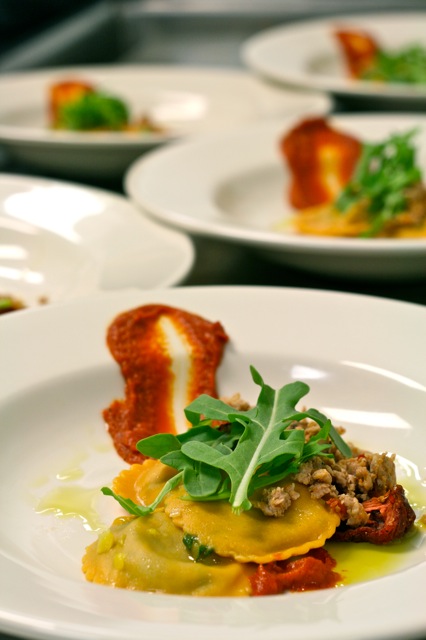
Nonna’s Heirloom – featuring Brandy Wine and Punta Banda tomatoes
Arugula, Pecorino and Golden Bar Squash Ravioli, house-made chicken and pork sausage, solar oven baked tomato sauce, paired with a 2009 Diva Red.

Tomato Pie – featuring Sun Golds, Black Pearl and Brandy Wine (for the sorbet) tomatoes
Thyme parmesan crust, tomato brown butter tart, house-spun tomato sorbet, paired with a 2009 Roan Red.
We definitely missed out, but Justin was nice enough to share his recipe for the Basil Gelee that was served with the first dish, Tomato Cubed. Bob raved about the basil gelee, saying that only a small sliver of it with a bite of tomato was beautiful thing. I can’t wait to try it for myself.
Basil Gelee
1/4 cup basil
1 1/2 cups dry white wine
1/2 cup sugar
1 teaspoon lemon zest
1/2 cup + 2 tablespoons water
2 teaspoons gelatin
2 tablespoons lemon juice
Blanch basil. Bring water, wine and sugar to a boil. Turn down to a simmer and cook for 2 minutes. Sprinkle gelatin on two tablespoons of water and let soften for two minutes. Pour 1/2 cup of the wine liquid thru a fine strainer into the gelatin mix. Blend remaining wine liquid with the basil and lemon juice till smooth. Pour into mold and chill quickly.


 McClendon's Select
